This article is for educational and informational purposes only and is not medical advice. Consult a healthcare professional for sleep concerns.
Sleep Hygiene for Optimal Wellness
The quiet, underrated health intervention that changes everything — from brain performance to immunity.

Sleep hygiene is the set of habits that protect deep, restorative sleep — the foundation of wellness. Practicing sleep hygiene for optimal wellness transforms health from the inside out.
1 in 3 U.S. adults doesn’t get enough sleep, raising risks of heart disease, diabetes, and depression (CDC).
Most people chase productivity hacks while ignoring sleep — the single most powerful performance enhancer.
A structured sleep hygiene program increased sleep duration by nearly one hour per night (UPenn study).
Consistent schedules, a cool/dark bedroom, and reduced screen time are small changes with massive returns.
Sleep isn’t wasted time — it’s the nightly system update that makes every waking hour better.
The Quiet Crisis of Modern Sleep
Walk through any neighborhood around midnight and you will see it. Lights are still glowing. Phones still glowing. Minds still racing. Modern humans have become oddly bad at sleeping. Which is strange, because sleep is the one biological function that every system in the body depends on. Memory, mood, metabolism, immunity, emotional stability — all of it runs through sleep. And yet millions treat sleep like an optional afterthought, ignoring the core principles of sleep hygiene for optimal wellness.
According to the Centers for Disease Control and Prevention, about one in three adults in the United States does not get enough sleep. That deficit quietly increases the risk of heart disease, diabetes, obesity, and depression. The irony is almost comical: people search endlessly for productivity tricks while ignoring the single most powerful performance enhancer built into human biology.
The solution has a name.
What is the real fix for chronic fatigue and brain fog?
Sleep hygiene for optimal wellness — not supplements, not stubbornness, just better habits that protect restorative sleep.
What Sleep Hygiene for Optimal Wellness Actually Means
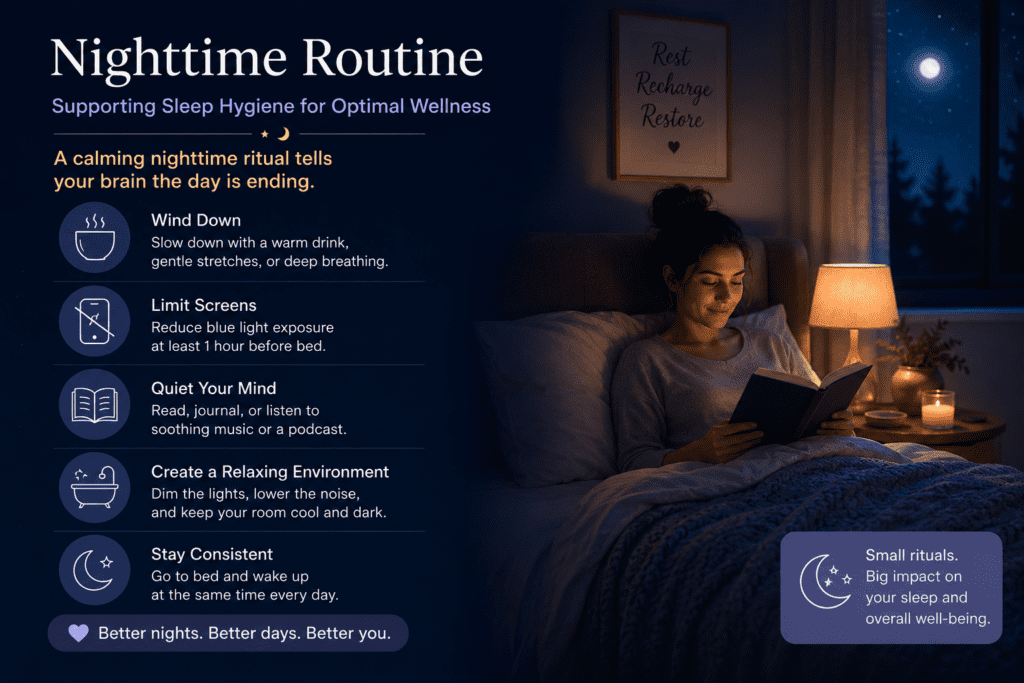
The phrase “sleep hygiene” sounds vaguely medical, like something involving disinfectant and hospital sheets. In reality it is simpler than that. Sleep hygiene for optimal wellness means creating habits and environments that allow the brain to do what it was designed to do at night: shut down the chaos and repair the system. Good sleep hygiene includes consistent sleep schedules, a dark and quiet bedroom, limiting late-night screen exposure, calming routines, and keeping the room cool.
Nothing here is particularly complicated. But modern life has a remarkable talent for interfering with every single one of these habits. Research from the National Institutes of Health shows that improving behavioral sleep habits can significantly increase both sleep duration and quality. Translation: the small things matter more than people think.
Why Sleep Is the Most Underrated Health Tool
Most health advice focuses on diet and exercise. Those matter. But sleep is where the real magic happens. During deep sleep the body performs astonishing maintenance: hormones rebalance, immune defenses recharge, cells repair, and the brain reorganizes memories and emotional experiences. A study from Harvard Medical School found that sleep plays a critical role in learning, memory consolidation, and cognitive performance. If the brain were a computer, sleep would be the nightly system update — exactly what sleep hygiene for optimal wellness optimizes.
Poor sleep hygiene leads to brain fog, mood instability, weakened immunity, metabolic dysfunction, and increased disease risk. Meanwhile, consistent restorative sleep strengthens nearly every system. That’s why sleep hygiene for optimal wellness is not a minor lifestyle tip — it is foundational biology.

A Real Example of Sleep Hygiene in Action
Researchers at the University of Pennsylvania studied adults struggling with mild insomnia. Instead of medication, participants followed a structured sleep hygiene program for several weeks. The results were impressive: average sleep duration increased by nearly one hour per night. Nighttime awakenings dropped dramatically. Daytime focus improved. Nothing exotic was required — no futuristic sleep pod, no complicated biohacking gadgets. Just better sleep habits that align with sleep hygiene for optimal wellness.
Sometimes health improvements come from fixing the basics.
How much can good sleep hygiene really improve sleep?
In the UPenn study, participants gained nearly one extra hour of sleep per night, with fewer disruptions and sharper daytime focus.
Practical Ways to Improve Sleep Hygiene for Optimal Wellness
Keep a Consistent Sleep Schedule: The brain runs on an internal clock known as the circadian rhythm. When bedtime changes constantly, that clock becomes confused. Try going to sleep and waking up at roughly the same time each day — even on weekends. The body thrives on rhythm.
Design a Sleep Friendly Bedroom: Your bedroom should feel like a cave designed for recovery. Dark, quiet, slightly cool. According to the Sleep Foundation, the ideal bedroom temperature is around 65°F (18°C) for most sleepers. Small environmental improvements often produce large gains.
Reduce Late Night Screen Exposure: Phones and laptops emit blue light that suppresses melatonin. Reducing screen exposure during the final hour before bed dramatically improves sleep hygiene. If total digital exile sounds unrealistic, enable night mode or use blue light filtering glasses.
Create a Simple Night Ritual: The brain loves cues. A consistent pre‑sleep ritual tells your nervous system that the day is ending. Examples include reading a book, stretching, journaling, or meditation. After a few weeks the brain begins associating the ritual with sleep.
Avoid Large Late Night Meals: Eating heavy meals right before bed forces the digestive system to work when the body should be winding down. The Mayo Clinic recommends finishing dinner two to three hours before bedtime for better sleep quality.

Final Thoughts, The Absurdity of Ignoring Sleep
There is something darkly funny about the way we prioritize everything above sleep. We worry about productivity, social media, and work emails, while robbing ourselves of the very thing that makes focus possible.
A 2021 APA report shows that chronic sleep loss is linked to higher rates of anxiety and depression. Yet we treat sleep as negotiable. Recognizing this absurdity is liberating: sleep is not wasted time. It is the foundation that makes every waking hour better. Better focus, better mood, stronger immunity, greater resilience to stress — all outcomes of proper sleep hygiene for optimal wellness.
Frequently Asked Questions
It refers to daily habits and environmental practices that promote consistent, high-quality sleep and support overall health — such as a regular schedule, dark/cool bedroom, and pre‑sleep rituals.
The National Sleep Foundation recommends most adults get 7 to 9 hours of sleep each night.
Most people notice improvements in sleep quality within two to four weeks of consistently practicing healthy sleep habits.
Yes. Poor sleep habits are strongly linked to anxiety, depression, and emotional instability. Restorative sleep is a cornerstone of mental wellness.
Experts recommend keeping the bedroom around 65°F (18°C) for optimal sleep quality.
Yes. Blue light suppresses melatonin, delaying sleep onset. Reducing screen exposure 60 minutes before bed dramatically improves sleep hygiene.