This article is for educational and informational purposes only and is not medical advice. Consult a healthcare professional for sleep concerns.
Sleep Hygiene for Optimal Wellness: Science-Backed Habits for Better Rest
The quiet, underrated health intervention that changes everything — from brain performance to immunity.

Sleep hygiene for optimal wellness is the set of habits that protect deep, restorative sleep — the foundation of wellness. (NIH Sleep Hygiene Guidelines)
1 in 3 U.S. adults doesn’t get enough sleep, raising risks of heart disease, diabetes, and depression (CDC).
Most people chase productivity hacks while ignoring sleep — the single most powerful performance enhancer.
A structured sleep hygiene program from University of Pennsylvania increased sleep duration by nearly one hour per night.
Consistent schedules, a cool/dark bedroom, and reduced screen time are small changes with massive returns.
Sleep isn’t wasted time — it’s the nightly system update that makes every waking hour better.
What Is Sleep Hygiene for Optimal Wellness? The Definition Backed by Research
Sleep hygiene for optimal wellness refers to the collection of habits, environmental conditions, and daily routines that support healthy sleep-wake cycles. According to the National Institutes of Health (NIH), these practices include controlling light exposure, regulating bedroom temperature, maintaining a consistent sleep schedule, and limiting pre-bed stimulation. Research from leading sleep medicine programs — including those at Stanford University School of Medicine and Harvard Medical School — consistently emphasizes that behavioral interventions are often as effective as pharmacological treatments for chronic insomnia.
Unlike rigid hacks, sleep hygiene for optimal wellness works with your circadian biology: dim lighting after sunset, reducing cognitive stimulation, and keeping the bedroom around 65°F (18°C). When these small signals align, sleep quality improves rapidly.
The solution has a name.
What is the real fix for chronic fatigue and brain fog?
Sleep hygiene for optimal wellness — not supplements, not stubbornness, just better habits that protect restorative sleep. According to CDC sleep research, consistent routines outperform quick fixes.
The Quiet Crisis of Modern Sleep
Walk through any neighborhood around midnight and you will see it. Lights are still glowing. Phones still glowing. Minds still racing. Modern humans have become oddly bad at sleeping. Which is strange, because sleep is the one biological function that every system in the body depends on. Memory, mood, metabolism, immunity, emotional stability — all of it runs through sleep. And yet millions treat sleep like an optional afterthought, ignoring the core principles of sleep hygiene for optimal wellness.
According to the Centers for Disease Control and Prevention, about one in three adults in the United States does not get enough sleep. That deficit quietly increases the risk of heart disease, diabetes, obesity, and depression. The irony is almost comical: people search endlessly for productivity tricks while ignoring the single most powerful performance enhancer built into human biology.
What Universities and Government Research Reveal About Sleep Hygiene for Optimal Wellness
A landmark trial from the University of Pennsylvania Sleep Medicine Division demonstrated that participants who adopted structured sleep hygiene for optimal wellness — including fixed bedtimes, eliminating screens 90 minutes before sleep, and temperature regulation — increased total sleep time by nearly one hour per night. Meanwhile, a meta-analysis from the American Psychological Association confirmed that poor sleep hygiene correlates with significantly higher risk of developing anxiety disorders. The evidence is unanimous: behavioral sleep hygiene is an underleveraged public health intervention.
Research from Harvard Medical School also found that sleep plays a critical role in learning, memory consolidation, and cognitive performance. If the brain were a computer, sleep would be the nightly system update — exactly what sleep hygiene for optimal wellness optimizes.
Practical Steps to Improve Sleep Hygiene for Optimal Wellness
1. Anchor Your Circadian Rhythm With Consistent Timing
The brain runs on an internal clock known as the circadian rhythm. When bedtime changes constantly, that clock becomes confused. Try going to sleep and waking up at roughly the same time each day — even on weekends. This consistency is a cornerstone of sleep hygiene for optimal wellness.
2. Design a Sleep-Friendly Bedroom
Your bedroom should feel like a cave designed for recovery. Dark, quiet, slightly cool. According to the Sleep Foundation, the ideal bedroom temperature is around 65°F (18°C) for most sleepers. Small environmental improvements often produce large gains in sleep hygiene for optimal wellness.
3. Reduce Late-Night Screen Exposure
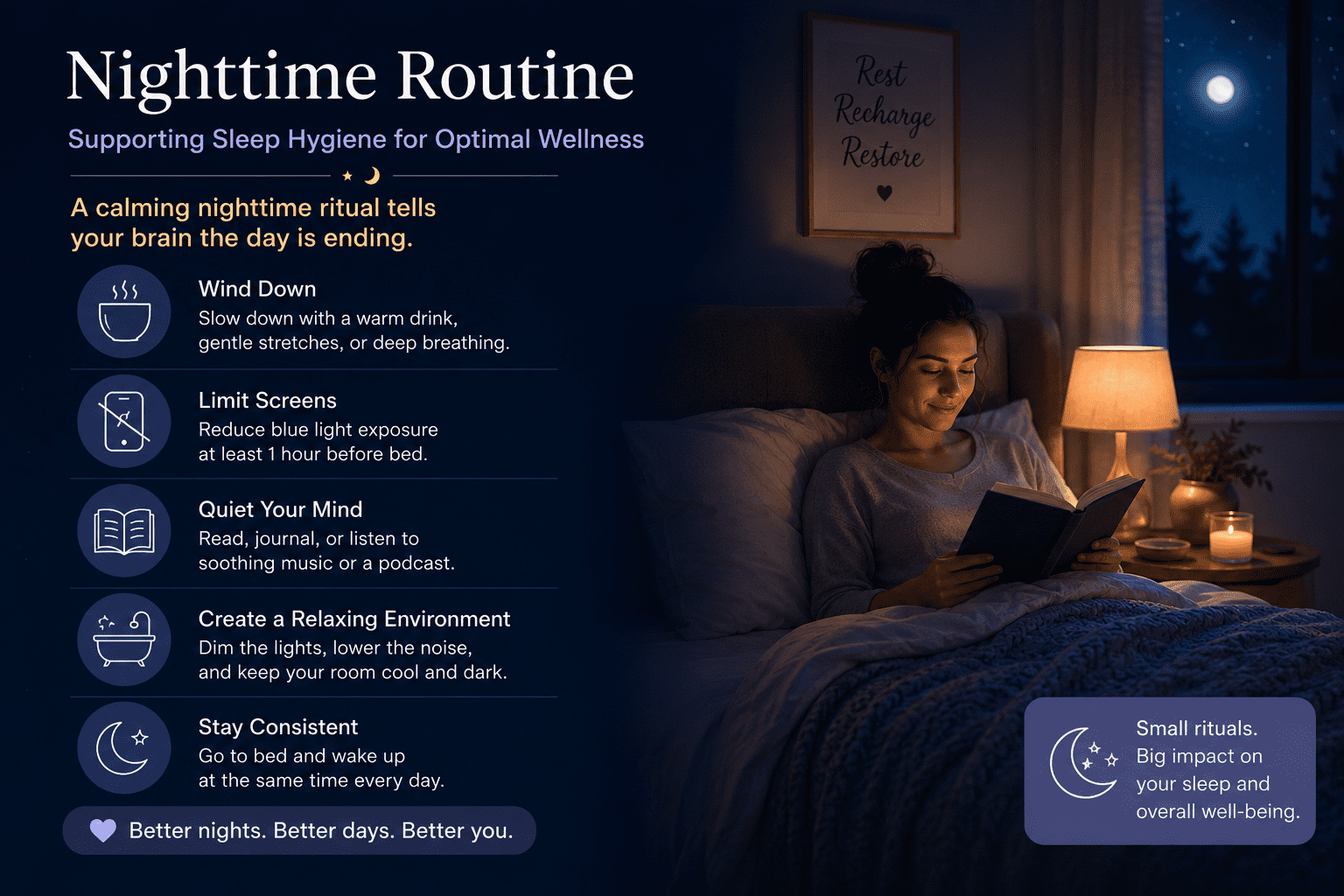
Phones and laptops emit blue light that suppresses melatonin. Reducing screen exposure during the final hour before bed dramatically improves sleep hygiene. If total digital exile sounds unrealistic, enable night mode or use blue light filtering glasses. This single habit transforms sleep hygiene for optimal wellness.
4. Create a Simple Night Ritual
The brain loves cues. A consistent pre-sleep ritual tells your nervous system that the day is ending. Examples include reading a book, stretching, journaling, or meditation. After a few weeks the brain begins associating the ritual with sleep — a powerful component of sleep hygiene for optimal wellness.
5. Avoid Large Late-Night Meals
Eating heavy meals right before bed forces the digestive system to work when the body should be winding down. The Mayo Clinic recommends finishing dinner two to three hours before bedtime for better sleep quality.

Final Thoughts on Wellness Assessments
Look, I’ve just spent several thousand words telling you what wellness assessments are, what they measure, what they get wrong, and where even I’ve stumbled with them. If you’ve made it this far, you’re either genuinely interested in understanding your own wellness or you have very unusual reading habits. Either way, the simplest step is the one most people skip. Just take one.
Not a perfect one. Not the most comprehensive one. Just a starting point that tells you something you didn’t know yesterday. Because that’s the thing about wellness assessments that even I, after 30 years in this field, am still learning: the value isn’t in the score. It’s in the honest conversation the score starts. With yourself. About yourself. Including the parts you’d rather not look at.
I’m still having that conversation. It’s not comfortable. But it’s better than the alternative, which is just not knowing and hoping for the best. The SAMHSA wellness framework and the CDC’s workplace health research both point toward the same conclusion: wellness assessments work when you act on what they reveal. Not before. Not without follow-through. But when you pair honest data with consistent action, the trajectory changes.
Start anywhere. Just start.
Frequently Asked Questions About Sleep Hygiene for Optimal Wellness
Sleep hygiene for optimal wellness refers to the daily habits and environmental factors (schedule consistency, light management, temperature, noise control) that facilitate high-quality, restorative sleep. Major health bodies like the CDC and NIH emphasize hygiene as a first-line approach before medication.
According to the National Institutes of Health, most adults require 7–9 hours of quality sleep per night. However, sleep hygiene for optimal wellness also improves the depth of sleep, meaning even those who currently sleep 6–7 hours can see major restoration gains by improving their bedtime environment and routines.
Yes. Research from Harvard Medical School shows that blue light exposure (from phones, laptops, LED bulbs) in the evening reduces melatonin production by about 50%. Protecting sleep hygiene for optimal wellness means using night mode, amber glasses, or eliminating screens 60–90 minutes before bed.
Absolutely. The American Psychological Association notes bidirectional links: poor sleep worsens mood disorders, and structured sleep hygiene reduces anxiety symptoms. Consistent sleep hygiene for optimal wellness stabilizes emotional reactivity and lowers cortisol, often within 2–3 weeks.
Most sleep experts, including the Sleep Foundation, recommend 65°F to 68°F (18–20°C). Cooler environments mimic the natural drop in core body temperature that initiates and sustains sleep. This small tweak is a cornerstone of sleep hygiene for optimal wellness.
Many people notice improved sleep onset and fewer awakenings within 4–7 days. However, full adaptation of sleep hygiene for optimal wellness typically yields significant benefits after 2–4 weeks of consistent practice, according to University of Pennsylvania behavioral sleep medicine trials.
Short power naps (20–30 minutes) are fine and can boost alertness. However, long or late-afternoon naps may fragment nighttime sleep. To preserve sleep hygiene for optimal wellness, keep naps before 3 PM and under 30 minutes.
Moderate exercise enhances deep sleep, but vigorous activity within 1–2 hours of bedtime can increase core temperature and adrenaline. For ideal sleep hygiene for optimal wellness, finish intense workouts at least 90 minutes before sleep. Morning or early afternoon exercise yields the strongest circadian benefits.