
This article is for educational and informational purposes only and is not medical advice. Consult a healthcare professional before making changes to your health routine.
Wellness Assessments: What They Measure and Why It Matters
A practical, no-nonsense guide to the tools that close the gap between “not dead yet” and actually thriving, with the honest limitations most articles skip.
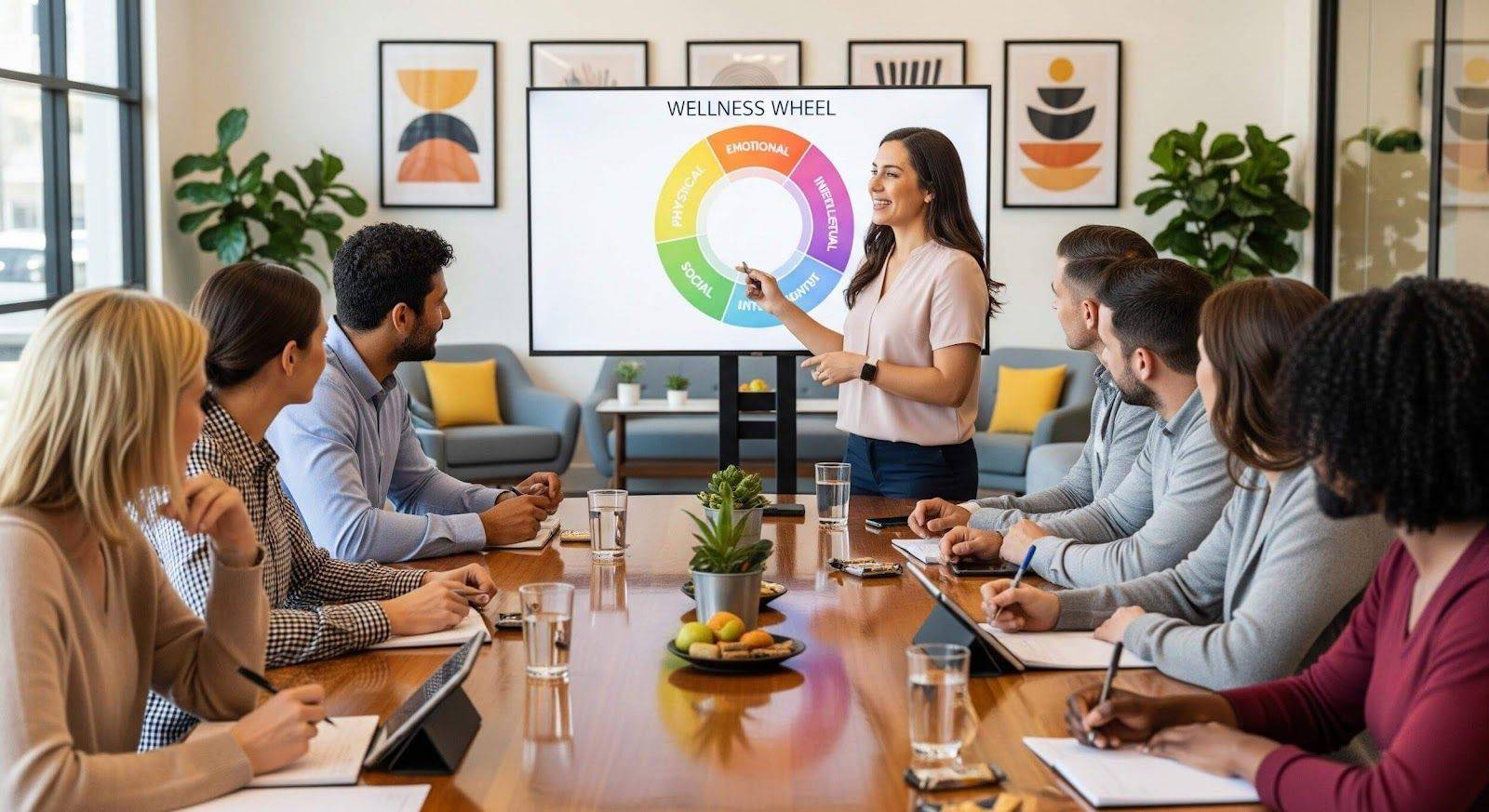
What Are Wellness Assessments, and Why Do They Matter?
What do wellness assessments actually measure?
Wellness assessments are structured evaluation tools that measure physical, mental, social, and lifestyle dimensions of health using frameworks like the 8 Dimensions of Wellness, backed by SAMHSA and university health systems nationwide. Unlike a standard medical checkup, they’re designed to identify the gap between where you are and where you could be, replacing vague health anxiety with actual data you can act on.
Key Takeaways
Wellness assessments close the gap between “alive” and “thriving” by replacing comfortable denial with actual data, including the data you didn’t want to see.
The 8 Dimensions of Wellness framework, covering physical, emotional, intellectual, social, spiritual, environmental, occupational, and financial health, is the gold standard approach, and it’s backed by SAMHSA research.
Mental health screening is often the most important component of a comprehensive wellness evaluation and, reliably, the most underfunded one.
Strong privacy protections aren’t just the ethical choice. They directly increase participation rates and improve the quality of data your program depends on.
The ROI on well-designed programs is real, but it depends entirely on what you do with the data. There is no vending-machine version of this, and any vendor who implies otherwise is lying to you.
Self-reported data has real limits. Pair questionnaires with objective measures and interpret every result with appropriate humility. One assessment on one bad Tuesday is not a verdict.
The Gap Between Alive and Thriving
Let’s get something straight: “not currently dying” is not a wellness strategy. It’s barely a status update. Yet that’s the bar most of us set for our health, somewhere between “functioning” and “hasn’t collapsed in a public place recently.” I include myself in that “us.” I’ve been in the wellness field for three decades and I still catch myself treating “not in pain right now” as a win, which says something unflattering about the industry I work in. Wellness assessments exist precisely because the gap between “alive” and “thriving” is roughly the size of the Grand Canyon, and most of us are standing on the wrong side pretending the view is fine.
These are structured evaluation tools that measure everything from cardiovascular fitness and nutritional status to mental resilience and whether you have meaningful human connections or just a group chat that sends memes. Think of them as a full-body audit conducted by someone who isn’t your mother but shares her gift for identifying exactly what you’re doing wrong.
The framework that actually makes sense here is the 8 Dimensions of Wellness, covering physical, emotional, intellectual, social, spiritual, environmental, occupational, and financial well-being. It’s a legitimate, research-backed framework used by SAMHSA and university health systems across the country. The premise is almost offensively obvious: you are not just a body that needs fuel and occasional repairs.
On a personal level, these assessments surface what you’ve been politely ignoring. The sleep debt you’ve been accumulating like it’s a loyalty program? Found that too. They create a baseline, track your trajectory, and replace the vague guilt that usually passes for health motivation with actual data. Less comforting. Considerably more useful.
For organizations, the value proposition shifts but the fundamental logic holds. Companies running systematic wellness evaluations tend to see higher program participation, because people engage more when you address their specific needs instead of mass-distributing a PDF titled “10 Tips for Hydration” as though dehydration is the workforce’s defining crisis. The CDC’s research on workplace health promotion is genuinely encouraging, though program design matters enormously. A poorly built wellness program doesn’t reduce healthcare costs. It just gives everyone a pedometer and a newsletter they immediately delete. I’ve watched that happen. More times than I’d like to admit.
What Wellness Assessments Actually Do
Modern wellness assessments aren’t one thing. They’re an entire ecosystem of evaluation methods, each designed to capture a different slice of the bewildering complexity that is human health. The best programs combine multiple approaches because, as it turns out, you cannot reduce a human being to a single number, no matter how much your insurance company wishes you could.
Holistic health assessments represent the gold standard, in theory. They treat your physical, mental, and social well-being as interconnected systems rather than isolated departments that have never been formally introduced, which is ironically how most healthcare actually operates. True wellness extends past the absence of disease into emotional resilience, social connections, meaning and purpose, and the hundred small lifestyle decisions that compound into long-term outcomes. You know, all the stuff you’ve been meaning to address “when things calm down.” (Things are never calming down. Do the assessment.)
In practice, a lot of what gets marketed as “holistic” is really just a longer questionnaire. The truly integrated ones, where your physical data talks to your mental health data talks to your lifestyle patterns, are rarer and more expensive than the brochures imply. I wish I had a tidier answer on that. I don’t. But knowing the difference between genuinely holistic assessment and a well-packaged checklist matters before you write the check.
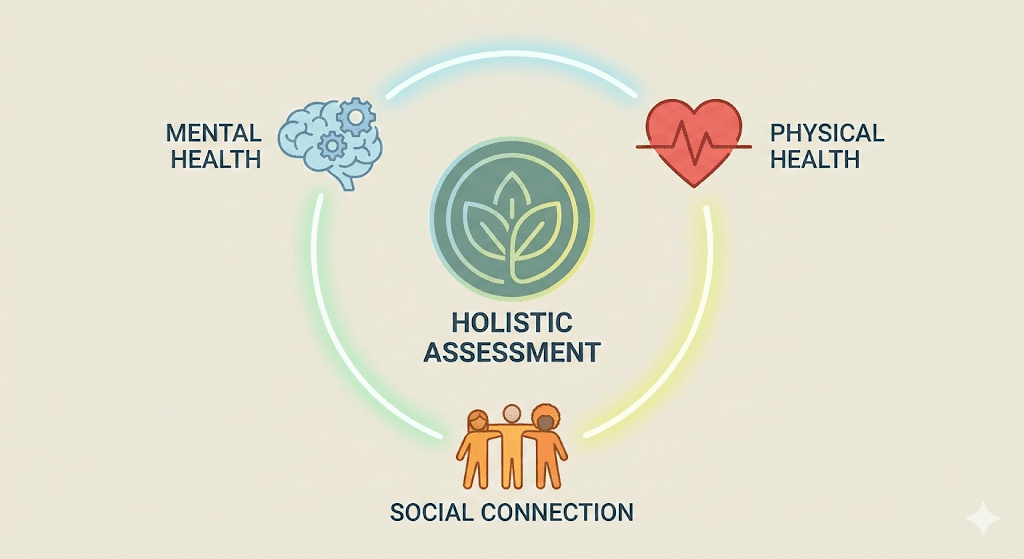
The Full Ecosystem of Evaluation Methods
A robust workplace wellness assessment typically layers several specialized components. Biometric screenings measure hard indicators, blood pressure, cholesterol, and body composition, providing objective cardiovascular risk data with the emotional sensitivity of a bathroom scale. Health risk assessments combine those biometrics with questionnaire data to flag individuals heading toward chronic conditions. Think of it as a weather forecast for your future medical bills.
Then come the specialty assessments. Ergonomic evaluations examine whether your workspace is methodically destroying your musculoskeletal system through a patient, years-long campaign of bad chair height and monitor placement. Stress management assessments identify psychological risk factors that won’t show up on a blood panel but will absolutely show up in your 3 AM ceiling-staring sessions and your increasingly creative excuses for calling in sick. Research from the APA on healthy workplaces confirms what most of us already know intuitively: psychological stress is a physical health problem.
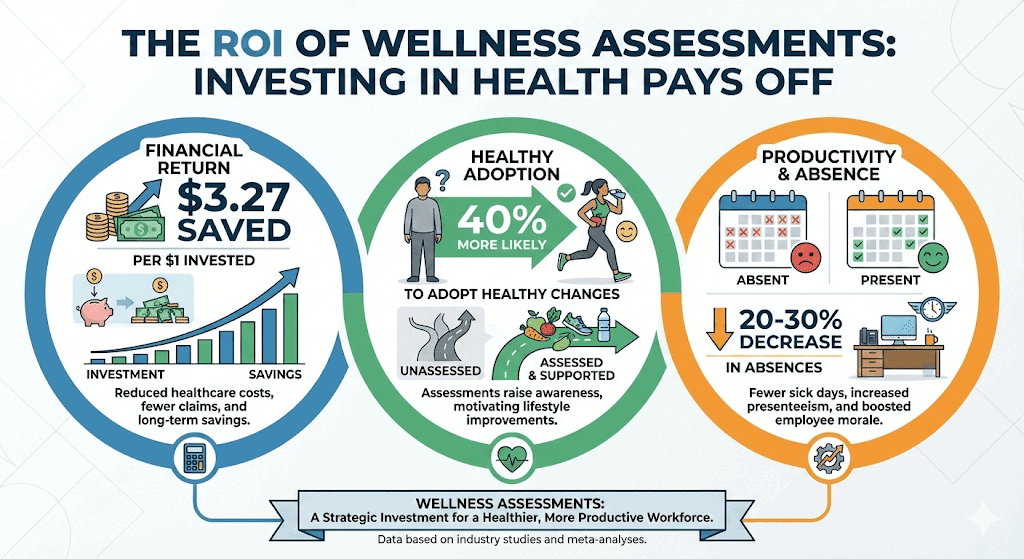
Organizations implementing comprehensive wellness programs often see measurable reductions in absenteeism. Research suggests 20-30% decreases and meaningful reductions in healthcare costs. “Often” is doing heavy lifting in that sentence. Some organizations see those numbers. Some don’t. The ones that don’t usually skipped the boring parts of implementation, and that’s the same story every time.
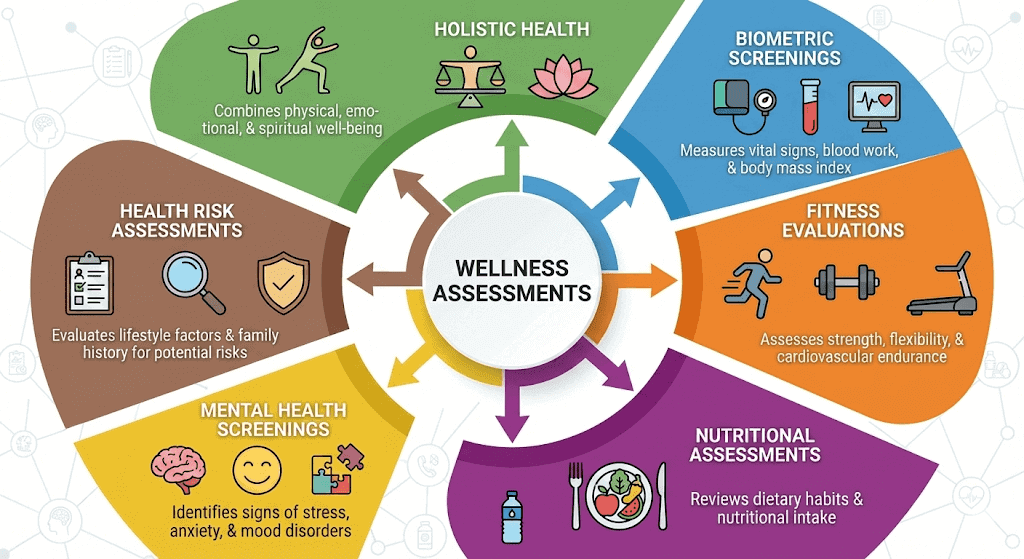
Fitness and Nutritional Evaluations
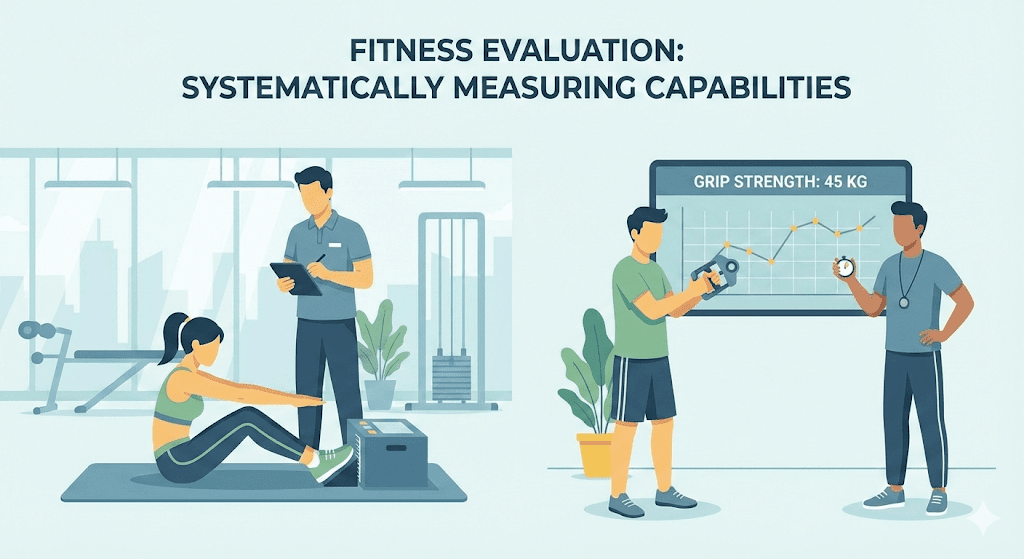
Fitness evaluations work by systematically measuring what your body can actually do right now. Not what it could do in college. Not what you told your doctor at your last checkup. Definitely not what your optimistic gym membership implies. These assessments examine cardiovascular fitness through VO2 max measurements or step tests (the NHLBI has solid resources on heart-healthy living if you want the clinical background), muscular strength via push-ups and grip strength tests, and flexibility using the sit-and-reach test that has been humbling desk workers since the invention of the desk.
Each component tells a different story about your physical wellness. Together, they assemble a narrative that’s usually less “inspiring comeback story” and more “well, at least now we know.” The real value is personalization. Generic workout routines are the wellness equivalent of a hospital gown: technically they cover the essentials, the fit is terrible, the dignity is questionable, and nobody chose this. The HHS Physical Activity Guidelines recommend at least 150 minutes a week of moderate aerobic activity, but that’s a starting point, not a prescription. Fitness evaluations let trainers design programs that target your specific weaknesses while building on your existing strengths, which is considerably more effective than the “do everything and hope” approach most people default to. Modern assessments have gotten impressively sophisticated, with wearable devices, bioimpedance scales, and digital movement analysis providing real-time tracking, though wearable accuracy varies wildly. I’ve worn three trackers simultaneously and gotten three different step counts, so take precision promises with appropriate salt.
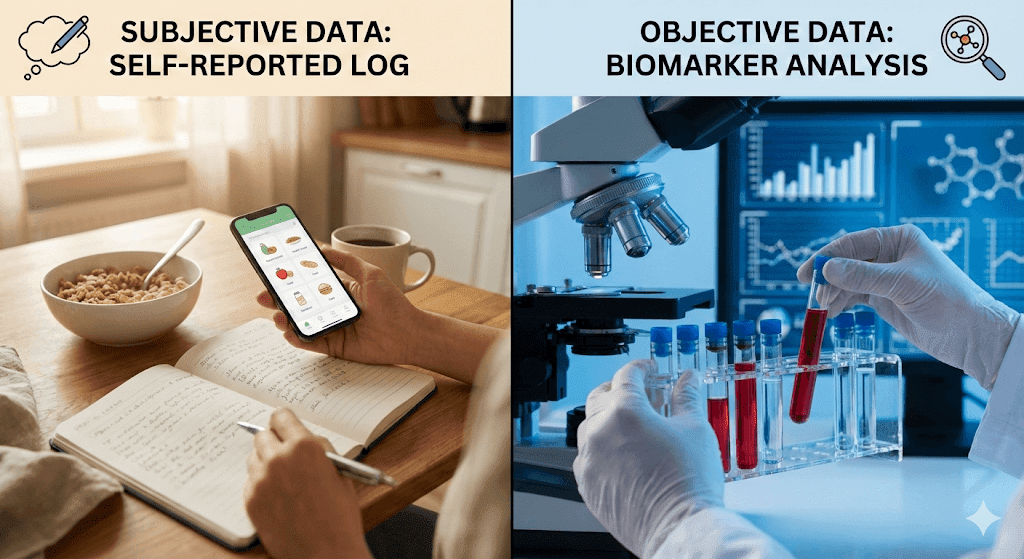
Nutritional assessments do something your calorie-tracking app fundamentally cannot: they tell the truth. These evaluations integrate multiple data sources, eating patterns, nutrient intake, and metabolic indicators, to reveal what’s actually happening inside your body, including the deficiencies you didn’t know you had because you assumed feeling exhausted all the time was just “being an adult in the modern economy.” I recommended nutritional assessments for years before actually getting a thorough one myself. When I finally did, my vitamin D levels were in the basement. Me. The wellness guy. Walking around telling people to get their blood work done while my own body was operating in a nutritional deficit. The shoemaker’s children, and all that.
The methodology layers several proven tools with solid backing from organizations like the USDA Food and Nutrition Information Center. Dietary recalls capture detailed food consumption over 24-72 hours, which is where most people discover that their diet is significantly more chaotic than they’d prefer to admit out loud. Biometric indicators, blood lipid profiles, vitamin D levels, and inflammatory markers, provide objective data that your food diary cannot argue with, no matter how creatively you categorized that 11 PM cheese plate as a “protein snack.” Growing research on food and brain health, including Harvard Health’s work on foods linked to better brainpower and the MIND diet research from Rush University, is genuinely compelling. Not magic. Not cure-alls. But compelling enough to pay attention to. We’ve got a deeper breakdown on fueling your wellness journey and understanding macronutrients if you want the practical side.
Mental Health Screenings
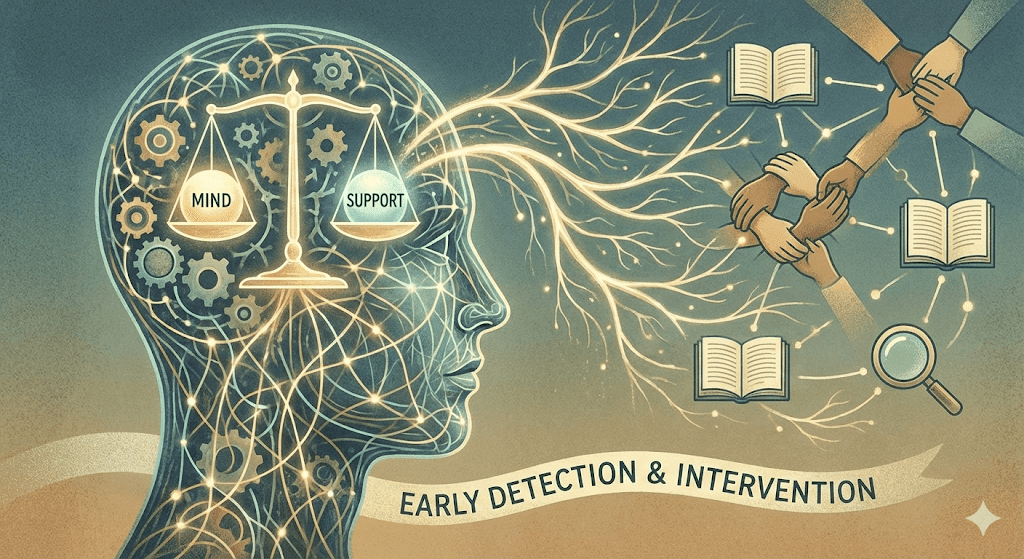
Mental health screenings are arguably the most important component of a comprehensive wellness program, which is why they’re also the component most likely to be crammed into the corner of the budget like a houseplant everyone forgot to water. These screenings use validated assessment tools, the PHQ-9 for depression, the GAD-7 for anxiety, and various stress inventories (NIMH has a solid overview of mental health resources), to evaluate psychological well-being and catch problems while they’re still problems and not full-blown crises. They address the dimension that physical-only evaluations miss entirely, which is a bit like inspecting a house and deciding the foundation isn’t really your department.
Early detection is everything here. When organizations include mental health components in their wellness assessments, they create opportunities to identify burnout, anxiety, and depressive symptoms during the stages when interventions actually work, before someone’s sending increasingly unhinged emails at 2 AM and their coworkers are having whispered conversations in the break room. This means timely referrals to employee assistance programs and workplace resources, counseling services, and appropriate providers.
The Harvard Study of Adult Development has decades of data showing that social connection and emotional well-being aren’t soft extras. They’re primary predictors of health outcomes and longevity. Mental health screenings combined with comprehensive assessment protocols amplify everything else you’re doing, creating alignment between physical and psychological wellness instead of two parallel programs that have apparently never been formally introduced. For the long-term picture of keeping your mind sharp, our piece on cognitive wellness over time gets into the specifics.
I want to be direct about the elephant doing yoga in the room: workplace mental health stigma is real, persistent, and the single biggest barrier to effective screening. The organizations that handle this well are the ones that normalize participation, protect privacy like their reputation depends on it (because it does), and demonstrate through consistent action, not a single all-hands meeting in May, that engaging with mental health resources won’t secretly appear on your performance review. Early in my career, I treated mental health as kind of a footnote in wellness programs, an “oh, and also” tacked onto the physical components. I regret that. It took me longer than it should have to understand that the mental dimension isn’t supplementary. It’s foundational.
Implementing a Program That Works
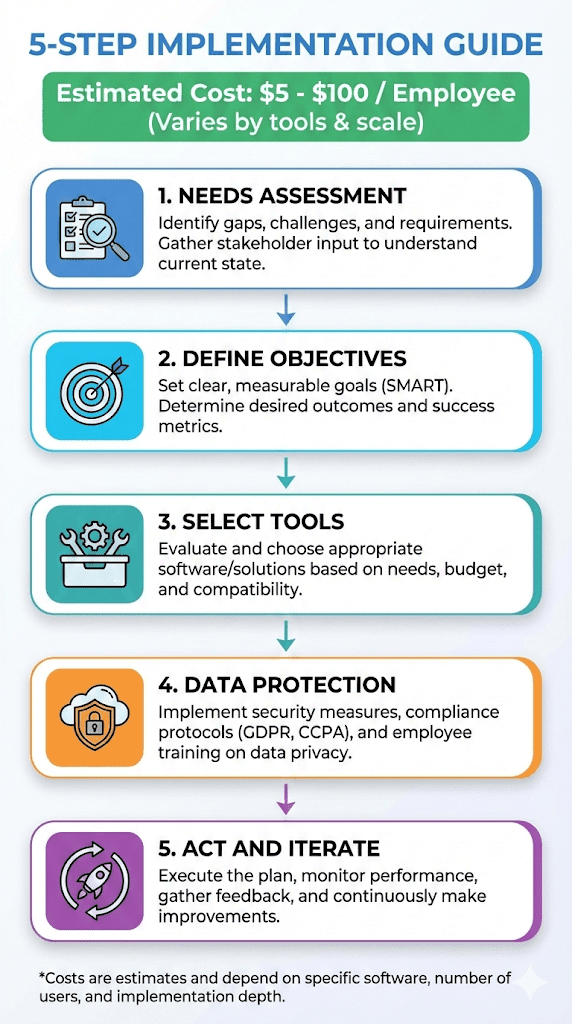
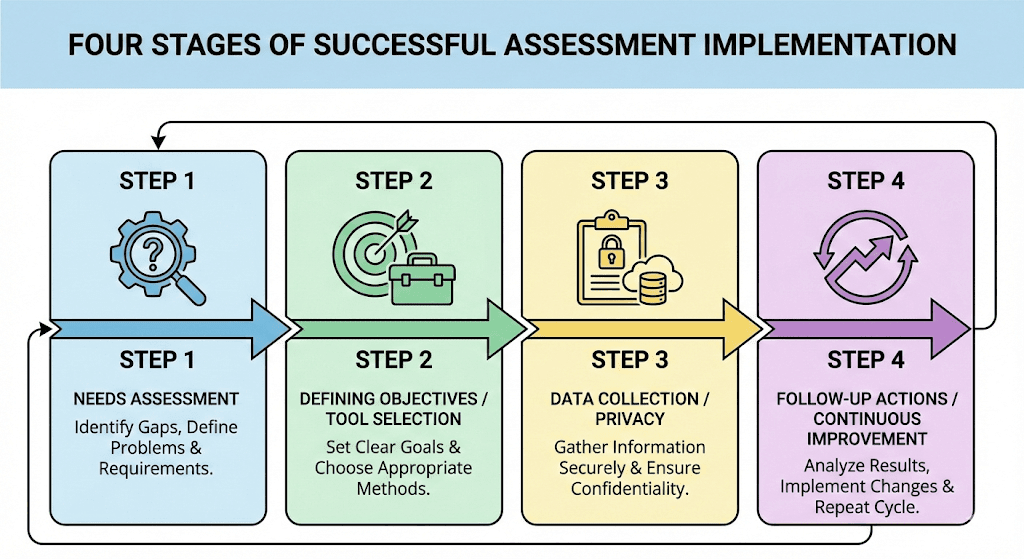
Implementation is where good intentions become expensive lessons. The research on successful wellness programs doesn’t point to the most sophisticated tools or the biggest budgets. It points consistently to the organizations that did the boring foundational work first, and took the results seriously when those results were uncomfortable. I’ve helped design programs that glossed over this part because the client was eager and the needs assessment felt like bureaucratic friction. The programs underperformed. Because of course they did. We built for assumptions instead of reality.
1. Start with a Real Needs Assessment
Identify your specific health priorities and workforce demographics before you select a single tool. This is the eat-your-vegetables step. It’s not exciting and it doesn’t photograph well for the company newsletter, but it determines which assessment types will deliver actual insights for your actual people, and it prevents you from spending six figures on a program designed for a workforce you don’t have. I have watched organizations skip this step. I have watched it go badly every single time.
2. Define Objectives That Aren’t Wishes
“Make employees healthier” is not an objective. It’s a wish. Are you targeting healthcare cost reduction? Productivity improvement? Specific health risks that keep showing up in your claims data? Pick your primary focus and be honest about it, because trying to solve everything simultaneously typically solves nothing. Once objectives are defined, select assessment tools that match your goals, budget constraints, and employee demographics. Worksite wellness implementation requires balancing quantitative metrics with qualitative feedback, because numbers without context are just decorative math, and context without numbers is just a very expensive opinion.
3. Select Validated Tools, Not Horoscopes with Better Branding
Look for assessments backed by peer-reviewed research and validated across diverse populations. If a vendor can’t point you to the evidence base behind their product, and the best they can offer is “our clients love it” and a testimonial from someone named Brad, that’s not an assessment tool. That’s a horoscope with better branding. Budget constraints will shape your options: basic online questionnaires run $5-15 per employee annually, while comprehensive biometric screening platforms can hit $50-100 per participant. Neither price point is inherently wrong. What matters is whether the tool matches your objectives, not whether it impresses people during the budget presentation. Popular platforms include Wellness Corporate Solutions, Virgin Pulse, and the CDC’s Workplace Health Promotion guidelines, which are available without a sales call. Also: don’t overlook accessibility. Multilingual capabilities, mobile optimization, and varying technology literacy levels all matter. The most elegant platform in the world is worthless if half your employees can’t figure out the login screen.
4. Build Follow-Up Into the Structure From Day One
Assessment results without structured follow-up actions are the wellness equivalent of getting a diagnosis and walking out of the doctor’s office without filling the prescription. Develop intervention strategies that address identified health risks while respecting individual privacy. Regular reassessment cycles track progress and prevent the whole initiative from calcifying into “that thing we did in 2024.” The organizations that see meaningful outcomes treat the follow-up as the main event, not the administrative afterthought. Data doesn’t fix culture. It exposes it. What you do after the exposure determines whether you spent the money well.
Privacy, Data, and Trust
Collecting sensitive health information requires safeguards that are robust, comprehensive, and treated as foundational infrastructure, not a compliance checkbox that someone in IT handles between lunch and their 2 o’clock meeting. Organizations need clear data governance policies specifying who can access wellness information, how long it’s retained, and under what very specific circumstances it can be shared. Encrypted data storage, limited access protocols, and clear consent procedures written in language actual humans can parse without a law degree are table stakes. Any vendor that treats these as premium features is a vendor you should move away from at speed.
HIPAA compliance becomes especially critical when programs involve healthcare providers or collect protected health information. Even wellness initiatives that seem purely voluntary can trigger HIPAA requirements if they create, receive, or transmit health information electronically. This is emphatically not the area for creative interpretation or optimistic assumptions. Get qualified legal counsel, not a blog post. The FTC’s guidance on health data privacy is a useful starting point, not a finish line.
The counterintuitive payoff: robust privacy protections actually increase participation. Employees engage more honestly when they trust their information is secure. The organizations that cut corners on data protection aren’t just creating legal liability. They’re poisoning the data quality their entire program depends on. Trust is the infrastructure. Everything else is built on top of it. An organization I consulted with had a data incident, nothing catastrophic, but enough to shake employee confidence. Participation in their wellness program dropped by nearly half overnight. It took two years to rebuild trust. Don’t learn this one the hard way.
Misconceptions, Limitations, and What the Numbers Show
Here’s where I break from the typical wellness article playbook. Most pieces treat limitations as a brief, obligatory paragraph at the end, a throat-clearing “to be sure” before moving on. That’s intellectually dishonest. The limitations are real. They affect how much you should trust any given result. And some of the persistent myths about wellness assessments, the wellness industry has earned through its own mistakes.
The Privacy Invasion Myth
Many people believe wellness assessments require handing over their complete medical history. They don’t. Effective assessments focus on aggregated, anonymized data patterns, general wellness indicators like stress levels, sleep quality, and work-life balance satisfaction, without requiring specific diagnoses or personal medical histories. That said, the fear isn’t entirely irrational. There have been cases where health data was mishandled. The myth persists partly because trust hasn’t always been earned. Dismissing the concern without acknowledging the history is its own kind of bad faith.
The Physical-Health-Only Misconception
If your assessment only checks blood pressure and BMI, it’s not a wellness assessment. It’s a physical with better marketing. Modern wellness evaluations recognize that comprehensive well-being encompasses mental health, social connections, financial stress, and career satisfaction alongside physical indicators. Your surroundings shape your health too, something environmental assessments are increasingly capturing. The 8 Dimensions framework exists precisely because no single domain operates in isolation from the others.
The Size Barrier Fallacy
Small and medium-sized organizations often see proportionally greater returns from wellness assessments because they can implement changes faster based on findings. Bureaucracy is the enemy of agility, and smaller organizations have less of it. Digital platforms now offer assessment solutions that organizations of virtually any size can afford. The question isn’t whether you can afford wellness assessments. It’s whether you can afford not having the data. The Gallup workplace research on engagement and retention is worth reviewing here, because the costs of ignoring employee health are not theoretical.
The Self-Reported Data Problem (and the False Precision Trap)
Self-reported data, which forms the backbone of most assessments, suffers from social desirability bias. People give answers they think are “correct” rather than truthful responses about their actual behaviors. Your employee who reports exercising “3-4 times per week” might be averaging once, optimistically. I know this because I’ve done it. You probably have too. Cultural sensitivity is another consideration that gets lip service more often than actual attention: standard assessment tools may not account for diverse cultural perspectives on health or comfort levels with sharing personal information. Most widely-used tools were designed primarily by and for a fairly narrow demographic. The field is improving on this. It’s not there yet. And there’s a trap I rarely see discussed: wellness assessments can create a false sense of precision. You get a number, a color-coded risk level, and it feels definitive. It isn’t. These are snapshots, taken on one day of your life. If you caught someone on a bad Tuesday, the results look different than a good Thursday. Useful measurement, not perfect measurement. Resist treating any single data point as gospel.
Final Thoughts
Look, I’ve spent several thousand words telling you what wellness assessments are, what they do, what they get wrong, and where even I’ve stumbled with them. If you’ve made it this far, you’re either genuinely invested in understanding your own wellness or you have very unusual reading habits. Either way, the thing that 30 years in this field keeps reminding me is this: the value isn’t in the score. It’s in the honest conversation the score starts.
I’ve taken my own assessments and been surprised. Not pleasantly. There’s a specific kind of humility that comes from spending your career telling people to prioritize sleep and then discovering your own sleep quality scores like a C-minus. My vitamin D was in the basement. Me. The wellness guy. Walking around telling people to get their blood work done while my own body was running a nutritional deficit. The shoemaker’s children, and all that.
The business case is real. Organizations implementing comprehensive assessment programs typically report a 20-30% decrease in unscheduled absences, and the CDC’s worksite wellness research suggests employees who participate are roughly 40% more likely to adopt healthy lifestyle modifications within six months. The $3.27 return per dollar invested gets cited often, including by me, and the methodology behind that number has limitations I don’t always mention when I’m making a point. The directional truth holds: well-designed programs save money. Treat the specific figure as directional, not gospel, and your expectations will be set correctly. If you want to understand the neuroscience of why assessments drive behavior change at all, our piece on neuroscience-backed habit formation gets into the mechanics.
The simplest step is the one most people skip. Just take one. Not a perfect one. Not the most comprehensive one. Just a starting point that tells you something you didn’t know yesterday. We’ve got a Wellness Assessment right here on the site, mercifully short, not asking for your social security number, and capable of giving you a sense of which dimensions of your life could use some attention. Or possibly a lot of attention. No judgment here.
Your environment shapes your wellness too. Start anywhere. Just start.
Frequently Asked Questions About Wellness Assessments
A wellness assessment is a structured evaluation tool that measures multiple dimensions of your health, including physical fitness, nutrition, mental health, stress levels, sleep quality, and social connections. Unlike a standard medical checkup designed to detect and treat illness, a wellness assessment is designed to identify the gap between where you are and where you could be. The 8 Dimensions of Wellness framework, backed by SAMHSA, is one of the most comprehensive evidence-based approaches available.
A doctor’s visit is primarily designed to detect and treat illness. A wellness assessment is designed to evaluate your entire health picture proactively, often before symptoms develop. It combines biometric data with lifestyle questionnaires, mental health screenings, and sometimes occupational and financial wellness components that a standard physical never touches. The short version: a physical tells you what’s wrong. An assessment tells you what’s trending in a direction you might not like, while there’s still time to do something about it.
Well-designed programs use encrypted data storage, limited access protocols, HIPAA compliance where applicable, and clear consent procedures. That said, employee skepticism about health data privacy isn’t irrational. A history of poorly handled data has made people reasonably cautious. The organizations that protect privacy rigorously end up with better participation rates and better data quality. Trust is the infrastructure. Everything else is built on top of it, and once you’ve lost it, the rebuild takes years.
For most people, an annual comprehensive assessment makes sense, with shorter check-ins quarterly if you’re actively working on specific health goals. Organizations typically run full biometric screenings once a year and track progress at six-month intervals. The goal is a trajectory, not a single data point. One assessment on one bad Tuesday is a snapshot, not a verdict. The value compounds over multiple assessment cycles as patterns become visible.
Yes, when implemented thoughtfully. The longer answer: it depends entirely on what you do with the data. Assessments that result in targeted interventions and structured follow-up show real outcomes. CDC research points to 20-30% reductions in absenteeism and a return of $3.27 per dollar invested in well-designed programs. Assessments that collect data nobody acts on? Those are expensive filing cabinets. The research on failure cases is less visible than the success stories, because failure cases don’t show up in vendor brochures. But they exist. The difference is almost always implementation quality.
A biometric screening measures objective physical indicators: blood pressure, cholesterol, glucose, and body composition. Numbers. A health risk assessment (HRA) combines those biometrics with questionnaire data about lifestyle, stress levels, sleep quality, and health history to build a fuller risk profile. The biometric screening tells you what your body is doing right now. The HRA attempts to tell you where it’s headed if current patterns continue. Both are more useful together than either is alone.