This article is for educational and informational purposes only and is not medical or mental health advice. Habit difficulties can be affected by health conditions, medications, stress, sleep, and environment. Consult a qualified professional when symptoms or behavior changes cause concern.
Brain-Based Habit Hacks: 10 Neuroscience-Backed Ways to Build Healthier Habits
⭐ TL;DR
Habits are learned patterns, not moral report cards. The brain repeats behaviors that are easy to cue, immediately rewarding, and practiced often enough to become efficient.
-
Make the first action small, obvious, and attached to something you already do.
-
Use immediate rewards and low-pressure tracking so repetition feels useful instead of punitive.
-
Expect disruption and prepare a smaller fallback behavior. Missing once is an event, not an identity.
A practical look at how cues, rewards, identity, environment, and repetition shape behavior, without pretending your brain is a productivity app with legs.
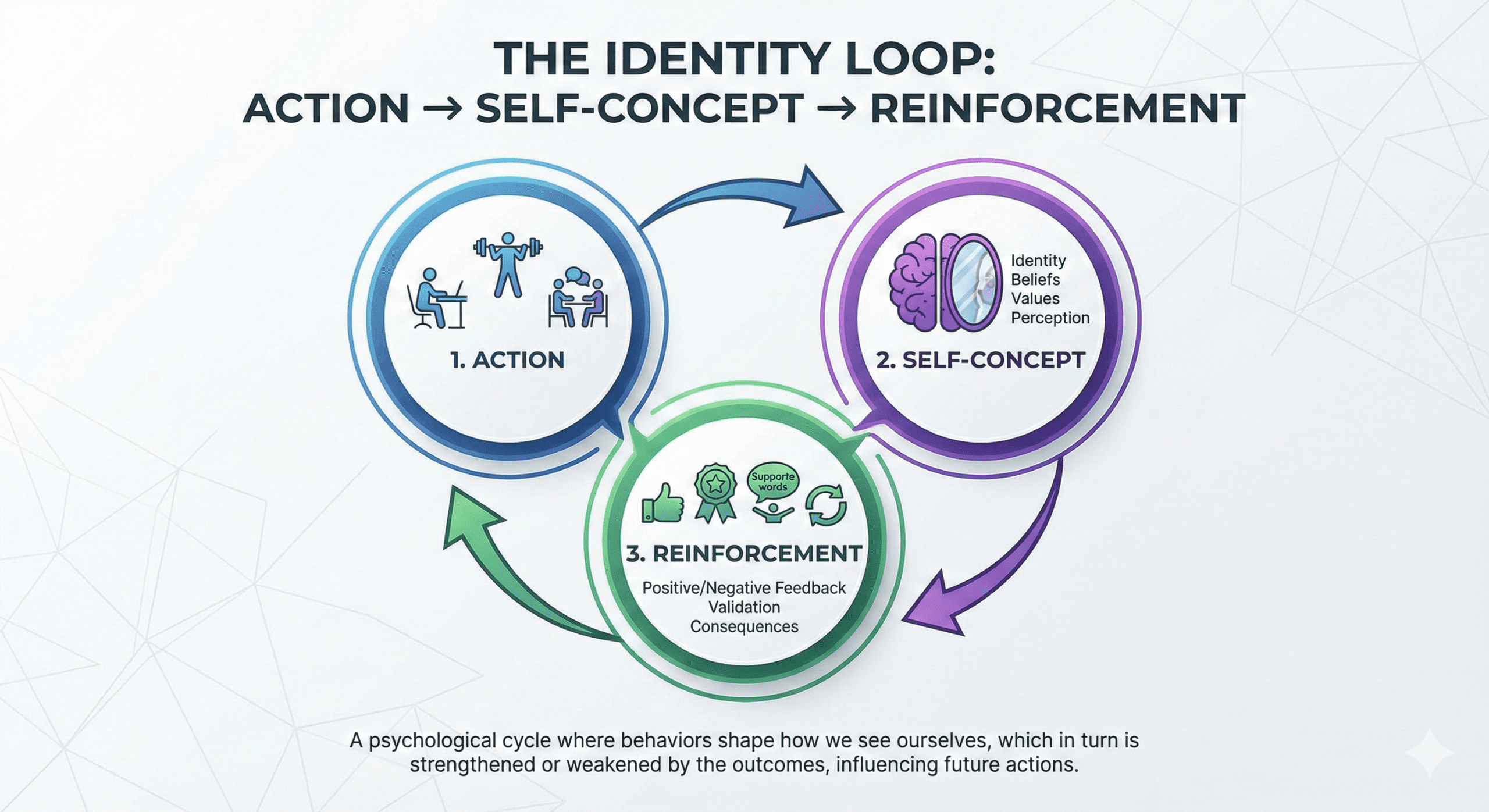
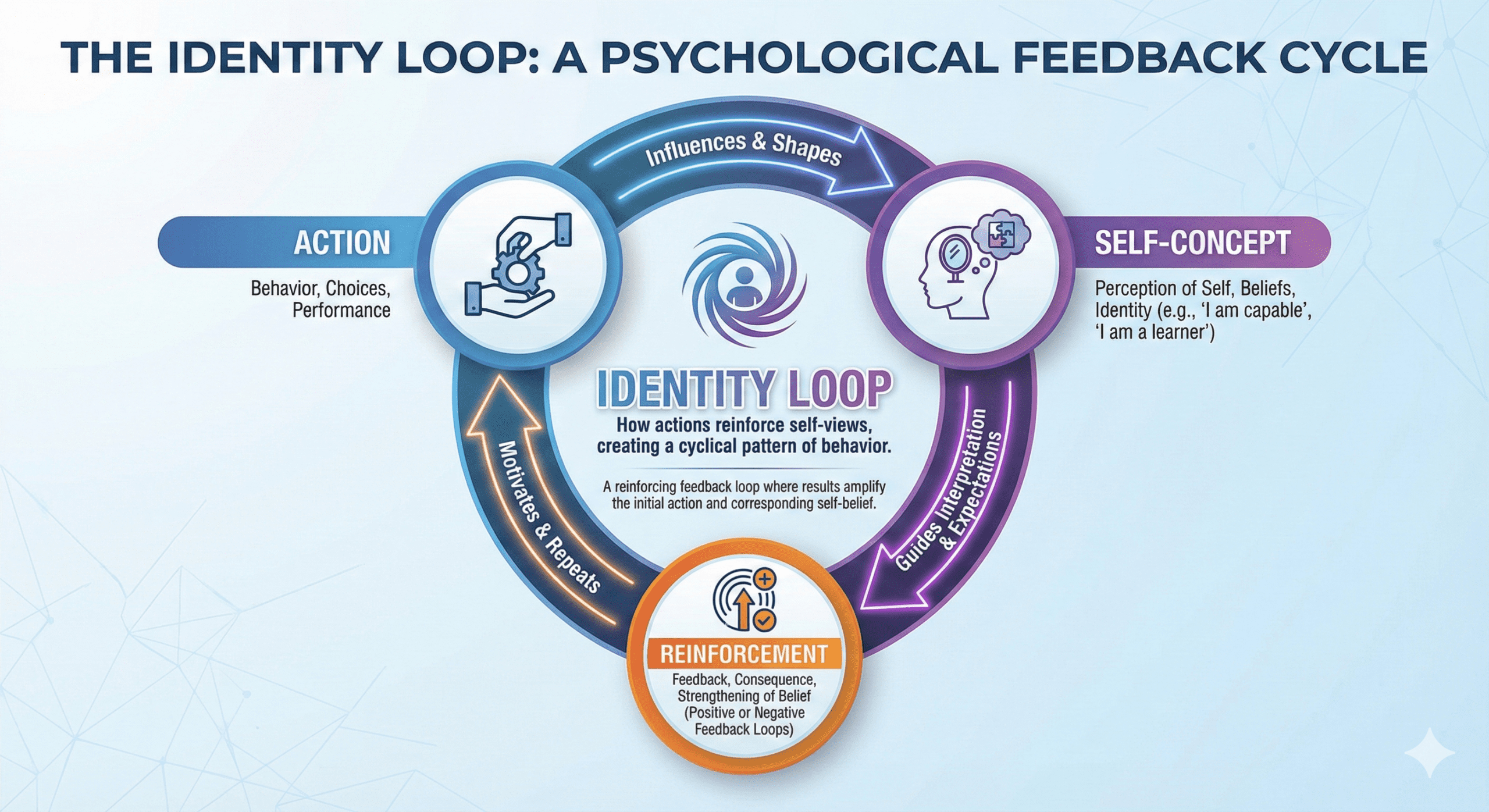 Habits strengthen through repeated interaction among action, self-concept, and reinforcement.
Your brain favors efficiency, not inspirational speeches.
How can neuroscience help build healthier habits?
Neuroscience suggests that habits become easier when a clear cue leads to a small behavior followed by a meaningful reward. Repetition gradually reduces the need for deliberate effort, while environment, stress, identity, and social context influence whether the loop survives real life.
Starting friction matters. A two-minute action is easier for the brain to repeat than a heroic plan designed during a burst of optimism.
Immediate feedback teaches faster than distant rewards. The brain is impatient, which explains both habit loops and most of the internet.
Environment often beats willpower because visible cues and easy access reduce the number of decisions required.
A lapse is information. A prepared fallback prevents one disrupted day from becoming a ceremonial abandonment of the entire plan.
You don’t need more willpower. You need insight into how your brain actually works.
If you’ve ever tried to “just be more disciplined” and crashed spectacularly by lunchtime, good news: that wasn’t your fault. Hardwired neural circuits, reward systems, and survival-first decision engines determine a lot of your behavior long before conscious intention does.
This article isn’t about “eat kale and wake up at 5 AM.” It’s about how to build habits that work with your brain, not against it.
Every one of these hacks is rooted in neuroscience research from government and university sources.
How Brains Form Habits (Neurobiology 101)
Before we dive in, here’s the condensed science baseline you need: Habits are not a personality trait. They are learned neural patterns in the brain’s basal ganglia, deep, ancient structures optimized for efficiency and automaticity. That’s why brushing your teeth feels effortless, but starting a new gym habit feels like negotiating peace treaties.
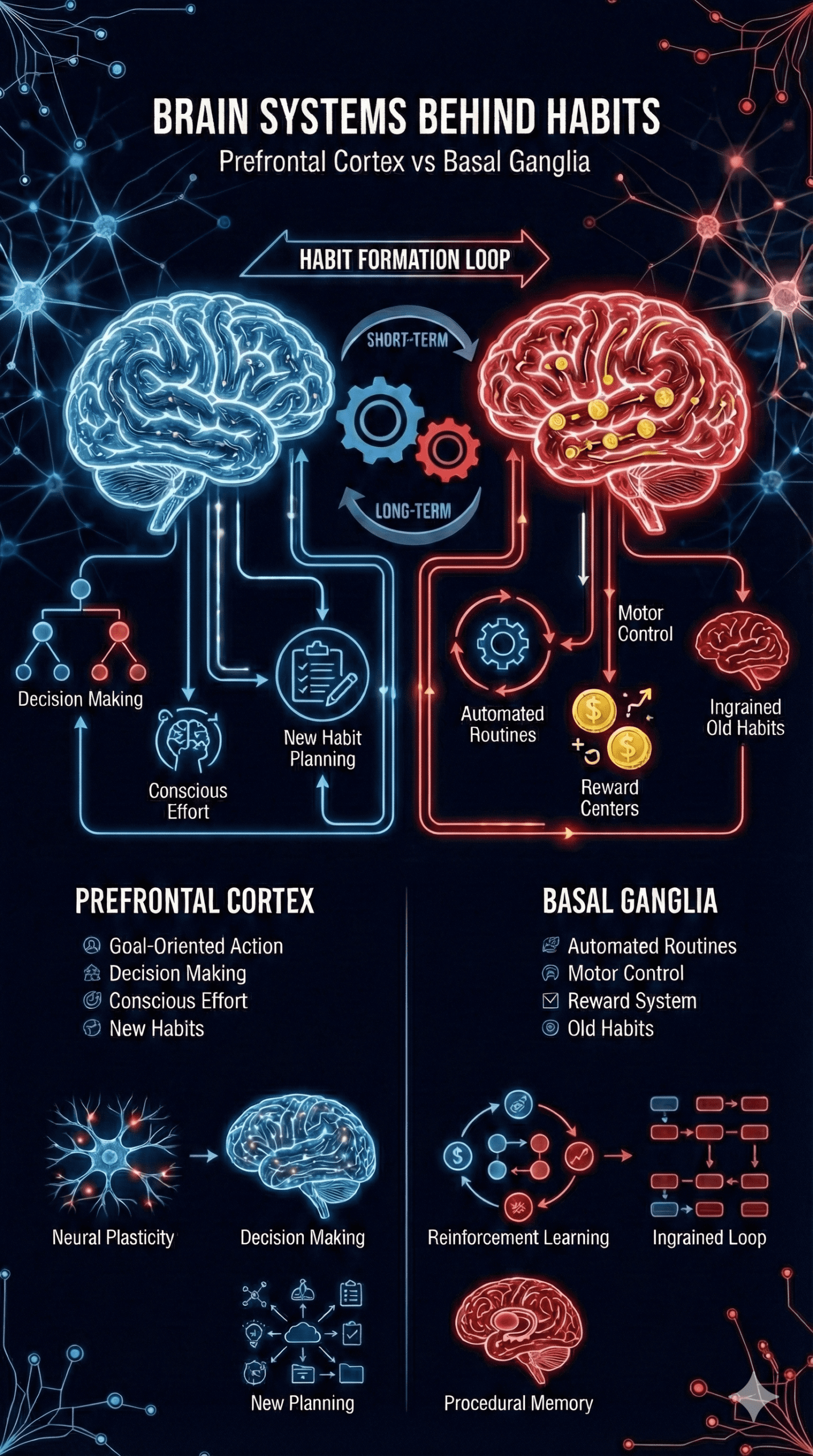
This visual would show how habits move from effortful decisions (prefrontal cortex) to automatic loops (basal ganglia) with repetition. See NIH + MIT research for basis.
Hack #1 Make Starting So Easy Your Brain Doesn’t Notice
Your brain is an efficiency machine. It hates untested beginnings because they demand energy and uncertainty. The more energy a task appears to require, the more resistance your brain generates.
That’s because new behavior engages the prefrontal cortex, which is metabolically expensive relative to automatic systems. When you drop your sneakers on the floor instead of promising a full run, you drastically lower the activation energy your brain perceives.
Research anchors: Neural pathways for habits become automatic with repetition and energy efficiency, basal ganglia take over when the brain detects repetition and reward.
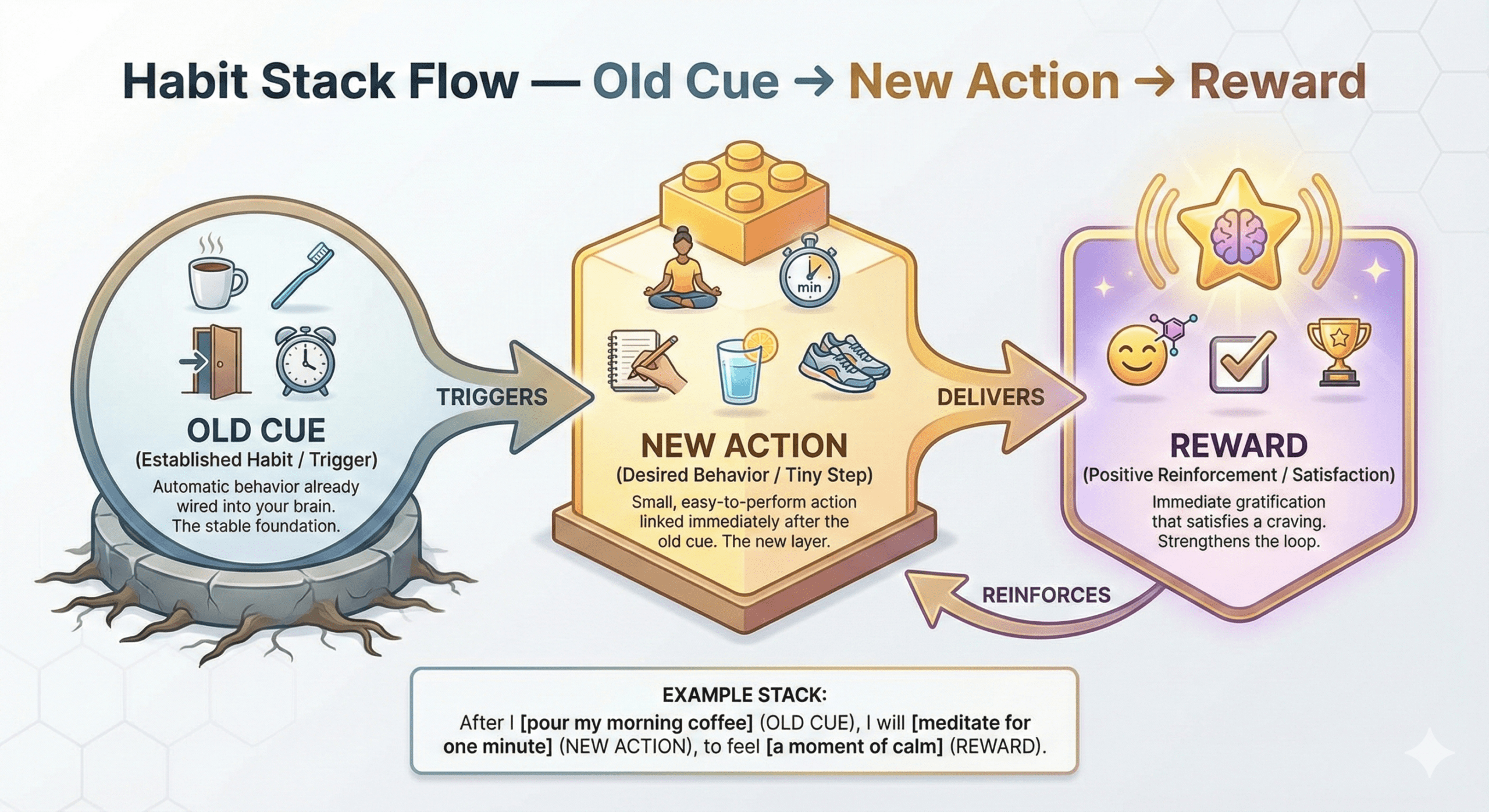
Hack #2 Stack New Habits on Old Neural Highways
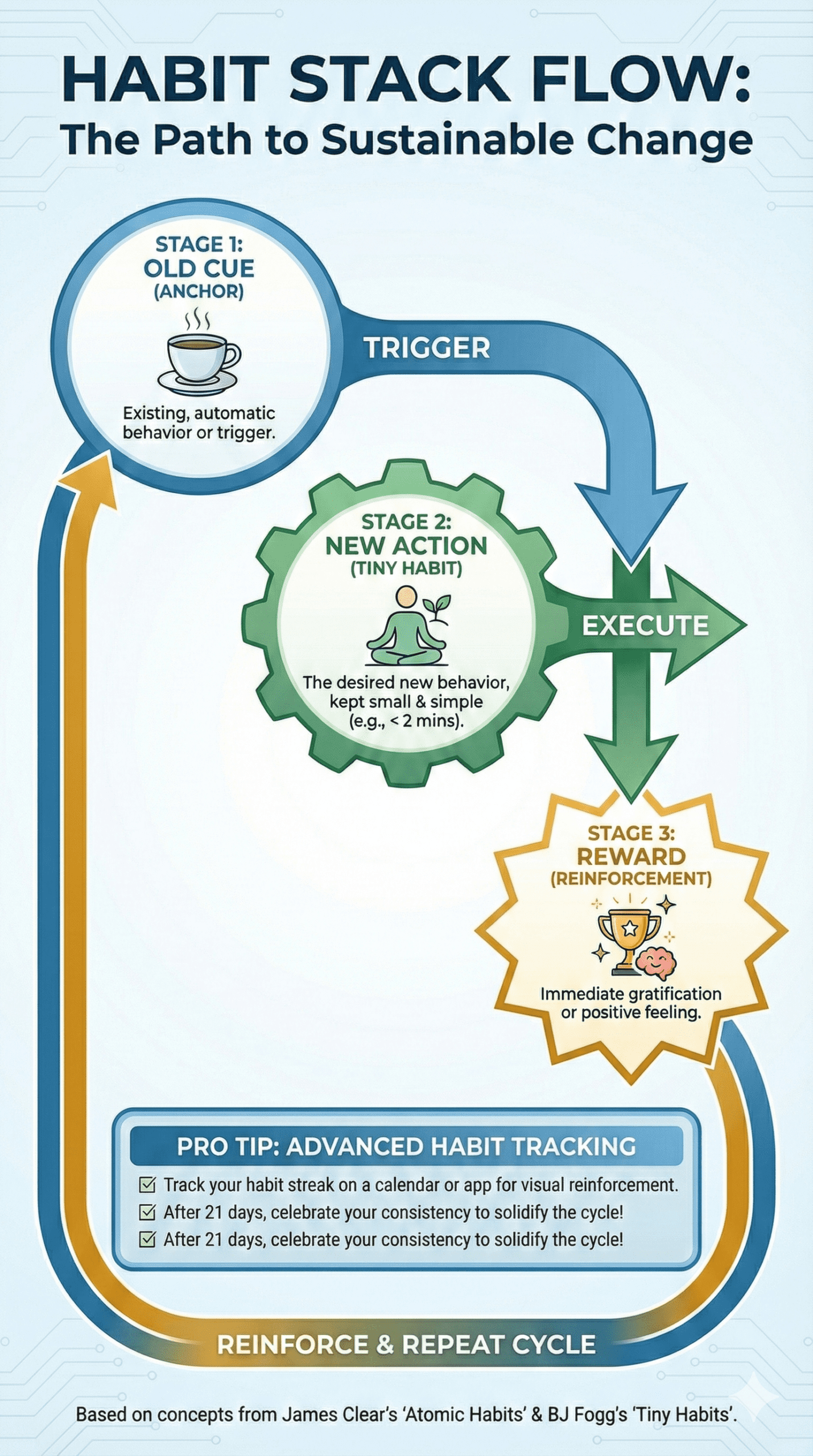
Your brain excels at linking behaviors that occur in sequence. This is the root of what psychologists call habit chaining, pairing a new behavior with an existing one so that one triggers the other automatically.
MIT neuroscience research shows that habits become “wired in” deep brain structures once they’re stable enough that the prefrontal cortex steps back.
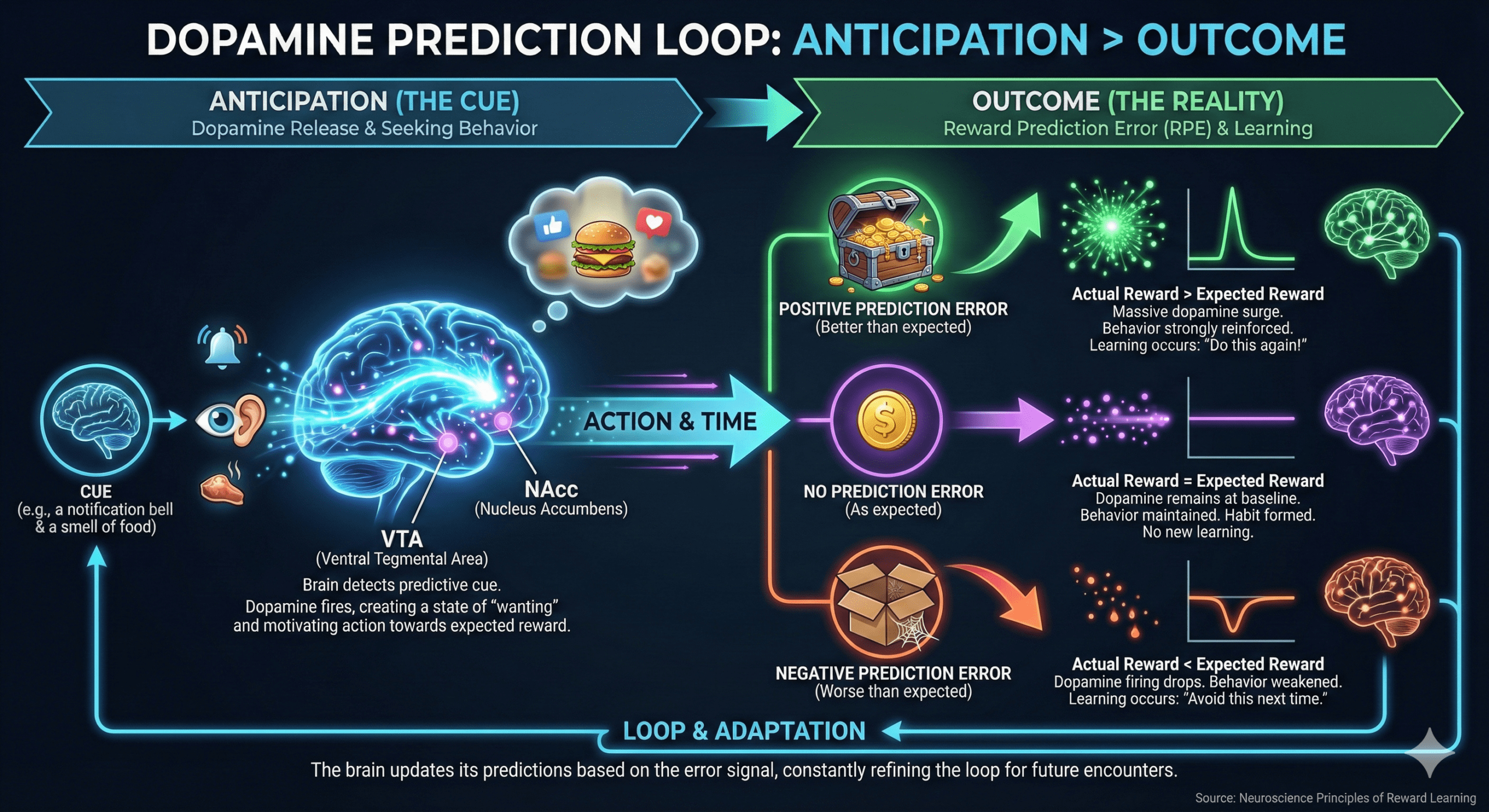
Hack #3 Use Immediate Rewards So Dopamine Says “Do That Again”
Reward prediction is central to habit formation. The dopamine system doesn’t deliver its teaching signal only after good outcomes, it spikes when you predict a reward. This is why you can feel the urge to check your phone before you look at it: dopamine has already anticipated the social or novelty hit, and your brain reinforces the loop.
To build healthier habits, pair them deliberately with an immediate, enjoyable experience, music during a walk, a tasty treat after a workout, a warm shower after meditation. Your brain begins to associate the behavior with reward sooner.
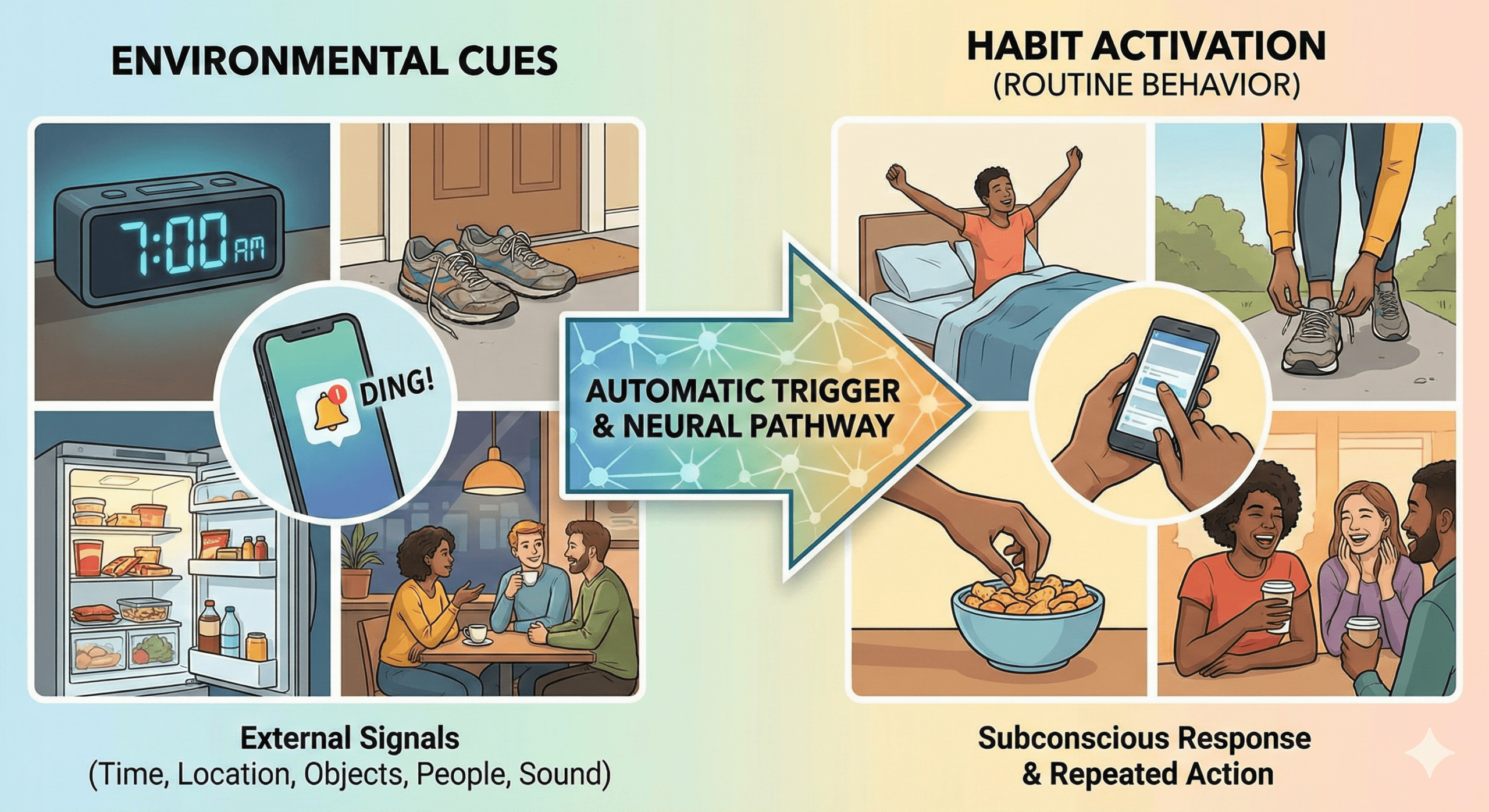
Hack #4 Design Your Environment So the Brain Doesn’t Have to Decide
Decision fatigue is real, and it’s not about character. Every choice you make drains cognitive energy. The prefrontal cortex struggles when overloaded, and your brain defaults to what’s easy, not what’s optimal.
If healthier choices are visible and convenient, and unhealthy ones are hidden or inconvenient, your brain chooses the effortless path: and that’s exactly what you want. This idea is rooted in cognitive load and decision neuroscience widely documented across universities.
Hack #5 Encode Habits as Identity, Not Goals
Neuroscience shows that behaviors tied to self-image engage self-referential processing areas of the brain. Identity-linked habits aren’t optional; they become part of how your brain defines “you.” Instead of trying to hit goals, reframe habits as who you are becoming: your brain stores that more deeply and resists change less.
Hack #6 Shorten the Time Horizon to Calm the Nervous System
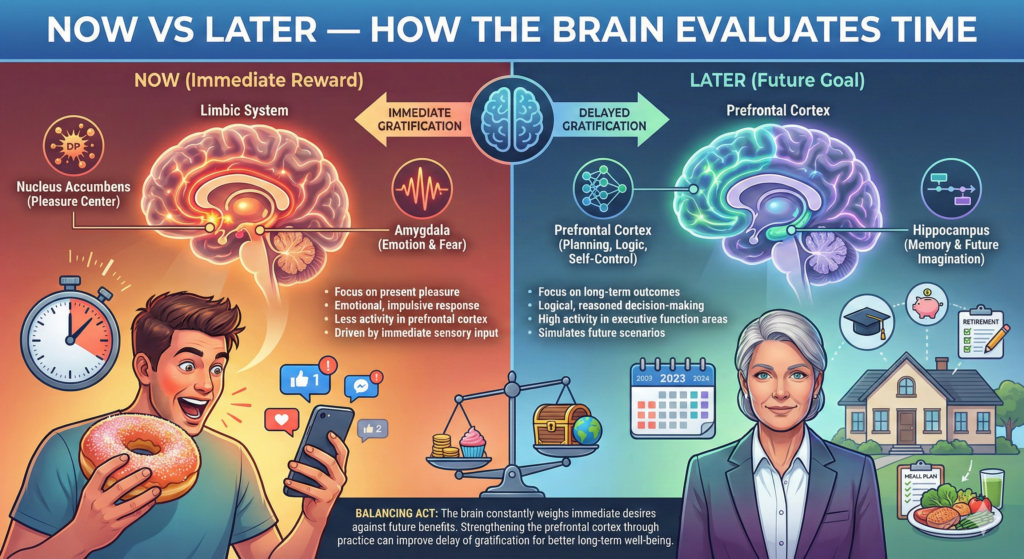
The brain doesn’t optimize for distant outcomes: it optimizes for certainty now.
Long-term goals don’t engage deep reward circuits the way immediate cues do.
Research in habit neuroscience shows that distant or abstract rewards often fail to trigger strong dopamine responses, which is why short, repeated commitments work better than vague “forever” plans.
Hack #7 Track Progress Without Triggering Threat Responses
Monitoring progress works, up to a point. If tracking becomes judgmental, it activates threat and stress responses in the amygdala, which short-circuits learning.
Habits take hold best when feedback is neutral and curiosity-driven, not fear-driven. That subtle shift aligns tracking with reward systems rather than stress circuits.
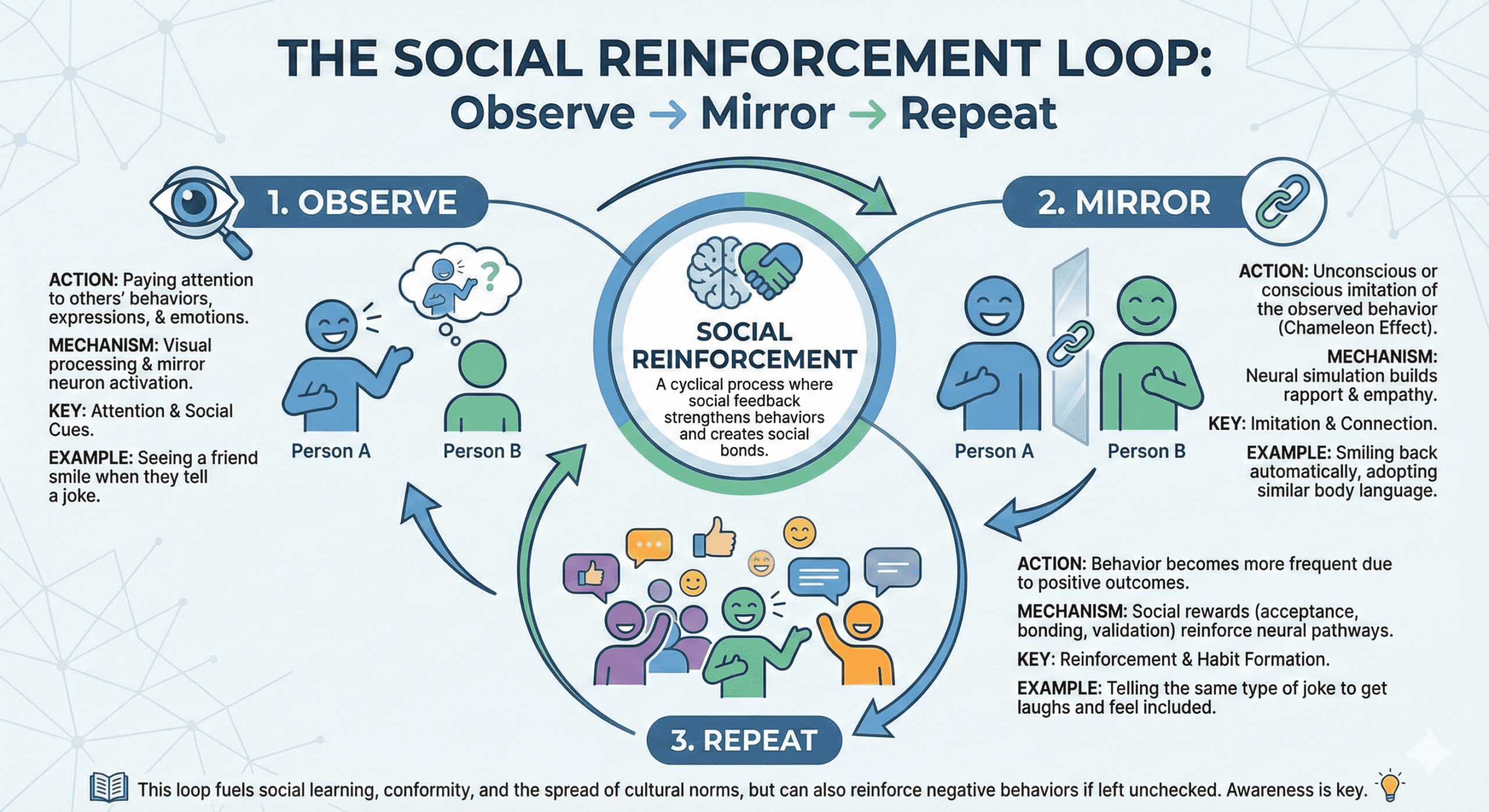
Hack #8 Leverage Social Brains Without Performing for an Audience
Humans evolved in groups. Neuroscience shows mirror neuron systems and social learning circuits fire when we observe others like us acting, not necessarily performing for us.
Low-pressure accountability taps into belonging circuits without triggering performance stress responses that hinder learning.
Hack #9 Prepare for Failure So the Brain Doesn’t Panic
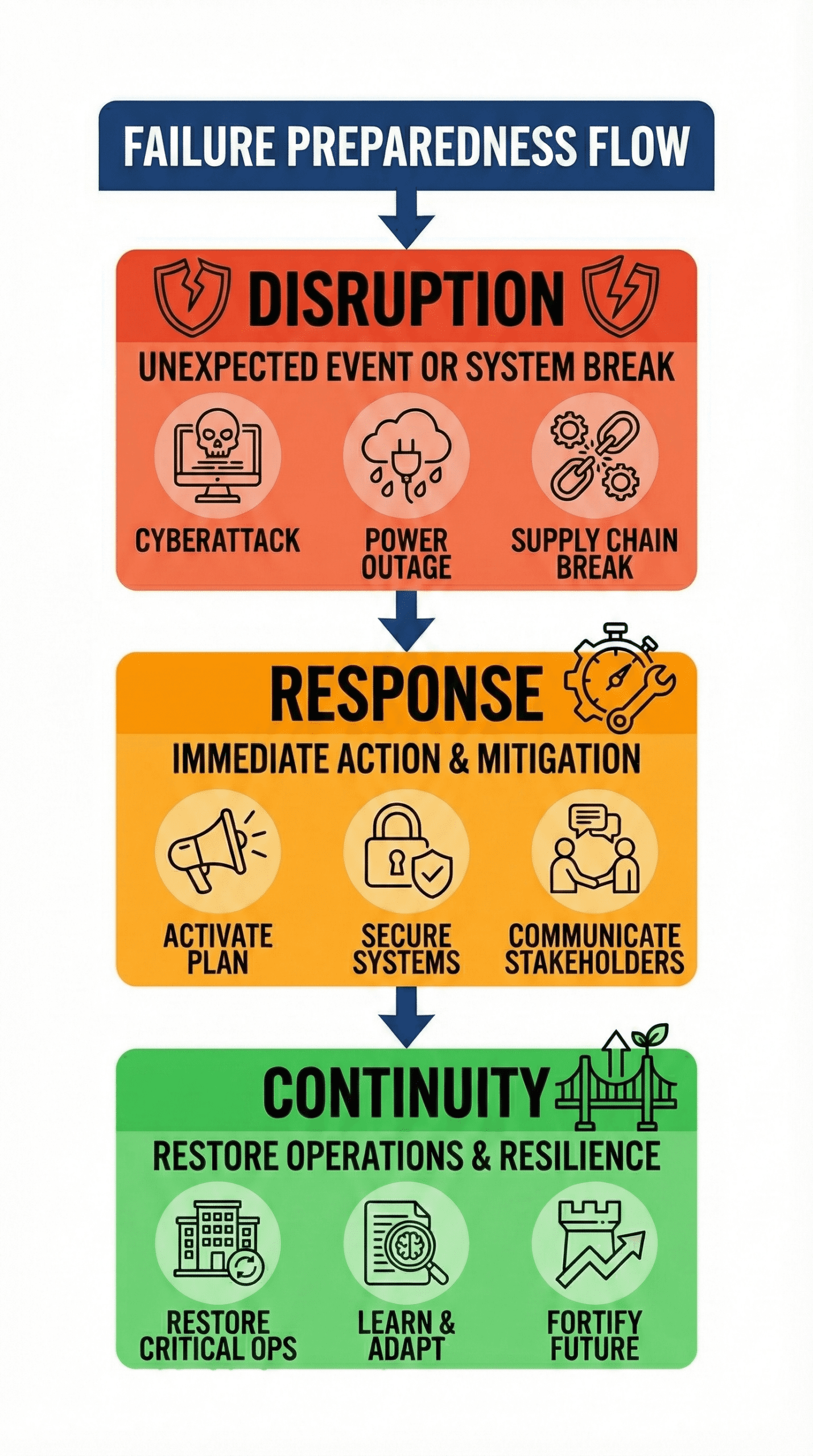
Unexpected disruption triggers neural threat assessments and emotional responses that derail habit progress.
If failure mode is expected and planned for, the brain treats it as data, not danger. Research into adaptive neural circuitry suggests that interruption with fallback responses strengthens long-term habit stability.
Hack #10 End on a High Note to Solidify Memory
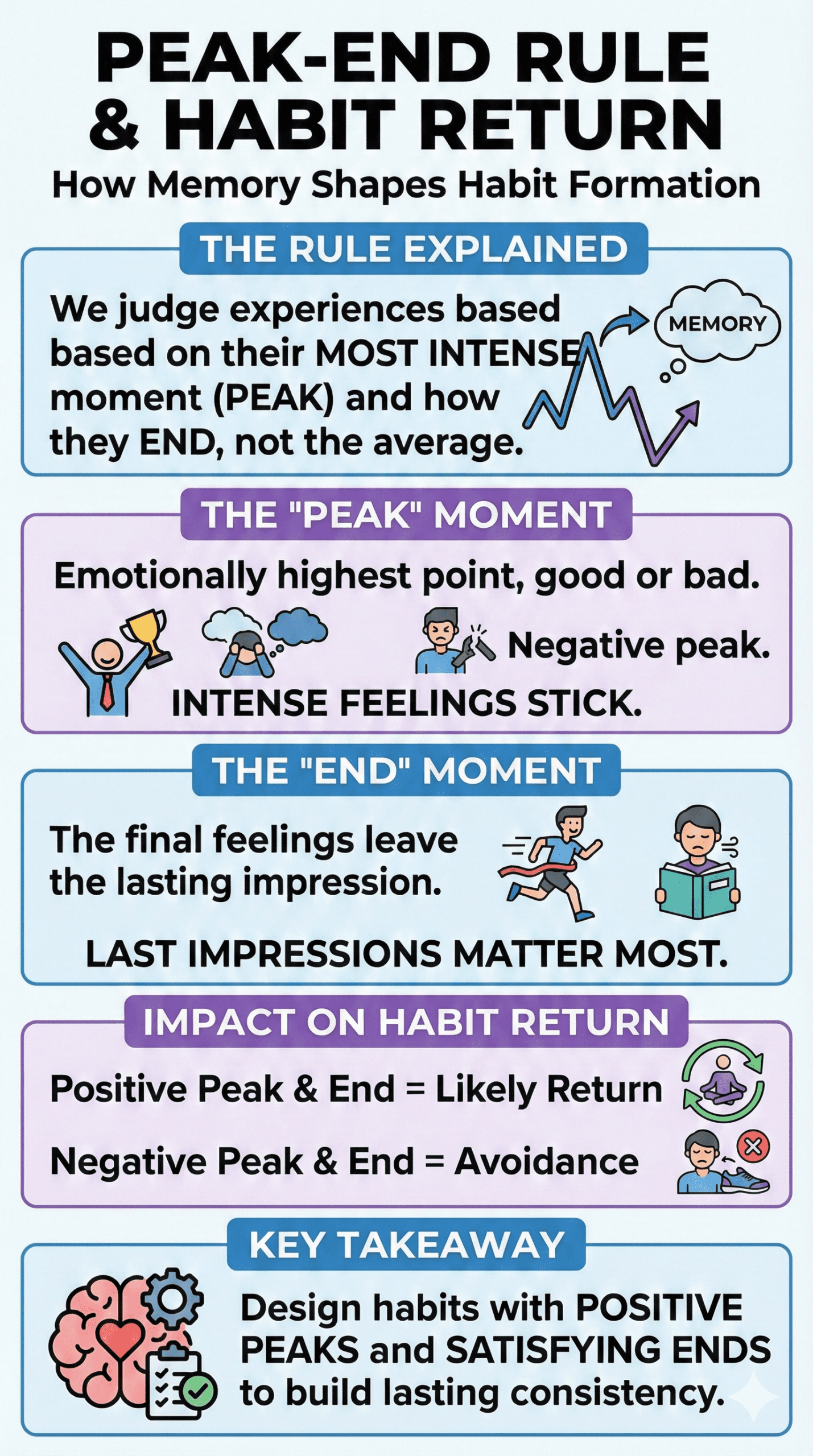
The peak-end rule, a concept supported by psychology and memory research, states that people remember experiences based on the peak positive moment and the ending, not the average. By consistently ending habits on a positive or slightly elevated note, you increase the likelihood your brain will want to revisit the behavior.
Putting It All Together: Your Brain Makes the Rules
This isn’t soft guidance. It’s neuroscience.
Habits form in basal ganglia circuits once they become automatic and efficient, bypassing high-cost decision systems. The structures and neurotransmitters involved: especially dopamine: don’t deal in morality or willpower. They deal in patterns that make survival efficient.
Each of these hacks aligns your environment and behavior with the brain’s learning architecture: so healthier habits don’t feel like a war against yourself.
Build healthier habits without turning your life into a laboratory. Get practical, evidence-aware wellness ideas from Health Needs Inc.
Frequently Asked Questions About Brain-Based Habits
There is no universal number. Habit formation varies with the behavior, the person, the environment, and how consistently the action is repeated. Simple behaviors may become easier fairly quickly, while complex routines can require months.
Habit learning involves networks that include the basal ganglia, while deliberate planning relies more heavily on the prefrontal cortex. The brain does not hand the job from one tiny office to another. Multiple systems continue interacting as behavior becomes more automatic.
Dopamine contributes to learning, motivation, and reward prediction, but it is not a magical habit chemical. It helps the brain update what is worth repeating. Context, cues, stress, memory, and access also shape the result.
New behaviors require attention, decisions, and tolerance for uncertainty. Existing routines are cheaper for the brain because they are familiar. Reducing the first step makes repetition more likely without requiring a sudden personality transplant.
No. One missed day is a disruption, not neurological demolition. Returning with a smaller fallback action can preserve continuity and keep shame from becoming the most powerful cue in the system.
Yes, when tracking becomes punishment or perfectionism. Neutral feedback can support learning, but harsh judgment may increase stress and avoidance. Track enough to notice patterns, not enough to turn a walk into an audit by a hostile accounting firm.