What everyday habits can realistically do for stress, what the wellness industry exaggerates, and when a symptom needs a doctor instead of a shopping cart.
★ TL;DR
Start with sleep, manageable movement, less late caffeine, and practical help with the pressures in your life. These can support health without supplements. Feeling stressed does not prove high cortisol, and feeling calmer does not prove it fell.
Persistent insomnia, unusual progressive symptoms, or significant daytime exhaustion deserve assessment. Judge a habit by whether it helps you function, not by a promised hormone reset.
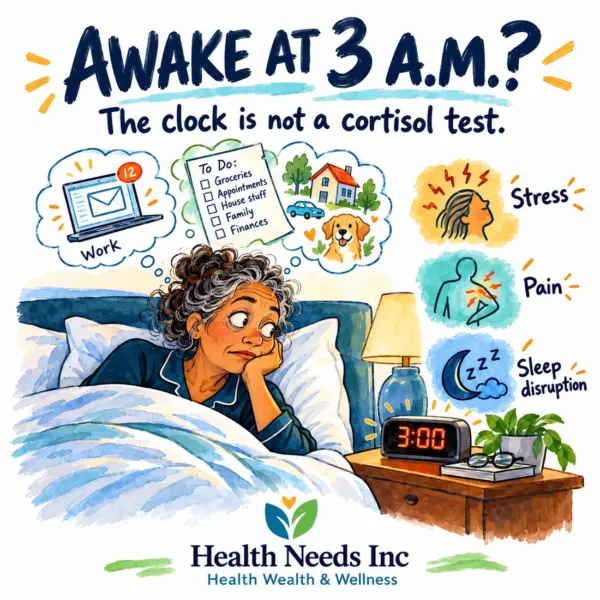
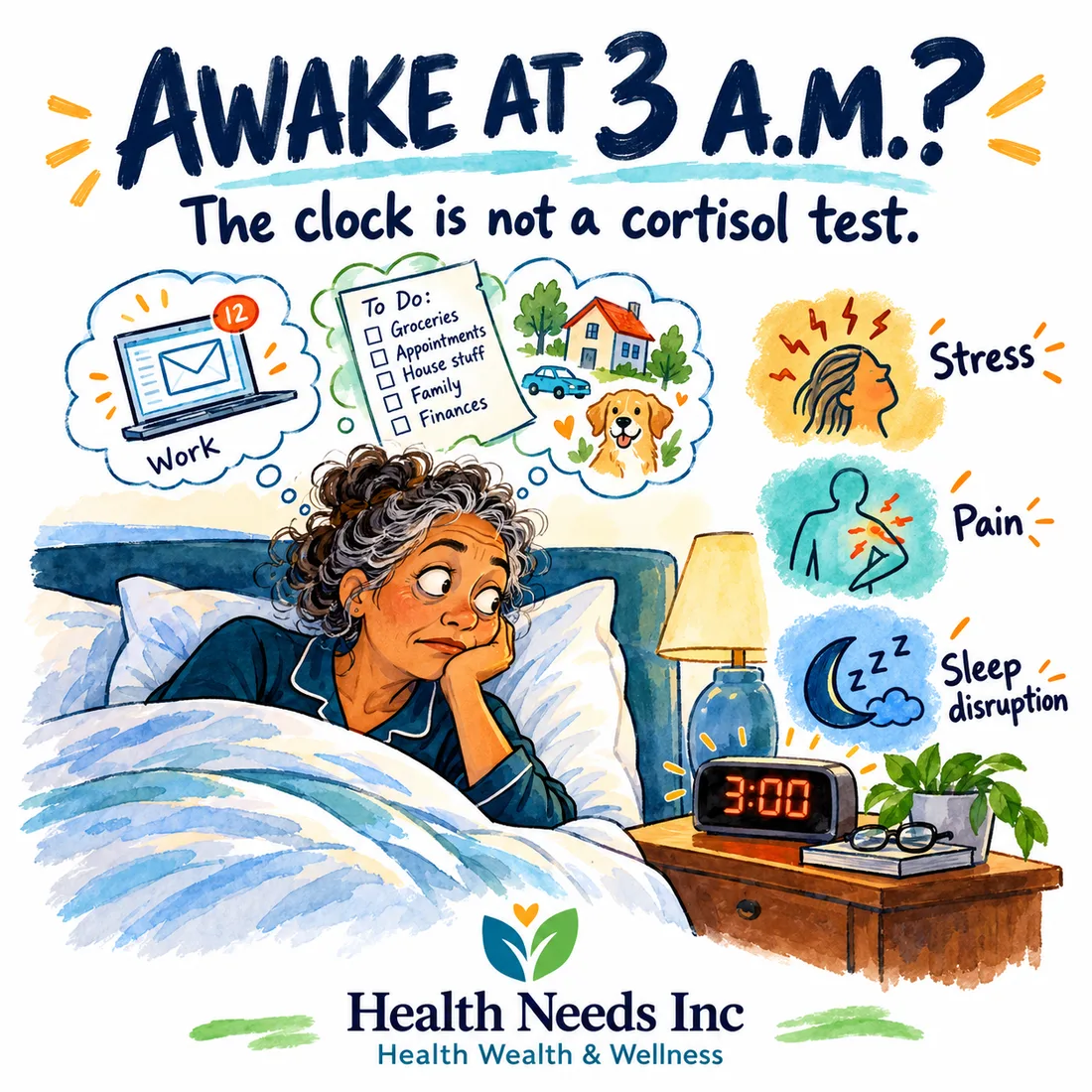
It is 3 a.m. Your brain has convened an emergency meeting about something that can almost certainly wait until breakfast. You would like to adjourn. Your brain has prepared slides.
Search for an explanation and cortisol quickly becomes the suspect. The internet supplies a diagnosis, a supplement stack, and a discount code before asking whether you snore.
Here is the useful answer: sleep habits, manageable movement, relaxation, and addressing the pressures in your life can support your health without buying supplements. But feeling wired does not establish that your cortisol is abnormally high, and feeling calmer does not prove that a hormone level has fallen.
That distinction matters. Otherwise, perfectly ordinary advice arrives dressed as endocrine treatment.
Key Takeaways
Cortisol is necessary. The goal is appropriate regulation, not the lowest possible number.
Start with the problem you can identify: late caffeine, poor sleep, relentless demands, or inadequate recovery.
Temporary changes are not automatically harmful. A normal response to exercise is different from a medical cortisol disorder.
Evaluate sleep and daily functioning. A home habit experiment cannot measure your cortisol.
Persistent or unusual symptoms deserve assessment. Lifestyle changes do not replace treatment for an endocrine disorder.
Health note: This article provides general education, not a diagnosis or individualized treatment. Do not change prescribed medicines to pursue a cortisol target.
1. First, stop diagnosing a hormone by the clock
Cortisol helps regulate energy, blood pressure, and the response to stress. Treating it as something to eliminate makes about as much sense as removing your smoke alarm because it occasionally makes noise.
Waking at night, fatigue, anxiety, and weight changes have multiple possible explanations. They are reasons to understand what is happening, not proof of a cortisol disorder.
NIDDK explains that Cushing's syndrome involves prolonged cortisol excess and requires medical evaluation. Progressive muscle weakness, easy bruising, and wide purple stretch marks are examples of findings worth discussing with a clinician, especially when several occur together.
Prescribed glucocorticoids also matter. Tell your clinician about steroid medicines, including injections, and never stop them abruptly on your own.
For the broader explanation, read what cortisol does and when testing is appropriate. Here, the narrower question is how to choose useful changes without turning your kitchen into a supplement warehouse.
2. Protect your sleep without turning it into a performance review
Sleep deserves attention because being exhausted makes life harder. It does not need a speculative hormone story to justify itself.
NHLBI recommends roughly seven to nine hours for adults. That is a general range, not a nightly examination you fail at six hours and fifty-eight minutes.
If you have given sleep a reasonable opportunity and still struggle, consider the actual obstacle. Pain, nighttime bathroom trips, medication effects, menopausal symptoms, or a sleep disorder may deserve attention rather than another lecture about discipline.
For long-term insomnia, cognitive behavioral therapy for insomnia, or CBT-I, is usually the first treatment recommended. It is more than sleep hygiene, and persistent insomnia does not mean you failed to dim a lamp enthusiastically enough.
3. Reconsider late caffeine and bright evenings
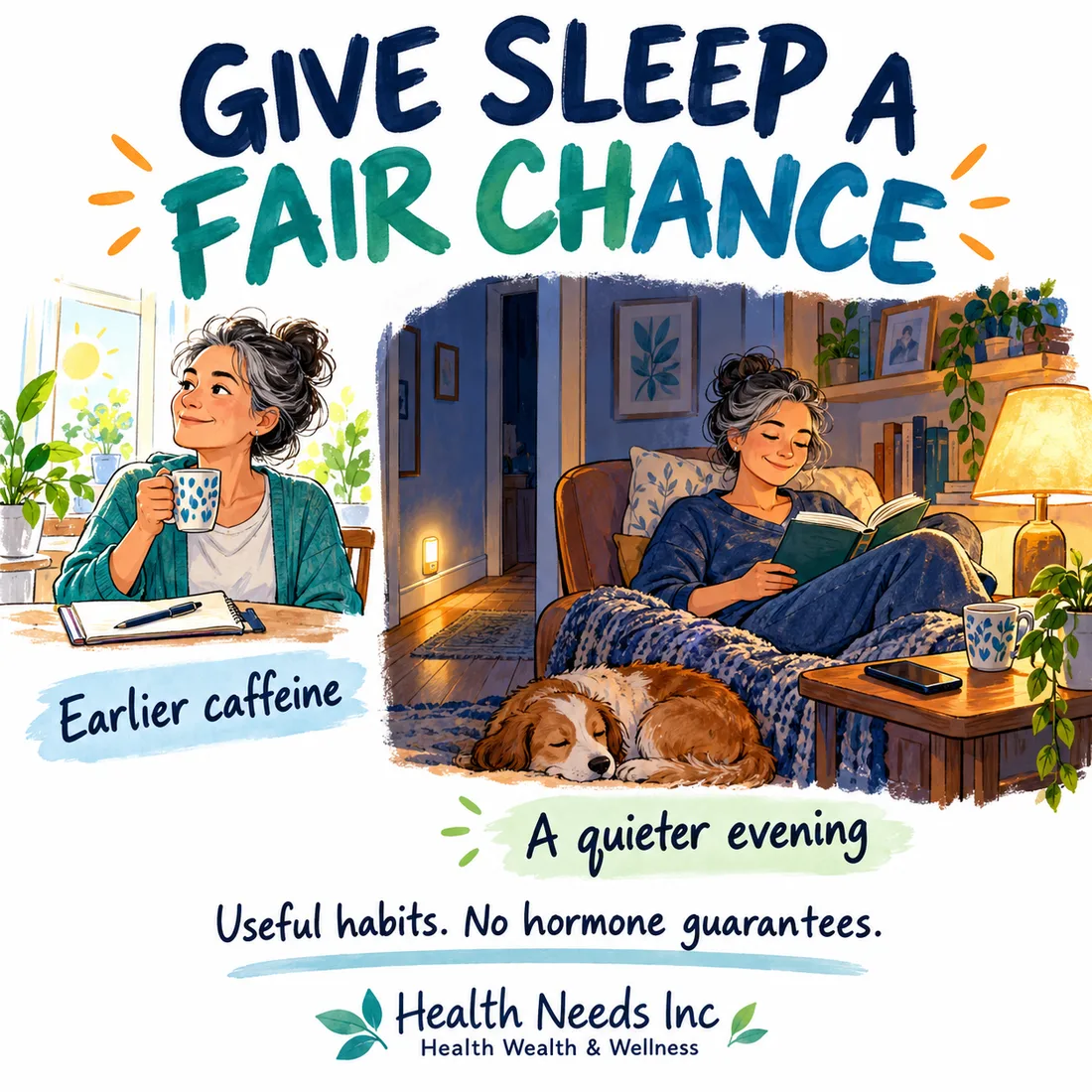
A useful experiment is moving your last caffeinated drink earlier. NHLBI notes that caffeine's effects can last up to eight hours; individual sensitivity varies.
Also try a quieter, dimmer period before bed and a reasonably consistent wake time. Bright evening light can interfere with sleep timing, but a screen is not a switch that automatically turns cortisol production on.
Keep enough light to move safely at night. Avoiding a fall takes precedence over creating a bedroom suitable for astronomical observation.
HNI's guide to how light and timing influence sleep explores that relationship in more detail.
4. Treat naps as a practical question
A nap can help alertness. If falling asleep at night is difficult, try keeping naps brief and earlier in the afternoon, consistent with NHLBI's sleep guidance.
There is no universal seven-hour boundary that turns a nap into endocrine sabotage. Ask whether your particular nap helps the afternoon at the expense of the night; shift work may require a different approach.
5. Move without fearing every cortisol rise
Your body responds to exertion. That does not make exertion a mistake, and a temporary hormone response is not evidence that a workout has damaged you.
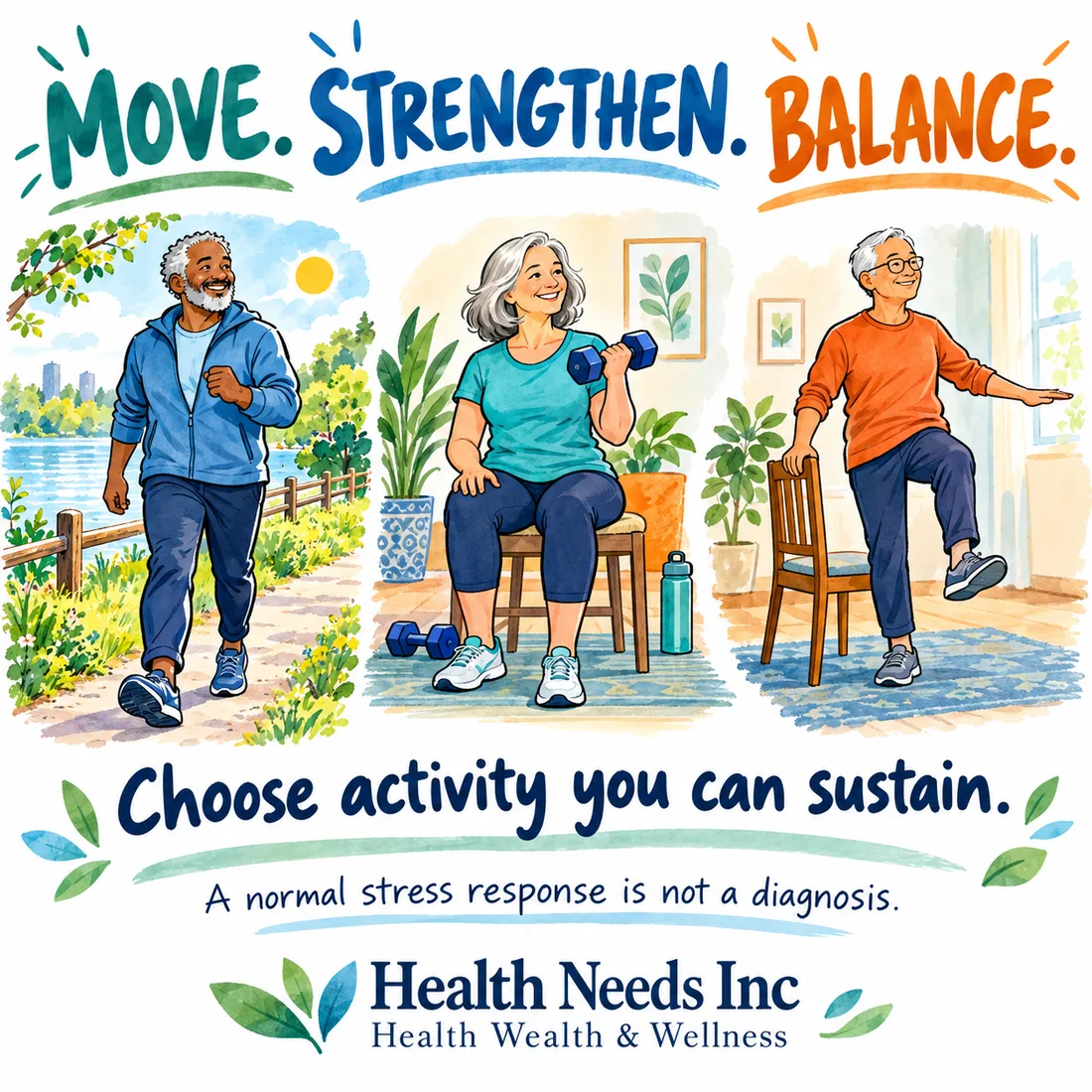
For adults 65 and older, CDC recommends at least 150 minutes of moderate aerobic activity weekly, muscle strengthening on at least two days, and balance activities. These are general health recommendations, not a prescription for lowering cortisol by a specified amount.
Build from your current ability and adapt to your health conditions. If a session consistently leaves you depleted, interferes with sleep, or aggravates pain, reconsider the workload and recovery rather than congratulating yourself for suffering efficiently.
Strength training need not be banished because someone online discovered that exercise involves stress. The useful question is whether the program fits your capacity and helps you function.
For a broader approach to sustainable activity, see physical wellness without the fitness cult nonsense. The point is a routine you can live with, rather than another test of personal worth.
6. Try comfortable breathing, without the mechanical fairy tale
Breathing exercises may help you settle. NCCIH describes preliminary evidence for diaphragmatic breathing in stress reduction, while noting limitations in the research.
That does not establish that one sigh instantly lowers circulating cortisol. Nor do your expanding lungs press a vagus-nerve button that announces the emergency is over.
- Sit comfortably, with your feet supported if that helps.
- Breathe gently at a pace that feels easy. Let the exhale lengthen slightly if comfortable.
- Try a minute or two as a starting experiment, without forcing deep breaths or holding your breath.
- Stop if you become dizzy, breathless, distressed, or uncomfortable.
This starting duration is a practical suggestion, not a validated cortisol-lowering dose. If focusing inward makes you more anxious, try an external anchor such as the room around you, or a quiet walk.
Relaxation should not become another task you can fail. See also HNI's discussion of mindfulness evidence.
Our emotional wellness guide explores how to respond to feelings without treating every one as an instruction. A difficult feeling can deserve attention without becoming a diagnosis.
7. Eat adequately, skip the hormone menu
The sensible food question is whether your eating pattern supports your health and fits your circumstances. “Which five foods lower cortisol?” invites a precision the evidence does not justify.
You can enjoy fish, beans, vegetables, fruit, or yogurt without assigning them jobs in an imaginary hormone repair department. The same applies to dark chocolate, which already has a perfectly respectable career as chocolate.
Skipping breakfast does not automatically put an otherwise healthy adult into a survival crisis. Equally, feeling shaky or unwell when you delay meals is a reason to reconsider the routine, especially if you use medicines that affect blood sugar.
Follow your prescribed diabetes and medication plan. Do not alter meals or treatment to chase a cortisol claim, and do not treat a tea or juice as therapy for a diagnosed endocrine condition.
8. Tool: choose your next step
Purpose: identify one useful action without buying anything or pretending to measure a hormone. Choose the row closest to your situation, then write your next step on paper or in a phone note.
| Your situation | A useful next step |
|---|---|
| Late caffeine, then difficulty sleeping | Move the last caffeinated drink earlier and note whether sleep changes. |
| You routinely leave too little time for sleep | Identify one evening demand you can shorten, move, or decline. |
| You allow enough time but remain persistently exhausted | Arrange an assessment rather than escalating self-experiments. |
| Exercise repeatedly leaves you depleted | Review the workload, recovery, and any symptoms with an appropriate professional. |
| The main stressor is caregiving, money, work, or conflict | Choose one concrete request for help or one practical step toward the underlying problem. |
- Name it: “The problem I want to improve is ______.”
- Choose: “The one action I can reasonably take is ______.”
- Observe: note sleep quality, daytime functioning, and whether the change is sustainable.
- Decide: keep a useful change; adapt an impractical one; seek help for persistent or worsening symptoms.
This is an informal decision aid, not a validated assessment or treatment plan. Improvement cannot establish what happened to cortisol, and lack of improvement is not a moral verdict.
Sometimes the most useful intervention is another person sharing the load. A breathing exercise cannot redistribute a caregiving schedule by itself.
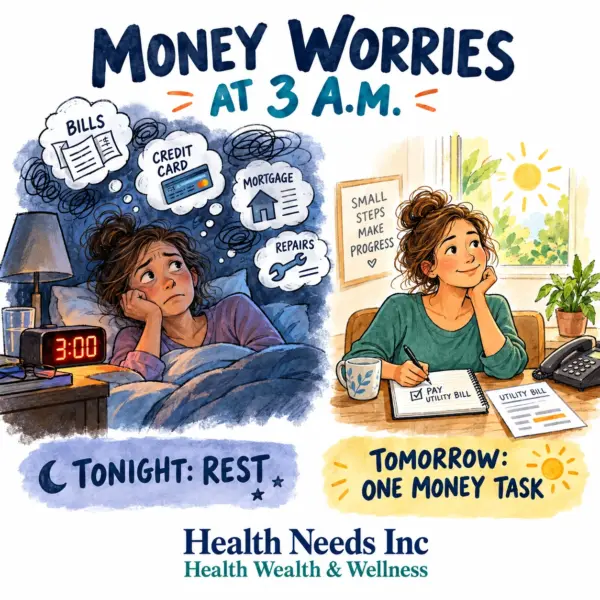
If money is the pressure that keeps following you to bed, our guide to financial stress burnout looks at that problem directly. If the missing resource is another person, social wellness and practical support deserve a place in the plan.
9. Quiz: can you spot the cortisol sales pitch?
Answer true or false before opening each explanation. This checks understanding, not your health; if an answer surprises you, revisit the relevant section.
1. Waking at 3 a.m. proves my cortisol is high. True or false?
False. Night waking has multiple possible causes. A symptom is not a hormone measurement.
2. A temporary cortisol rise during exercise means exercise is harmful. True or false?
False. A normal response to exertion is different from sustained pathological excess. Workload, recovery, symptoms, and overall function matter.
3. Feeling calmer after breathing proves cortisol fell immediately. True or false?
False. A subjective benefit can be worthwhile without establishing a particular biological mechanism.
How to use your result: three correct answers means you have identified the central distinctions. Any missed answer points to a claim worth questioning before you spend money.
10. Frequently asked questions
No five-symptom checklist can diagnose it. Persistent or progressive changes, particularly easy bruising, unusual stretch marks, and muscle weakness, warrant a clinical conversation; ordinary fatigue and stress alone do not establish cortisol excess.
There is no dependable five-food prescription for treating high cortisol. Judge an eating pattern by its nutritional value and suitability for you, rather than a claimed hormone effect from individual ingredients.
Advice should reflect the actual issue, including menopausal symptoms, pregnancy, medicines, or a diagnosed condition. A blanket rule to reduce exercise during a particular menstrual phase is not an appropriate recommendation for every woman.
A quiet pause or comfortable breathing may help you feel less overwhelmed. Neither provides a guaranteed immediate cortisol reduction, and neither treats an endocrine disorder.
None should be used for that purpose. Choose a drink you enjoy and tolerate; replacing a late caffeinated drink may help sleep, but that is different from removing cortisol.
Arrange assessment for persistent insomnia, significant daytime sleepiness, repeated palpitations, or unexplained progressive changes. Loud snoring or waking gasping can be symptoms of sleep apnea and also deserves attention. Seek urgent help for symptoms such as chest pain, fainting, or severe breathlessness rather than assuming stress.
11. Leave the hormone scoreboard behind
There is a peculiar commercial achievement in convincing exhausted people that rest requires a protocol, a dashboard, and a recurring payment. Even recovery has acquired homework.
You can begin more modestly: identify the problem, choose a sensible next step, and notice whether life gets easier. Ask for assessment when it does not.
The aim is a life you can inhabit with a little more ease. Your adrenal glands do not need a personal brand.