★ TL;DR
Physical wellness is not a punishment plan, a purity contest, or proof that you have become spiritually superior in athletic pants.
-
It means caring for how your body moves, sleeps, eats, recovers, heals, and warns you when something is wrong.
-
Most adults benefit from regular movement, strength work, sleep, nutrition, recovery, preventive care, and less sitting.
-
The best routine is the one you can repeat during an ordinary week, not the one that looks heroic for three days and collapses by Thursday.
-
Physical wellness works better when it supports your actual life instead of turning your body into a home renovation project with no completion date.
Your body is not a productivity appliance. It is your transportation system through work, grief, grocery stores, relationships, aging, bad chairs, bad news, and the occasional decent sandwich.
For educational purposes only. Not medical advice. Talk with a qualified healthcare professional before making major changes to exercise, diet, medication, or health routines, especially if you have symptoms, injuries, chronic conditions, disability, pregnancy, or a long period of inactivity.
The useful answer is less dramatic than the industry version.
What does physical wellness actually mean?
-
- Physical wellness means ongoing care for the body you actually have: how it moves, sleeps, eats, recovers, heals, and signals when something is wrong.
- It includes exercise, but it also includes sleep, hydration, nutrition, mobility, strength, balance, pain management, preventive care, dental and vision care, and reducing sedentary time.
- It is not about proving discipline, chasing influencer routines, or confusing soreness with virtue. A good physical wellness plan is practical, repeatable, and boring enough to survive a normal Tuesday.
Physical wellness is broader than fitness. Movement matters, but so do sleep, recovery, food, preventive care, pain signals, and basic maintenance.
The guidelines are useful, not sacred tablets. Adults are generally encouraged to get aerobic activity plus strength work, but starting smaller is still better than staying still.
Shame is a terrible architect. It may create short bursts of effort, but it rarely builds a durable routine.
Sitting deserves more suspicion. Even people who exercise can spend most of the day folded into chairs like exhausted office furniture.
Consistency usually beats intensity. A 10-minute walk you repeat is more useful than a fantasy workout that exists only in your guilt imagination.
Physical wellness is not a moral achievement.
It is not proof that you are disciplined, superior, spiritually optimized, or secretly made of kale. It does not require a $90 water bottle, a wearable device that judges your sleep like a disappointed parent, or a man on the internet telling you that breakfast is weakness.
Physical wellness is simpler than that.
It is the ongoing care of the body you actually have. Not the imaginary body you plan to earn after six months of punishment.
Not the body from the supplement ad.
Not the body from the “morning routine” video filmed by someone whose full-time job is having a morning routine.
Your body is not a productivity appliance. It is your transportation system through work, grief, grocery stores, relationships, aging, bad chairs, bad news, and the occasional decent sandwich.
So let’s talk about physical wellness without turning it into a cult.
Physical wellness also belongs inside the larger 8 Dimensions of Wellness framework because your body is influenced by stress, money, work, relationships, environment, and access to care.
What Physical Wellness Actually Means
Physical wellness is the part of whole-person wellness that focuses on how your body functions, recovers, moves, sleeps, eats, heals, and warns you when something is off.
It includes exercise, yes. But it is not only exercise.
Physical wellness also includes:
-
- Sleep
- Nutrition
- Hydration
- Mobility
- Strength
- Balance
- Recovery
- Preventive care
- Medical checkups
- Pain management
- Dental and vision care
- Reducing sedentary time
- Avoiding risky substances
- Knowing when to ask for help
In other words, physical wellness is not about looking impressive in athletic clothing. It is about having enough capacity to live your life without your body constantly sending angry letters.
A person can look “fit” and be physically unwell. A person can live in a larger body and have strong physical wellness habits.
A person can be disabled, chronically ill, aging, recovering, or starting over and still practice physical wellness.
The wellness industry often forgets this because nuance is harder to sell than abs.
Definition: Physical wellness is the ongoing care of the body through movement, sleep, nutrition, recovery, preventive healthcare, pain awareness, and sustainable daily habits. It is not body size, a gym identity, or a punishment system wearing breathable fabric.
The NIH Physical Wellness Toolkit takes the same broad view, connecting activity with strength, food, sleep, healthy habits, and routine care. The body, rather inconveniently for single-product marketing, is a system.
The Fitness Industry Confuses Pain With Virtue
Somewhere along the way, we decided physical health had to feel like punishment.
-
- No pain, no gain.
- Go hard or go home.
- Earn your food.
- Destroy your body.
- Beast mode.
This is not wisdom. This is bumper-sticker masochism with better lighting.
The problem is not ambition. Wanting to get stronger, improve endurance, lose weight, move better, or change your health markers can be perfectly reasonable. The problem is when physical wellness becomes a purity contest.
Shame can get people moving for a week. Maybe a month. But shame is a lousy architect.
It does not build a life. It builds resentment, injury, avoidance, and a weird relationship with chicken breast.
Physical wellness works better when it is practical, repeatable, and boring enough to survive a normal Tuesday.

How Much Movement Do Adults Actually Need for Physical Wellness?
For most adults, public health guidance lands in a fairly consistent place: aim for at least 150 minutes of moderate-intensity aerobic activity per week, or 75 minutes of vigorous activity, plus muscle-strengthening activity on at least 2 days per week. The CDC adult physical activity guidance and American Heart Association recommendations both use this general benchmark.
Interactive Tool: Your Physical Wellness Reality Check
This is a reflection tool, not a diagnosis and not a morality test wearing a clipboard. Check what was reasonably true during the last seven days.
Use the result: Pick one unchecked item that feels both useful and realistic. Turn it into one small action for the next seven days, then reassess. If you want a broader view beyond the body, HNI’s guide to wellness assessments explains what structured assessments can and cannot tell you.
The World Health Organization physical activity fact sheet gives a similar range: adults should aim for 150-300 minutes of moderate-intensity physical activity weekly, or 75-150 minutes of vigorous activity, with muscle-strengthening activities included. WHO also recommends reducing sedentary behavior.
That sounds like a lot until you translate it into real life.
Thirty minutes of brisk walking five days a week gets you there. So does three 10-minute walks on weekdays.
So does dancing in your kitchen, biking to errands, pushing a stroller, swimming, yard work, or walking with a friend while complaining about health insurance. The CDC’s physical activity benefits guide also notes that adults who sit less and do any amount of moderate-to-vigorous activity gain some health benefits.
You do not have to become an athlete. You have to become less still.
And even that can start small.
The Basic Physical Wellness Formula
There is no single perfect routine. But there are a few boring pillars that keep showing up because, annoyingly, boring things often work.
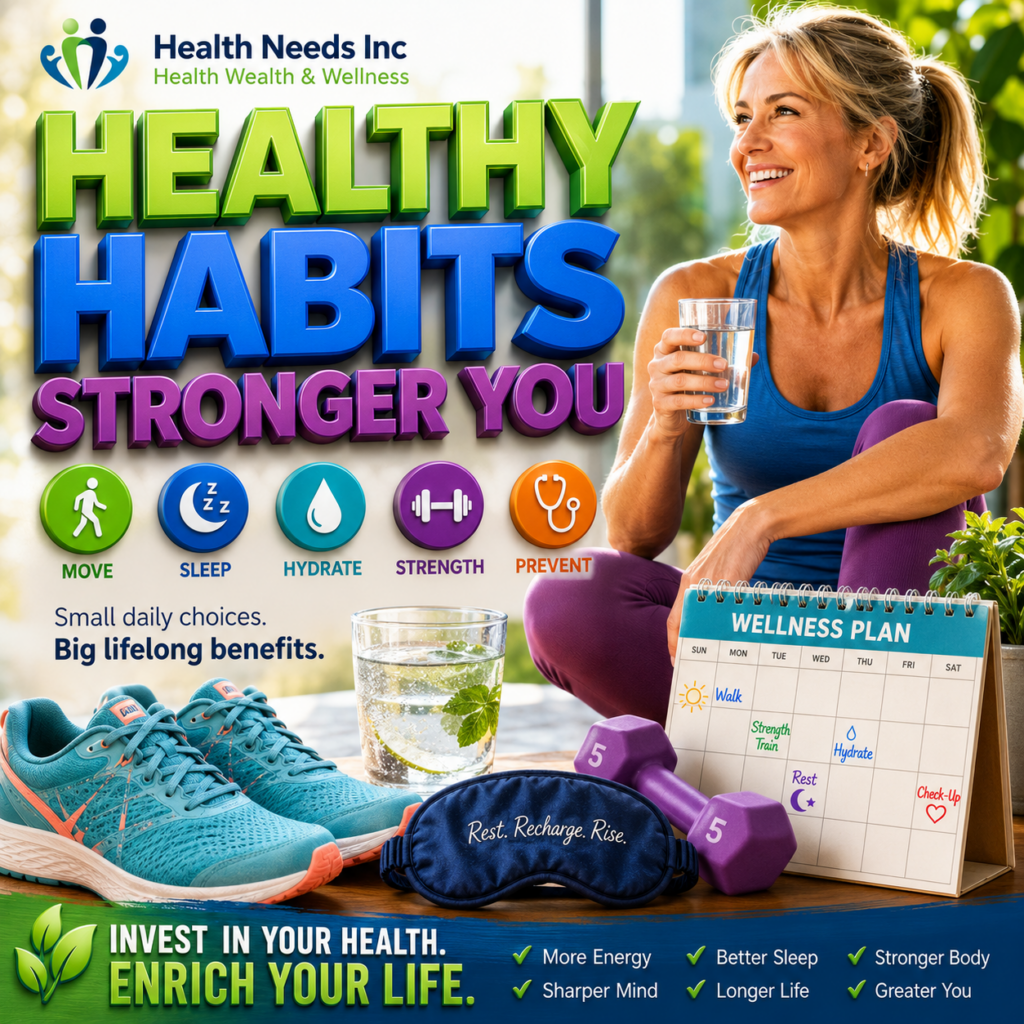
1. Move Often
Walking counts. Stairs count. Chores count.
Gardening counts. Dancing badly counts. Carrying groceries counts.
Taking a lap around the block because your inbox has become a haunted house counts.
The body likes circulation, joint movement, muscle contraction, and variety. It does not care whether the movement looks inspirational on Instagram.
Start with what you will actually do.
A 10-minute walk you repeat is better than a 90-minute fantasy workout that exists only in your guilt imagination.
2. Build Strength
Strength training is not just for gym people making dragon noises near the dumbbell rack.
Muscle helps you lift things, stabilize joints, protect independence, support metabolic health, and age with a little more bargaining power. The National Institute on Aging exercise guidance describes aerobic, muscle-strengthening, and balance activity as important, especially as people get older.
Strength training can mean weights. It can also mean resistance bands, bodyweight squats, wall pushups, step-ups, carrying bags, or getting up from a chair without using your hands.
The goal is not to become a superhero. The goal is to remain harder to knock over by life.
3. Sleep Like It Matters
Sleep is not the garnish on wellness. It is the kitchen.
Poor sleep makes everything harder: movement, food choices, mood, blood sugar regulation, recovery, pain tolerance, and patience with other humans. The NIH National Heart, Lung, and Blood Institute notes that most adults need 7 to 9 hours of sleep a night.
You do not need a perfect sleep ritual involving moon-charged tea and linen pajamas. Start with the basics: consistent sleep and wake times when possible, a dark and cool room, less late caffeine, less doom-scrolling in bed, and some kind of wind-down period that tells your nervous system the day is over.
The body is not a laptop. You cannot run 19 tabs forever and act shocked when the fan starts screaming.
For a deeper practical guide, see Sleep Hygiene for Optimal Wellness.
4. Eat Like an Adult, Not a Hostage
Nutrition advice has been kidnapped by extremists.
One group says carbs are poison. Another says seed oils are the devil. Someone else is trying to convince you that butter in coffee is a personality.
Most people do not need a food religion. They need a livable pattern.
Physical wellness nutrition usually starts with unglamorous questions:
- Are you eating enough protein?
- Are you getting fiber?
- Do you drink water?
- Are there fruits or vegetables in the building?
- Are you skipping meals and then fighting a vending machine at 4 p.m.?
- Do you have a plan for food when life gets messy?
Food matters. But food is not morality.
A salad does not make you pure. A cookie does not make you broken.
Aim for patterns, not perfection. The USDA MyPlate framework can help people think in food groups instead of internet panic, and Sustainable Nutrition covers the HNI version of eating without turning lunch into a courtroom drama.
5. Recover Before Your Body Files a Complaint
Recovery is not laziness. Recovery is maintenance.
Muscles need rest. Joints need care. The nervous system needs downtime.
Even ambition needs a nap occasionally.
If every workout leaves you crushed, every week feels like survival, and every ache gets ignored until it becomes a plot point, your routine may not be wellness. It may be a tiny private dictatorship.
Recovery can include sleep, lighter movement, stretching, mobility work, massage, physical therapy, rest days, hydration, and simply not treating your body like rented equipment.
6. Get Basic Medical Care
Physical wellness also means getting help when something is wrong.
Not everything can be solved with stretching, magnesium, or positive thinking in attractive fonts.
Preventive care, screenings, vaccinations, dental visits, vision checks, medication management, and conversations with qualified professionals all belong in physical wellness.
See a clinician promptly for chest pain, fainting, severe shortness of breath, sudden weakness, unexplained weight loss, persistent pain, concerning symptoms, or anything that feels medically urgent. If you have a chronic condition or have been inactive for a long time, talk with a qualified healthcare professional before starting intense exercise.
This is not fear. This is adulthood with a calendar.
The Overlooked Villain: Sitting
Exercise matters. But so does the rest of the day.
A person can technically exercise for 30 minutes and still spend most of life folded into a chair like a sad origami swan.
Sedentary behavior has become one of the sneakiest physical wellness problems because it hides inside normal life: work, commuting, streaming, scrolling, meetings, driving, and desk jobs that turn humans into office furniture.
The American Heart Association recommends spending less time sitting and notes that even light activity can offset some risks of being sedentary. WHO also recommends reducing sedentary behavior across groups, though exact thresholds are not always simple or universal.
Access matters too. Federal Healthy People 2030 guidance on social determinants of health recognizes that neighborhoods, work, transportation, healthcare access, and economic conditions shape health choices. “Move more” becomes a thinner instruction when a person lacks time, safety, mobility support, or a decent place to walk.
The practical fix is not dramatic.
Stand up. Walk around. Stretch.
Take calls on your feet. Put the printer farther away. Do five squats while the microwave rotates your leftovers into mediocrity.
Break up long sitting periods before your hips begin filing for divorce.
Light movement is not glamorous. Neither is back pain.
Physical Wellness for People Who Hate Exercise
Good news: you are allowed to hate exercise.
You are not allowed to conclude that because you hate gyms, your only remaining option is decay.
Physical wellness can be built through ordinary movement. The NIH MedlinePlus exercise and physical fitness guide also emphasizes different types of activity, including aerobic, strength, balance, and flexibility work.
-
- Walk after meals.
- Do ten minutes of stretching while watching TV.
- Carry groceries instead of using a cart for every bag.
- Dance in your kitchen.
- Clean vigorously.
- Garden.
- Take stairs when reasonable.
- Try beginner yoga.
- Use resistance bands at home.
- Walk with a friend instead of sitting for coffee.
- Park farther away when it is safe.
- Do one set of squats, wall pushups, and calf raises during the day.
The best form of movement is not the one with the most impressive marketing. It is the one you can repeat without needing to become a different person first.
A Realistic Weekly Physical Wellness Plan
Here is a simple version for someone starting from “I know I should move more, please stop yelling.”
1️⃣ Monday
20-minute walk. 5 minutes stretching.
2️⃣ Tuesday
Beginner strength: squats, wall pushups, rows with resistance band, glute bridges. Two sets each.
3️⃣ Wednesday
10-minute walk after lunch. 10-minute walk after dinner.
4️⃣ Thursday
Mobility or gentle yoga. Earlier bedtime.
5️⃣ Friday
20-30-minute walk. Light core work.
6️⃣ Saturday
Strength training again. Housework, errands, gardening, or outdoor movement.
7️⃣ Sunday
Rest, meal prep, gentle walk, plan the week.
This is not the Navy SEAL version of wellness. Excellent.
Most people are not Navy SEALs. Most people are tired, busy, and trying to remember whether the laundry in the washer is from today or the previous administration.
A realistic plan beats an impressive plan that collapses by Wednesday.
What Physical Wellness Is Not
Physical wellness is not:
-
- Obsessing over every calorie
- Treating rest as failure
- Ignoring pain
- Buying every new supplement
- Copying an influencer’s routine
- Punishing yourself for eating
- Believing thinness automatically equals health
- Believing soreness proves success
- Turning your body into a home renovation project with no end date
A healthy body is not one that obeys every command. It is one you learn to cooperate with.
The Mental Side of Physical Wellness
Physical wellness is physical, obviously. But it is never only physical.
Stress affects sleep. Sleep affects hunger. Hunger affects mood.
Mood affects movement. Movement affects pain. Pain affects stress.
The whole system is connected in ways that are inconvenient for anyone trying to sell a single miracle solution.
This is why physical wellness belongs inside the larger framework of the 8 Dimensions of Wellness. Your body is influenced by your job, your finances, your home, your relationships, your beliefs, your environment, and your access to care.
Telling someone to “just exercise” while ignoring their night shifts, medical bills, unsafe neighborhood, caregiving duties, depression, or chronic pain is not health advice. It is bumper-sticker cruelty.
Physical wellness should make life more livable, not add another unpaid job called “Become Perfect.” The National Institute on Aging notes that physical activity can also support sleep and emotional well-being.
For more on how stress gets physical, read Understanding Cortisol, and for the cognitive side of long-term health, see Five Pillars of Holistic Brain Health.
Practical Takeaways
-
- Start smaller than your ego wants.
- Walk more.
- Sit less.
- Strength train twice a week if you can.
- Protect sleep.
- Eat in patterns, not panic.
- Take pain seriously.
- Get basic checkups.
- Do not confuse influencer confidence with evidence.
- Remember that consistency usually beats intensity.
Your body does not need a rebrand. It needs care.
Not worship. Not punishment. Care.
That is physical wellness in the larger 8 Dimensions of Wellness framework: not domination, but cooperation with the body carrying you through the rest of your life.
FAQ
Examples of physical wellness include regular movement, strength training, quality sleep, balanced eating, hydration, preventive healthcare, stretching, dental care, reducing sedentary time, and listening to pain or fatigue signals instead of pretending you are made of plywood.
The main components usually include movement, nutrition, sleep, recovery, preventive care, body awareness, and avoiding harmful habits. For many people, strength, endurance, flexibility, and balance are also useful categories.
You can walk, use resistance bands, do bodyweight exercises, garden, stretch, dance, take stairs, clean actively, or follow beginner home workouts. A gym is a tool, not a temple.
Walking is one of the best starting points for physical wellness. For a more complete routine, add strength training, mobility work, and balance exercises when possible. Public health guidelines generally recommend both aerobic activity and muscle-strengthening activity.
Sleep supports recovery, energy, mood, immune function, appetite regulation, and exercise performance. Poor sleep can make almost every physical wellness habit harder to maintain.
Physical fitness usually refers to performance-related qualities like strength, endurance, flexibility, and cardiovascular capacity. Physical wellness is broader. It includes fitness, but also sleep, recovery, nutrition, preventive care, pain management, and sustainable habits.
Medical Disclaimer
This article is for general educational purposes only and is not medical advice. Talk with a qualified healthcare professional before making major changes to your exercise, diet, medication, or health routine, especially if you have a medical condition, symptoms, injury, disability, pregnancy, or a long period of inactivity.