This article is for educational and informational purposes only and is not medical advice. Persistent insomnia, severe daytime sleepiness, loud snoring, breathing pauses, unusual nighttime behavior, or sleep problems that affect driving, work, or daily safety deserve evaluation by a qualified healthcare professional or sleep specialist.
Creating the Perfect Sleep Sanctuary: Light, Temperature, and Sound
★ TL;DR
A sleep sanctuary is not a luxury bedroom. It is a room that removes the environmental interruptions most likely to keep the brain alert or repeatedly pull it toward wakefulness.
-
Make the room as dark as safety allows, especially during the intended sleep period. Blackout curtains, covered LEDs, and an eye mask often outperform expensive decorative remedies.
-
Keep the bedroom comfortably cool rather than chasing one supposedly perfect thermostat setting. Bedding, clothing, humidity, age, health, and personal preference change what “cool” means.
-
Reduce sudden, meaningful noises first. Earplugs, a fan, or steady background sound may help, but alarms, smoke detectors, children, and emergency calls must remain safely audible.
Better sleep does not require a bedroom that resembles a Himalayan spa. It requires darkness, thermal comfort, quieter nights, and fewer objects demanding your attention.

A good sleep environment is dark, quiet, comfortably cool, safe, and boring in precisely the right ways.
What makes a bedroom better for sleep?
- Control light: reduce outdoor glow, bright electronics, and unnecessary illumination during the sleep period.
- Control temperature: prevent overheating while using bedding and clothing that remain comfortable through the night.
- Control sound: reduce irregular noises, soften what cannot be eliminated, and preserve access to essential alerts.
Darkness is biological information. Nighttime light can interfere with the contrast between biological day and night, while even small LEDs can become surprisingly theatrical in a dark room.
Cool is personal. Public-health guidance favors a cool bedroom, but comfort matters more than winning an argument with the thermostat.
Unpredictable sound is especially disruptive. A changing voice, barking dog, truck brake, or slamming door may attract attention more readily than a steady low sound.
Safety outranks darkness. Use a dim, low-positioned night light when falls, stairs, medications, caregiving, or nighttime bathroom trips make complete darkness unsafe.
Fix the room before buying the mythology. Curtains, a door sweep, clean bedding, and silenced notifications may matter more than a premium device with twelve subscription settings.
Your Bedroom Is a Signal, Not a Cure
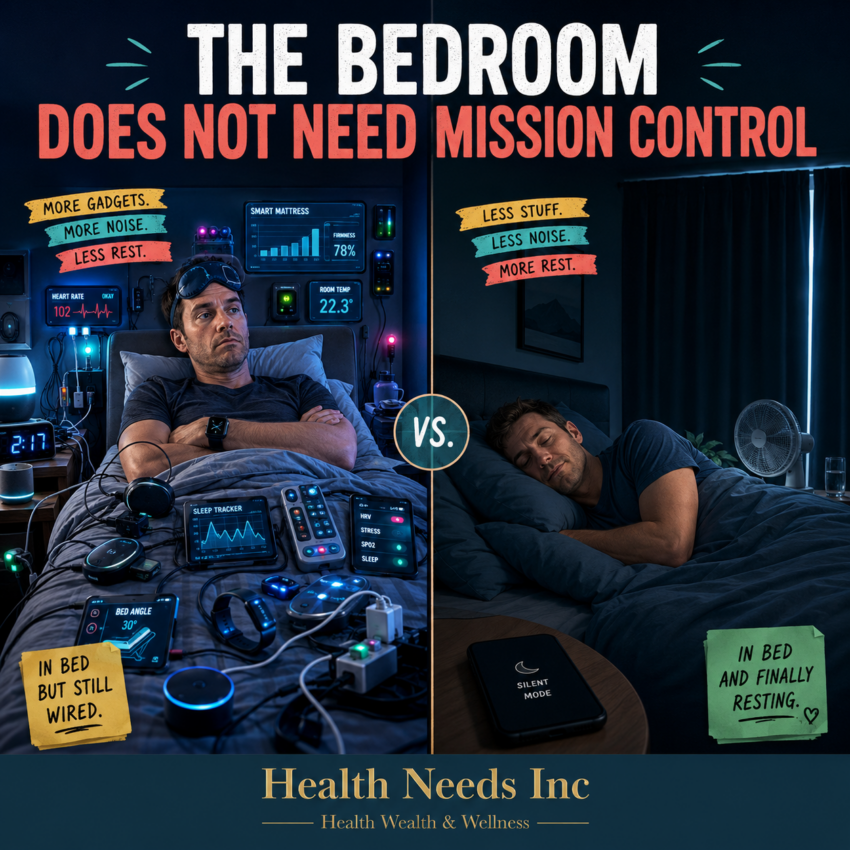
At some point, the humble bedroom became a consumer category. It now contains cooling systems, sunrise simulators, biometric rings, weighted blankets, scented machinery, smart mattresses, and enough charging cables to restart a small municipality.
Some products are useful. Others solve problems introduced by the previous product. The result can be a bedroom that resembles mission control while its exhausted owner lies awake beneath six softly blinking status lights.
A sleep sanctuary begins with a less profitable question: what in this room is making sleep harder? Light can signal wakefulness or cause awakenings. Heat can make the body uncomfortable. Noise can pull attention toward possible threats, unfinished domestic negotiations, or the neighbor’s philosophical commitment to leaf blowing.
The National Heart, Lung, and Blood Institute recommends keeping the bedroom quiet, cool, and dark. The CDC similarly advises a quiet, relaxing bedroom at a cool temperature and turning off electronic devices before bedtime.
These conditions help create opportunity for sleep. They do not cure sleep apnea, restless legs, chronic pain, depression, medication effects, menopause symptoms, circadian disorders, or clinical insomnia. A magnificent curtain cannot negotiate with an obstructed airway.
Think of the room as one part of broader sleep hygiene. It should support a stable schedule and a workable wind-down routine, not become another nightly performance review.
Light: Make Night Look Like Night
Light does more than illuminate the furniture. It helps the brain interpret time. Bright light in the evening and light during the intended sleep period can weaken the distinction between day and night, particularly when exposure reaches the eyes.
The goal is not to cultivate a gothic lifestyle. It is to make the sleep period genuinely dark while using daylight and brighter surroundings during the waking day. Contrast matters. A dim bedroom is more persuasive after a brighter day than after twelve hours in a cave with email.
Start with the largest light leaks
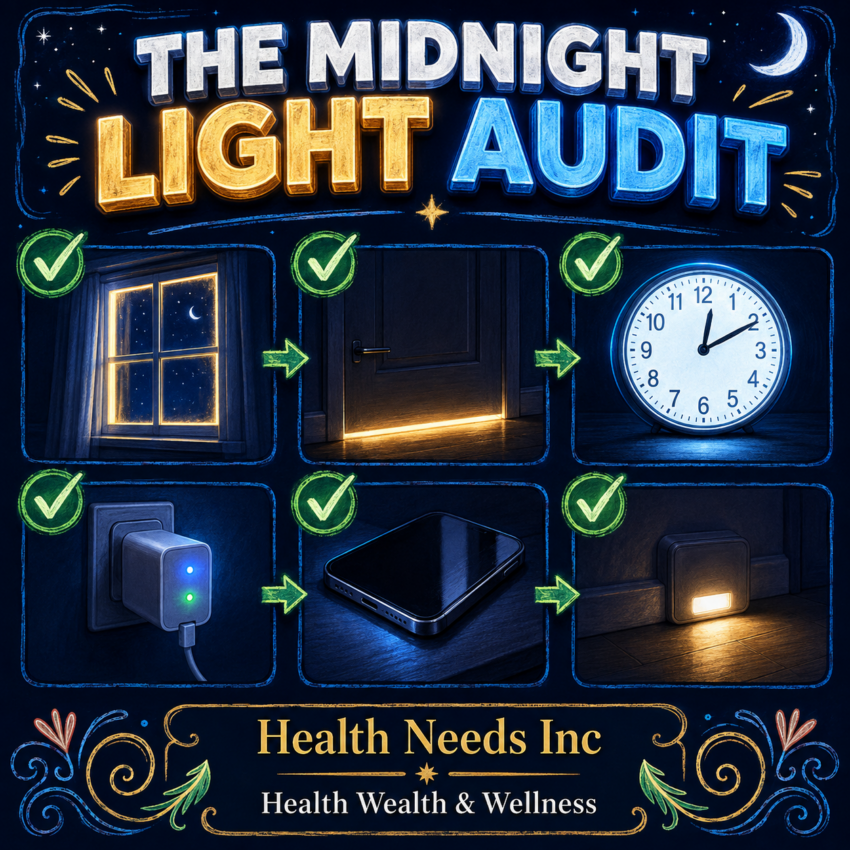
Stand in the room after dark and let your eyes adjust for several minutes. Look for streetlights around curtain edges, hallway light beneath the door, glowing clocks, chargers, television indicators, smoke-alarm reflections, and the tiny blue LED apparently designed by the lighthouse industry.
Begin with the window. Opaque curtains, lined drapes, blackout shades, or a removable light-blocking liner can help. If light enters around the edges, extend the covering beyond the window frame or use side channels. Renters may prefer tension rods, removable hook-and-loop strips, or an eye mask.
Cover nonessential LEDs with purpose-made dimming stickers or opaque tape that does not block ventilation. Turn the clock face away. Place phones facedown and out of reach, preferably with notifications silenced through a carefully configured do-not-disturb mode.
Preserve safe nighttime navigation
Complete darkness is not automatically virtuous. Older adults, people with balance problems, anyone taking sedating medication, and those navigating pets, stairs, oxygen tubing, or an urgently placed ottoman may need low-level lighting.
Use the dimmest practical light, positioned low and aimed toward the floor. Warm-colored light may be less disruptive than bright blue-white light, but preventing a fall matters more than achieving laboratory darkness. Biology is important. So are hips.
For the broader timing question, see Blue Light, Melatonin, and You and Mastering Your Circadian Rhythm for Better Sleep. Bedroom darkness works best as part of a clear light-dark pattern, not as an isolated ritual performed after an evening beneath stadium lighting.
Temperature: Cool Without Turning Sleep Into an Arctic Expedition
Core body temperature follows a daily rhythm and normally declines around the sleep period. A room that is too warm can work against thermal comfort and contribute to restlessness or awakenings. Public-health guidance therefore tends to recommend a comfortably cool bedroom.
Specific temperature numbers are useful as starting points, not commandments. CDC and NIOSH materials have suggested ranges around the mid-to-upper 60s Fahrenheit for many adults, while also emphasizing that preferences differ. Your bedding, sleepwear, humidity, air movement, age, health, hormones, and bed partner all change the equation.
Adjust layers before declaring thermostat war
Use breathable layers that can be added or removed during the night. A lighter blanket over a sheet offers more control than one enormous comforter engineered for a February monastery. If two sleepers prefer different conditions, separate blankets can prevent a minor thermal disagreement from becoming constitutional law.
Air movement from a fan may improve comfort even without dramatically lowering room temperature. In hot weather, close blinds during peak sun, ventilate when outdoor air is cooler, and use air conditioning when available and medically appropriate. In cold weather, avoid overheating the entire room merely because uncovered feet filed a complaint.
Humidity also influences comfort. Very dry air may aggravate nasal or throat discomfort, while excessive humidity can feel clammy and encourage mold or dust-mite problems. A humidifier or dehumidifier should answer a measured need, receive regular cleaning, and not become a countertop swamp with mood lighting.
Health can change temperature needs
Hot flashes, fever, thyroid conditions, poor circulation, neuropathy, respiratory disease, and some medications can alter thermal comfort or safety. Infants also have different sleep-safety requirements and should not be managed using generic adult bedroom advice.
If nighttime sweating is new, severe, persistent, or accompanied by fever, unexplained weight loss, pain, breathing problems, or other concerning symptoms, seek medical advice. The correct response to a clinical symptom is not always bamboo sheets.

Sound: Quiet the Unpredictable
Humans do not become acoustically unconscious during sleep. The sleeping brain continues monitoring the environment, which was useful when a snapped twig might indicate a predator and remains less useful when the refrigerator begins its nightly impression of farm machinery.
The World Health Organization identifies environmental noise as a contributor to sleep disturbance and has published health-based noise guidance. Exact decibel targets are difficult for household use because duration, peaks, sound character, building construction, and individual sensitivity all matter.
Reduce sound at the source
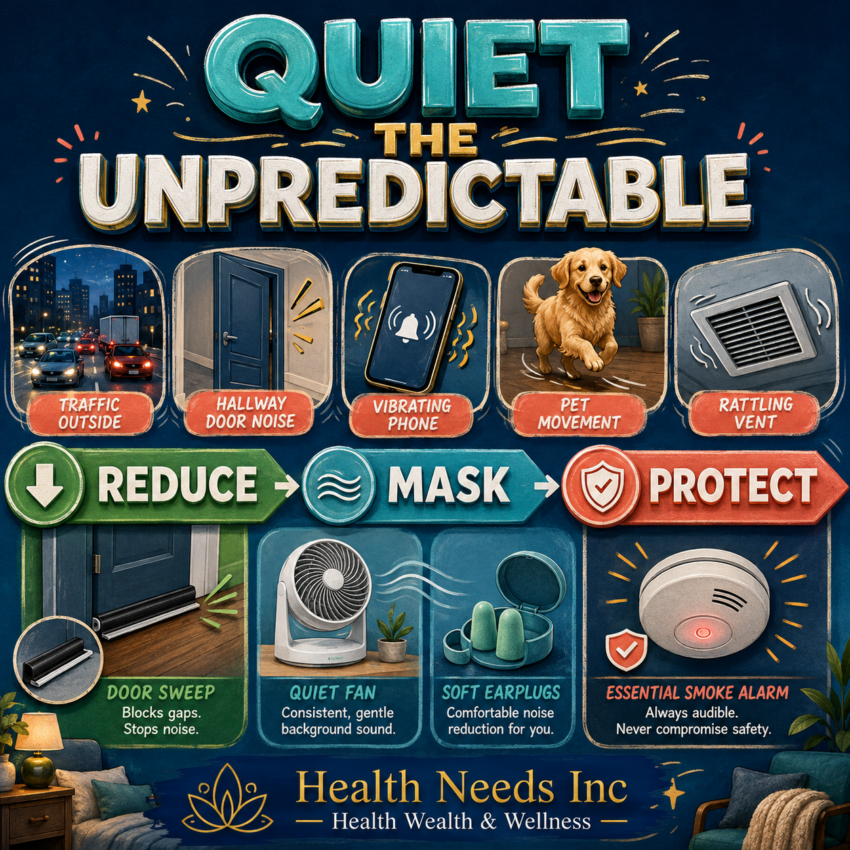
Close the window if traffic is the culprit, provided temperature and ventilation remain safe. Tighten a rattling vent, move a vibrating phone off a hollow nightstand, place felt pads on contact points, lubricate a squeaking hinge, and ask household members to retire the midnight cabinet-slamming program.
Soft furnishings, rugs, lined curtains, door sweeps, and bookcases against shared walls may reduce reflections or modestly soften sound. They will not soundproof a room against aircraft, construction, or an upstairs neighbor auditioning for Stomp. True sound isolation usually requires sealing gaps, adding mass, and sometimes professional building work.
Mask what cannot be removed
A fan or sound machine can provide a steady background that makes intermittent noises less noticeable. White, pink, and brown noise differ in their frequency balance, but no color is universally superior. Choose a sound that feels neutral, keep the volume modest, and place the device away from the head.
Earplugs can help with traffic, a snoring partner, or daytime sleep, but fit and safety matter. They should not prevent you from hearing a smoke alarm, alarm clock, child, dependent adult, or emergency alert. People with ear pain, drainage, impacted wax, recurrent infections, or hearing concerns should ask a clinician before routine use.
Noise-canceling headphones are generally bulky for sleep and may create pressure, heat, tangled charging habits, or missed alarms. Small sleep headphones may be more comfortable for some people, but adding audio all night is not mandatory. Silence does not need a subscription.
The Seven-Night Sleep Sanctuary Audit
Changing everything at once creates an attractive room and terrible evidence. If sleep improves, you will not know whether the helpful factor was darkness, cooler bedding, less noise, reduced phone use, or the fact that assembling a curtain rod exhausted you.
This audit is a practical observation tool, not a medical test. Keep the sleep schedule reasonably stable during the experiment. Record the room and your experience without turning the notebook into a second job.
Seven-Night Sanctuary Audit
- Night 1: Observe only. Record bedtime, estimated sleep onset, awakenings, wake time, obvious light, sound, temperature discomfort, and morning feeling.
- Night 2: Remove light leaks. Darken the window, cover nonessential LEDs, turn the clock away, and preserve a safe low path light if needed.
- Night 3: Adjust thermal comfort. Change one variable such as room temperature, blanket weight, sleepwear, fan use, or airflow.
- Night 4: Reduce source noise. Silence notifications, stop vibration, close or cushion doors, address rattles, and negotiate household quiet.
- Night 5: Test masking if needed. Try a fan, gentle steady sound, or properly fitted earplugs while protecting essential alerts.
- Night 6: Remove attention traps. Relocate work, visible clocks, television, and unnecessary devices from the sleep zone.
- Night 7: Repeat the best combination. Keep only the changes that improved comfort, reduced awakenings, or made the room easier to use.
Use simple ratings from 0 to 5 for darkness, noise disturbance, overheating, feeling too cold, and morning restfulness. Patterns matter more than a single night. Sleep varies naturally, and the mind becomes a mischievous statistician when given one dramatic data point.
If the audit increases anxiety, stop scoring. Keep the obvious environmental improvements and return attention to normal life. A bedroom should not become a laboratory in which you are both the principal investigator and the increasingly resentful mouse.
Mattress, Pillows, and Bedding: Comfort Without Theology
A mattress should support a comfortable position without creating pressure, pain, overheating, or a crater from which escape requires municipal assistance. No single firmness or material is best for every body. Weight distribution, preferred sleep position, pain, mobility, temperature sensitivity, and partner movement all matter.
Replace a mattress because it is damaged, sagging, persistently uncomfortable, or no longer supportive, not because a calendar issued an ultimatum. If possible, use a meaningful trial period and understand return fees. Mattress marketing remains one of capitalism’s more upholstered branches of metaphysics.
Pillows should help keep the neck reasonably comfortable in the chosen sleep position. Side sleepers may prefer more height than back sleepers, while stomach sleeping often calls for less. People with pain, recent surgery, reflux, breathing problems, or mobility limitations may need individualized advice.
Bedding affects both temperature and sensory comfort. Breathable sheets and adjustable layers are useful, but fiber labels do not guarantee a particular experience. Wash bedding regularly, follow allergy-management advice when relevant, and keep pets out of the bed if they trigger symptoms or conduct vigorous nocturnal border patrols.
A weighted blanket can feel calming to some adults, but it is not appropriate for everyone. Breathing problems, limited mobility, circulation issues, frailty, heat sensitivity, and inability to remove the blanket independently deserve caution and clinical guidance.

Screens, Clutter, and the Architecture of Attention
A screen affects sleep through more than light. It delivers novelty, work, conflict, shopping, news, and the sudden discovery that a stranger is wrong about something. The bedroom then becomes associated with alertness, decision-making, and unfinished business.
The CDC recommends turning off electronic devices at least 30 minutes before bedtime. That is a reasonable experiment, not a magical threshold. Some people need longer; others can read quietly on a dim device without obvious trouble. Content, brightness, distance, timing, and personal response all matter.
Charge the phone across the room or outside it when practical. Use a physical alarm clock with a dimmable display if emergency contact is not a concern. If the phone must remain nearby, configure do-not-disturb so selected people can reach you and disable the chorus of ordinary alerts.
Clutter is not a recognized sleep disorder, and shaming an exhausted person about laundry is a peculiar hobby. Still, visible work, bills, exercise equipment, and half-completed projects can act as attention cues. Remove the most mentally noisy items or conceal them rather than attempting a midnight lifestyle renovation.
Reserve the bed primarily for sleep and intimacy when possible, especially if insomnia has made it a place for worry and wakefulness. A short 20-minute nighttime ritual can provide a repeatable bridge into the room without demanding an elaborate wellness pageant.
Wellness without the expensive fog machine.
Get evidence-aware health, wealth, and wellness thinking without miracle claims, panic marketing, or furniture that requires firmware updates.
Special Cases: Shared Rooms, Shift Work, Children, and Aging
Sleep advice often assumes one healthy adult owns a detached house, controls the thermostat, works daylight hours, has no caregiving duties, and shares the bed with nobody who snores. This person may exist. The wellness industry has apparently photographed them extensively.
Shared bedrooms
Partners can disagree about light, sound, bedding, and temperature without either person being unreasonable. Try separate blankets, individual eye masks, targeted fans, soft earplugs when safe, and a negotiated notification policy. Persistent loud snoring, gasping, or breathing pauses warrant medical evaluation rather than acoustic escalation.
Shift workers and daytime sleepers
Daytime sleep often requires more aggressive light and sound control. Blackout coverings, an eye mask, a door sign, household agreements, silenced deliveries, and steady masking sound may help. The NIOSH shift-work guidance specifically recommends a very dark, quiet, cool, comfortable sleep environment.
Older adults and mobility concerns
Fall prevention takes priority over total darkness. Clear pathways, secure rugs, reachable glasses, stable furniture, and a dim motion-activated floor light may support safer nighttime movement. Hearing changes also affect alarm selection, while temperature regulation and medication effects can alter comfort.
Children and infants
Children benefit from a consistent, calm environment, but infant sleep requires specific safe-sleep practices that go beyond this adult-focused article. Follow current pediatric guidance and ask a pediatric healthcare professional about room temperature, bedding, sleep position, monitors, or medical concerns.

A Budget-First Sleep Sanctuary Action Plan
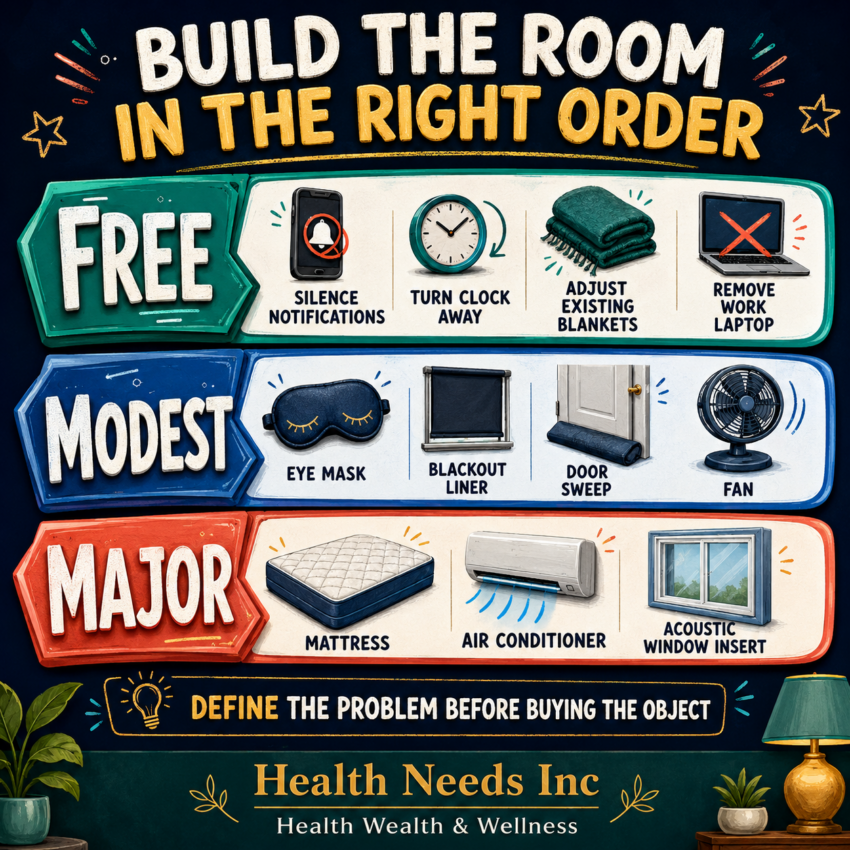
Begin with free changes. Silence notifications, turn the clock away, move the charger, close the door, remove visible work, adjust existing blankets, and establish household quiet hours. The least expensive intervention is often ceasing an activity already happening.
Next, spend modestly on the dominant problem. For light, try an eye mask, removable blackout liner, or better curtain coverage. For sound, try a door sweep, earplugs, felt pads, or a fan you already own. For heat, change bedding layers, improve airflow, or block daytime solar gain.
Only then consider larger purchases such as a mattress, air conditioner, window insert, or professional sound treatment. Define the problem before selecting the object. “I wake when trucks brake outside” is a usable problem. “My bedroom lacks a proprietary sleep ecosystem” was written by somebody with quarterly targets.
The 15-minute setup
- Walk through the room after dark and cover or remove unnecessary light.
- Set a comfortable cool temperature and place one removable bedding layer within reach.
- Silence nonessential alerts while preserving emergency contacts and alarms.
- Remove one attention cue, such as the work laptop, visible clock, or pile of bills.
- Clear the path to the bathroom and add safe low lighting if needed.
Test the setup for a week. Keep what helps. Abandon what creates discomfort, anxiety, safety problems, or needless maintenance. A sanctuary should reduce demands, not submit a new list of them each evening.
When the Room Is Not the Problem
If sleep remains poor after the room is reasonably dark, cool, quiet, comfortable, and safe, the answer is not necessarily a more advanced pillow. Chronic insomnia often requires a structured treatment such as cognitive behavioral therapy for insomnia. Other sleep disorders require diagnosis and condition-specific care.
Seek prompt evaluation for loud habitual snoring with gasping or breathing pauses, severe daytime sleepiness, drowsy driving, unusual movements or behaviors during sleep, persistent restless sensations in the legs, or insomnia lasting despite adequate opportunity to sleep. Also discuss new night sweats, breathing difficulty, chest symptoms, severe pain, or major mood changes with a qualified clinician.
A two-week sleep diary can help. Record sleep and wake times, awakenings, naps, caffeine and alcohol timing, medications, symptoms, and obvious room disturbances. Bring the pattern rather than a bag containing every sleep product advertised during the previous month.
The room matters, but it is not the whole organism. Sleep sits inside Physical Wellness and interacts with emotional health, work, relationships, finances, and the other Eight Dimensions of Wellness. A noisy apartment may even be a housing problem disguised as a bedtime problem.
Final Thoughts on Creating the Perfect Sleep Sanctuary
The perfect sleep sanctuary does not exist. Rooms contain weather, neighbors, partners, pets, aging plumbing, financial limits, and the occasional smoke detector announcing a low battery only after midnight.
A better room is entirely possible. Make the intended sleep period dark without making movement unsafe. Keep the temperature comfortably cool without treating one number as sacred. Reduce sudden noise, mask what remains, and preserve essential alarms.
Then stop improving it for a while. Let the room become familiar and unremarkable. Sleep is not a prize awarded to the most optimized consumer. It is a biological process that tends to prefer clear signals, adequate opportunity, and fewer interruptions.
The best bedroom may be the one that gradually disappears from attention. Nothing flashes. Nothing argues. Nothing measures your soul through a mattress sensor. The room simply gets out of the way.

FAQs About Light, Temperature, Sound, and Sleep
A comfortably cool room is a sensible target, and public-health materials often mention temperatures in the mid-to-upper 60s Fahrenheit for many adults. There is no universally perfect number. Bedding, clothing, humidity, airflow, age, health, and personal preference all affect comfort.
Make the room as dark as practical during the intended sleep period, but preserve safety. A dim, warm, low-positioned night light may be appropriate for fall prevention, caregiving, medication needs, or nighttime bathroom trips. Blackout curtains or an eye mask can help when outdoor light cannot be controlled.
Steady background sound may make intermittent noises less noticeable, but it does not help everyone. Keep the volume modest, place the source away from the head, and make sure essential alarms and emergency sounds remain audible. First reduce avoidable noise at its source when possible.
Removing it can reduce light, notifications, checking behavior, and mentally stimulating content. If the phone must remain nearby for emergencies, use do-not-disturb settings that allow selected contacts, dim the display, place it facedown, and keep it beyond easy reach.
They can help when streetlights, early sunrise, or daytime sleep makes the room too bright. Coverage matters because light often leaks around the edges. An eye mask is a lower-cost alternative when curtains are impractical, provided it is comfortable and safe.
Calming décor may make a room pleasant, but evidence-based priorities remain darkness, thermal comfort, reduced noise, safety, and fewer attention traps. Fragrances can trigger headaches, asthma, or irritation in some people. No paint color compensates for untreated sleep apnea or a television arguing through the night.
Seek help when insomnia persists, sleepiness affects safety, or symptoms include loud snoring, breathing pauses, gasping, unusual nighttime behavior, severe leg discomfort, or major mood changes. A sleep-friendly room supports care, but it does not replace diagnosis or treatment.