A practical guide to anger, frustration, disappointment, and the conversations you would prefer not to regret.

TL;DR · Key Takeaways
- Separate what happened, what you think it means, and what you want to do.
- During a safe disagreement, pause before a harmful reply and give the conversation a realistic return point.
- Choose a concrete request or boundary. Reframing should not become an excuse for mistreatment.
- Review your conduct afterward. An apology can acknowledge your part without surrendering a reasonable concern.
- Repeated escalation, impaired daily functioning, threats, or harm deserves appropriate outside help.
Educational note: This article provides general information, not diagnosis or individualized mental health treatment. The checklist, worksheet, and quiz are HNI educational exercises, not validated assessments. Prioritize safety and urgent local help if there is immediate danger.
Someone tells you to calm down. Your body receives this useful instruction and immediately considers becoming less calm.
Emotional regulation means influencing how you experience and respond to emotions. Here, the practical question is what happens when anger, frustration, hurt, or disappointment begins writing your next sentence.
You can feel angry and still make a clear request. You can regret shouting without deciding the unfair arrangement was acceptable. The aim is a more deliberate response, not a permanent expression of spiritual customer service.
If fear, persistent worry, panic, or avoidance is the main difficulty, start with Effective Coping Techniques for Anxiety. This article concentrates on interpersonal responses: what to say, when to pause, and how to return or repair.
01. What emotional regulation means in a disagreement
A friend cancels dinner. You feel disappointed and unimportant, then begin composing a reply that could end the friendship and possibly establish a small independent republic.
The feeling, interpretation, and response are different things. You know the plan changed; you may not know whether the friend is rejecting you, exhausted, or dealing with something they have not explained.
Regulation creates room to investigate and decide what the interaction needs. Sometimes that means expressing disappointment clearly. Sometimes it means waiting before replying, then asking about a recurring pattern.
Keeping an emotion off your face is called expressive suppression. It is one regulation strategy, rather than the opposite of regulation. Remaining composed briefly can serve a purpose; it does not require pretending nothing mattered afterward.
A cross-cultural study found that suppression’s relationship with psychological functioning differed between the populations studied. That cautions against declaring every instance of holding back unhealthy.
HNI’s practical interpretation is flexibility. You do not owe everyone an immediate broadcast of your internal weather.
The emotional wellness pillar maps the broader subject. This checklist has a narrower job: helping you choose a response during a difficult interaction.
02. The interpersonal-response checklist
Use these prompts for an ordinary disagreement, frustrating exchange, or disappointment. They are not a clinical protocol or a guarantee that the other person will respond reasonably.
1. Check safety before communication technique
If someone is threatening you or you fear retaliation, prioritize safety and appropriate support. You do not have to return to an unsafe conversation because a checklist recommends following through.
New chest pain, fainting, severe breathlessness, or sudden confusion may need urgent or emergency medical care. Do not assume unfamiliar physical symptoms are merely an emotion.
2. Name the feeling and the impulse separately
Try: “I feel angry and embarrassed. I want to send something cruel.” Or: “I am disappointed, and I want to withdraw without explaining why.”
Approximate language is enough. You can choose a useful response without identifying every feeling correctly or reconstructing your entire childhood.
3. Delay the reply that will create another problem
Put down the phone or save the message as a draft. During a safe conversation, try: “I want to discuss this. I need a break, and I will come back after dinner.”
Give the pause a realistic return point where possible. Otherwise it can become disappearance dressed as emotional maturity.
4. Decide what you want the conversation to accomplish
Do you want clarification, an apology, a fairer arrangement, or to end an exchange that is going nowhere? Give the next sentence a job beyond delivering your current mood.
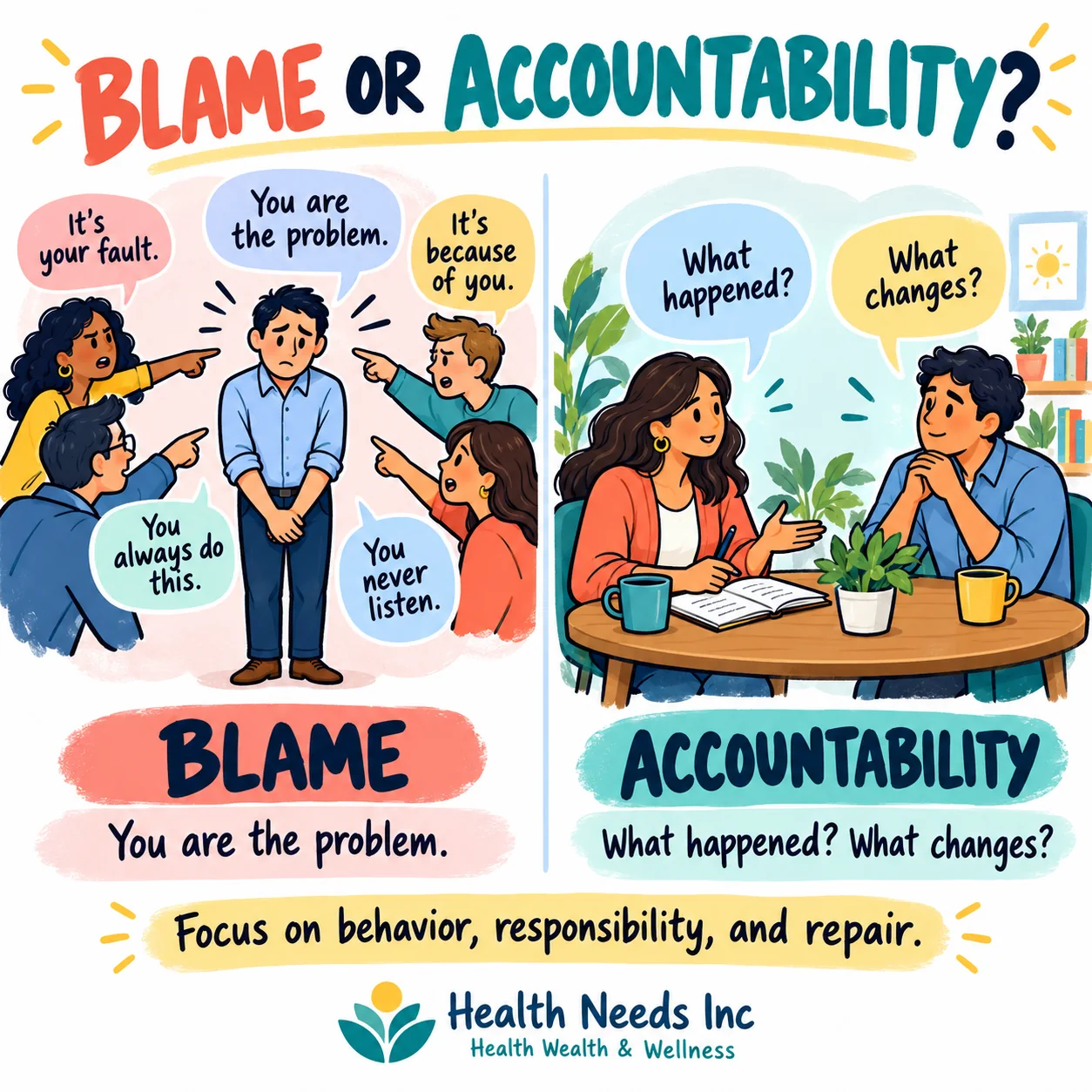
“I am frustrated that the plan changed. Can we agree who is covering Friday?” identifies a problem and a request. “You always ruin everything” may produce a longer conversation with remarkably little scheduling.
5. Check the interpretation against the facts
Separate “My son has not replied” from “He is dismissing me.” He could be working; equally, a repeated pattern may need discussing.
Checking an assumption does not oblige you to invent a charitable explanation. If you do not know, ask rather than presenting the first explanation as the verdict.
6. State the request or boundary concretely
“I cannot cover another overnight shift this week” describes a limit. “Please confirm by Wednesday whether you can take Friday” names an action and a time.
The purpose is clarity, not control over the other person’s response. If the arrangement remains unworkable, the next step may involve outside support or a different plan.
7. Return, review, and repair your part
If you agreed to return to a safe discussion, follow through. Ask whether the request was understood, whether anything changed, and whether your own conduct needs correcting.
“I should not have shouted. I still need us to share the appointments” can hold both responsibilities in view. An apology does not require withdrawing a reasonable concern or accepting someone else’s mistreatment.
03. Reframing without excusing the behavior
Cognitive reappraisal means changing an interpretation to alter its emotional impact. “This criticism proves I am useless” might become “I can examine the specific feedback without accepting a verdict on my entire character.”
That differs from declaring every setback a gift. Sometimes the setback is bad management wearing a lanyard.
If a misunderstanding drives the conflict, check the interpretation. If the issue is repeated disrespect, an unfair workload, or unshared care, consider what practical change is needed.
Disappointment also deserves room. A canceled visit can hurt even when the other person has a good reason. You can acknowledge both without issuing a prosecution or pretending to be delighted.

04. What a questionnaire can actually tell you
The Emotion Regulation Questionnaire, or ERQ, measures reported habitual use of cognitive reappraisal and expressive suppression. It is not a complete emotional-health grade or a test of whether you handled Tuesday’s argument correctly.
A change in answers alone cannot establish meaningful treatment progress. Follow the original instructions rather than inventing a combined wellness score.
You do not need a questionnaire before practicing a clearer request or reviewing a regrettable reply. For this article’s purpose, the interaction worksheet below asks a more immediate question: what happened, what did I do, and what needs changing?
05. When the pattern needs outside help
If arguments repeatedly escalate, anger leads to threats or harm, or distress disrupts daily life, seek qualified support. Repeating the same checklist more forcefully is unlikely to settle the question.
The National Institute of Mental Health explains that psychotherapy can address troubling emotions, thoughts, and behaviors, including relationship difficulties. Ask about a clinician’s relevant experience, proposed goals, costs, and how you will review whether the approach helps.
A new or marked change in mood, memory, sleep, or behavior also deserves discussion with a health professional. Do not automatically attribute it to poor emotional skills.
For fear, persistent worry, panic, or avoidance, use the anxiety coping guide. A disagreement, an anxiety problem, and an unsafe relationship can overlap; they do not require identical responses.
06. A one-week interaction worksheet
Purpose: Choose one recurring interaction involving anger, frustration, or disappointment, then identify a response worth practicing. This is an educational reflection tool, not a diagnostic scale or proof of treatment effectiveness.
How to use it: After a manageable interaction, answer these prompts briefly on paper or your own device. Keep notes private, and skip written records if someone discovering them could put you at risk.
- Event: What was said or done, without guessing motives?
- Feeling and urge: What did I feel, and what did I want to do?
- Response: What did I actually say or do?
- Consequence: Did the interaction become clearer, more difficult, or unchanged?
- Need: What request, boundary, apology, or support might help?
- Next attempt: What one sentence or action will I try?
For example: “My sibling canceled a caregiving shift. I felt trapped and wanted to send an accusation. I waited, then asked for a replacement date. The appointment was covered, but the arrangement remains unreliable. Next: discuss a backup plan.”
Use the result: At the end of the week, look for one repeated problem and choose one adjustment. Bring the notes to a clinician if recurring distress or escalation is interfering with life.
Do not grade yourself for having fewer emotions. A clearer request or repaired disagreement can matter more than looking calm. If tracking increases rumination or distress, stop and discuss another approach with a qualified professional.
Wellness without the expensive fog machine.
Get evidence-aware health, wealth, and wellness thinking without miracle claims, panic marketing, or furniture that requires firmware updates.
Newsletter signup is not connected on this draft.
07. Quick reader quiz: what serves the conversation?
Choose an answer before reading the explanation. This checks the article’s distinctions, not your mental health or personality.
1. Someone repeatedly cancels a shared caregiving shift. Must you find a positive interpretation?
A. Yes, otherwise you are failing to regulate. B. No, you can acknowledge frustration and ask for a workable arrangement. C. Anger proves they intended to hurt you.
Answer: B. Managing your response does not require excusing repeated behavior. Describe the problem and the change you need without treating your first interpretation of intent as a fact.
2. You pause an argument and promise to return after dinner. What makes that pause useful?
A. Never mentioning the issue again. B. Returning when it is safe, naming the concern, and making a concrete request. C. Waiting until you feel no emotion.
Answer: B. A pause should help you re-enter a safe discussion with more choice. Disappearing indefinitely can leave the problem untouched, and a feeling does not prevent a clear request.
3. You shouted during a disagreement about an unfair workload. What can an apology do?
A. Acknowledge shouting while keeping the workload concern on the table. B. Prove the workload was fair. C. Make you responsible for the other person’s threats.
Answer: A. You can take responsibility for your behavior without accepting responsibility for someone else’s conduct or abandoning a reasonable boundary.
Use your answers: Any missed question identifies an idea to revisit. Getting them all right means you understood the distinctions, not that difficult conversations will now behave themselves.
08. Frequently asked questions
Does emotional regulation mean never getting angry?
No. Anger can remain present while you decide what to say, what request to make, or whether to leave an exchange. The aim is a more deliberate response, not an emotion-free performance.
Is taking a break the same as avoiding the conversation?
It depends on what follows. During a safe disagreement, explain the need for a break and a realistic return point, then follow through. If returning would expose you to threats or harm, prioritize safety and outside support.
What if I still feel disappointed after discussing it?
A conversation can clarify what happened without removing the disappointment. Ask whether you understand the situation better and whether another action is needed. The other person may have a reasonable explanation while the change still hurts.
Should I apologize even when the original complaint was fair?
You can acknowledge a hurtful response without withdrawing the complaint. Be specific about your own behavior, then return to the actual request or boundary. An apology is not an agreement that someone else’s conduct was acceptable.
When does this need more than self-help?
When distress is recurring, worsening, disrupting daily life, or creating safety concerns, seek qualified help. You do not need to exhaust every checklist before asking for care.
The useful question is what your next response will accomplish. Sometimes it is a clear request, sometimes a boundary, and sometimes repair.
For the longer process of living with what happened, read Emotional Healing: Stop Pretending You Are Unbroken.