Cortisol is a vital hormone rather than a toxic substance, functioning as a critical regulator of metabolism, blood pressure, and circadian rhythms.
★ TL;DR
Cortisol is an essential hormone, not toxic stress juice. The goal is a healthy daily rhythm, not the lowest possible number.
-
Cortisol helps regulate energy, blood pressure, inflammation, metabolism, and the response to physical or emotional demands.
-
One vague symptom or one random cortisol test cannot diagnose “high cortisol.” Timing, medication, illness, sleep, and the type of test all matter.
-
Sleep regularity, manageable movement, relaxation practices, social support, and treatment of the actual stressor may help regulate stress. Supplements sold as “cortisol blockers” are not a substitute for diagnosis.
Cortisol keeps you alive, gets blamed for nearly everything, and has somehow acquired its own supplement aisle. Here is what the evidence actually supports.

For educational purposes only. This article does not provide medical diagnosis or treatment. Cortisol symptoms overlap with many health conditions, and cortisol testing must be interpreted in context. Do not stop prescription corticosteroids suddenly. Consult a qualified health professional about persistent symptoms, medication changes, or concerns about Cushing’s syndrome or adrenal insufficiency.
Do not aim for zero cortisol. Aim for appropriate cortisol at the appropriate time.
What is cortisol, and how can you lower it?
- Cortisol is a glucocorticoid hormone made by the adrenal glands under direction from the brain.
- It normally peaks around waking, changes in response to demands, and declines toward night.
- When everyday stress is the issue, improve the conditions that keep the alarm system activated. When true hormone excess is suspected, seek medical evaluation rather than attempting a supplement exorcism.
Cortisol is necessary. It helps mobilize energy, maintain blood pressure, influence immune activity, and respond to illness, exercise, and stress.
Normal cortisol is dynamic. Time of day, sleep, meals, exercise, acute illness, medication, and the testing method can change the result. The related vagus-nerve guide separates nervous-system regulation from claims about a quick reset.
Stress is not automatically Cushing’s syndrome. Clinical cortisol excess is uncommon and requires appropriate testing, often more than once.
Symptoms are not laboratory results. Fatigue, poor sleep, weight change, anxiety, and brain fog have many possible causes.
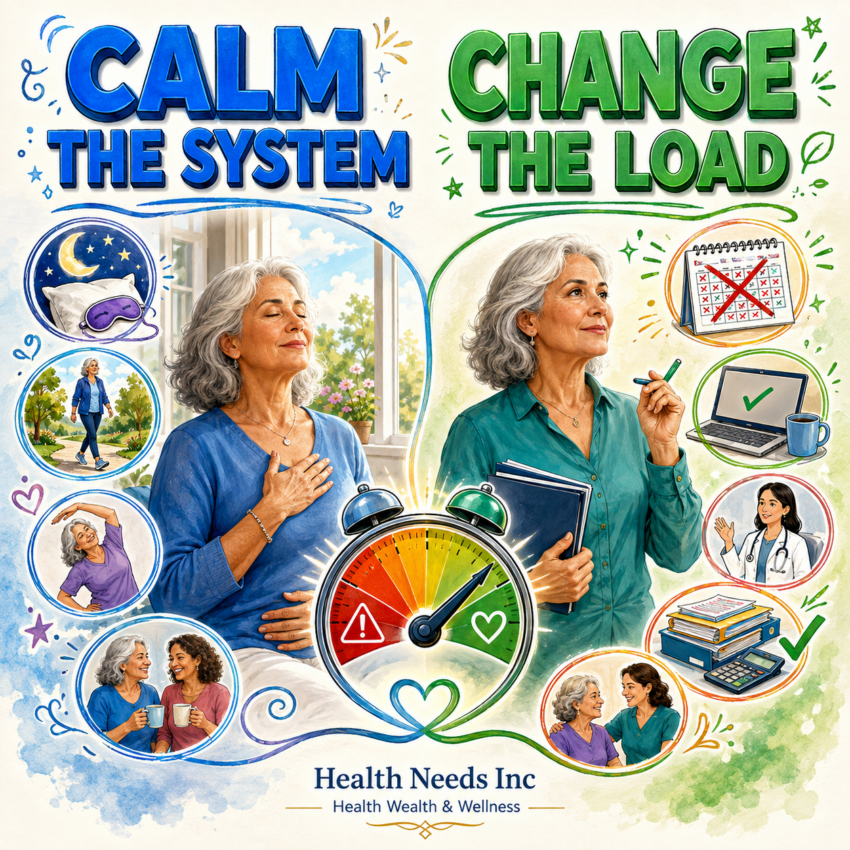
The basics are not glamorous, but they travel well. Consistent sleep, appropriate activity, realistic workload changes, connection, and evidence-based mental health care can reduce stress burden.
Steroid medicines matter. Long-term or high-dose corticosteroid use is the most common cause of Cushing’s syndrome, and suddenly stopping them can be dangerous.
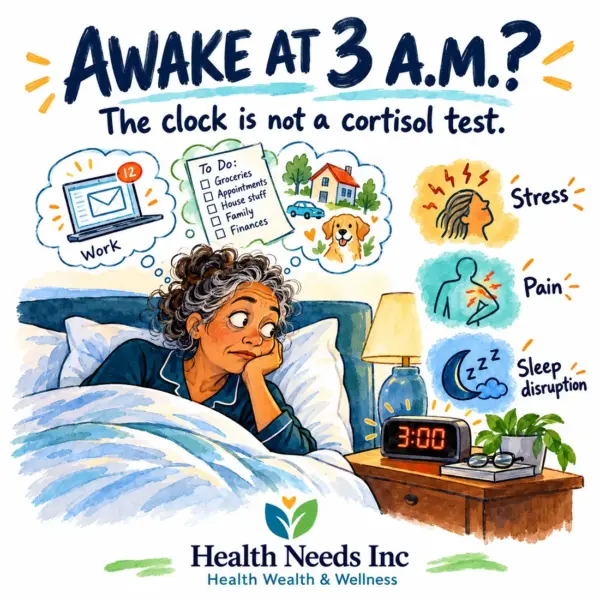
Cortisol has become the wellness industry’s favorite suspect. Tired? Cortisol. Awake at 3:12 a.m.? Cortisol. Jeans objecting to recent negotiations? Obviously cortisol, possibly plotting with gluten.
The appeal is understandable. A single hormone offers a clean explanation for messy modern life. It also creates a splendid sales funnel: first frighten people with a normal biological process, then sell them gummies to negotiate with their adrenal glands.
But cortisol is neither imaginary nor trivial. It is essential. Too much cortisol for too long can damage health, and too little can become dangerous. The useful question is not, “How do I destroy cortisol?” It is, “Is my cortisol system responding normally, or is something genuinely wrong?”
This article separates everyday stress physiology from endocrine disease.
It also places cortisol inside the larger picture of physical wellness without fitness-cult nonsense, because sleep, work, money, relationships, illness, and movement refuse to remain in separate lifestyle departments.
What Cortisol Actually Does
Cortisol is a steroid hormone produced by the adrenal glands, which sit above the kidneys. Its release is coordinated by the hypothalamic-pituitary-adrenal axis, usually abbreviated HPA axis because biology occasionally shows mercy.
The brain detects a demand. The hypothalamus signals the pituitary. The pituitary releases adrenocorticotropic hormone, or ACTH, which tells the adrenal glands to produce cortisol.
Cortisol then helps the body meet the moment and feeds information back to the brain so the response can be adjusted.
Cortisol helps regulate several systems:
-
- It makes energy available by influencing glucose, fat, and protein metabolism.
- It supports blood pressure and cardiovascular function.
- It changes immune and inflammatory activity.
- It helps the body respond to infection, injury, low blood sugar, exercise, and psychological stress.
- It participates in the sleep-wake rhythm and morning alertness.
A brief cortisol rise is not evidence of bodily failure. It may be exactly what adaptation requires. Exercise can raise cortisol during the session while regular appropriate activity improves broader health and may improve sleep and anxiety.
Context is doing a great deal of work here, as context tends to do when the internet has already left the building.
Cortisol Is a Rhythm, Not a Fixed Score
Cortisol follows a circadian pattern. Levels generally rise around waking, increase during the first part of the morning, then decline across the day and reach their lowest range near the beginning of sleep.
That curve helps explain why a result without a collection time is not very informative. A morning blood cortisol and a late-night salivary cortisol are answering different questions.
Shift work, jet lag, disrupted sleep, pregnancy, illness, alcohol use, depression, and medications can further complicate interpretation.
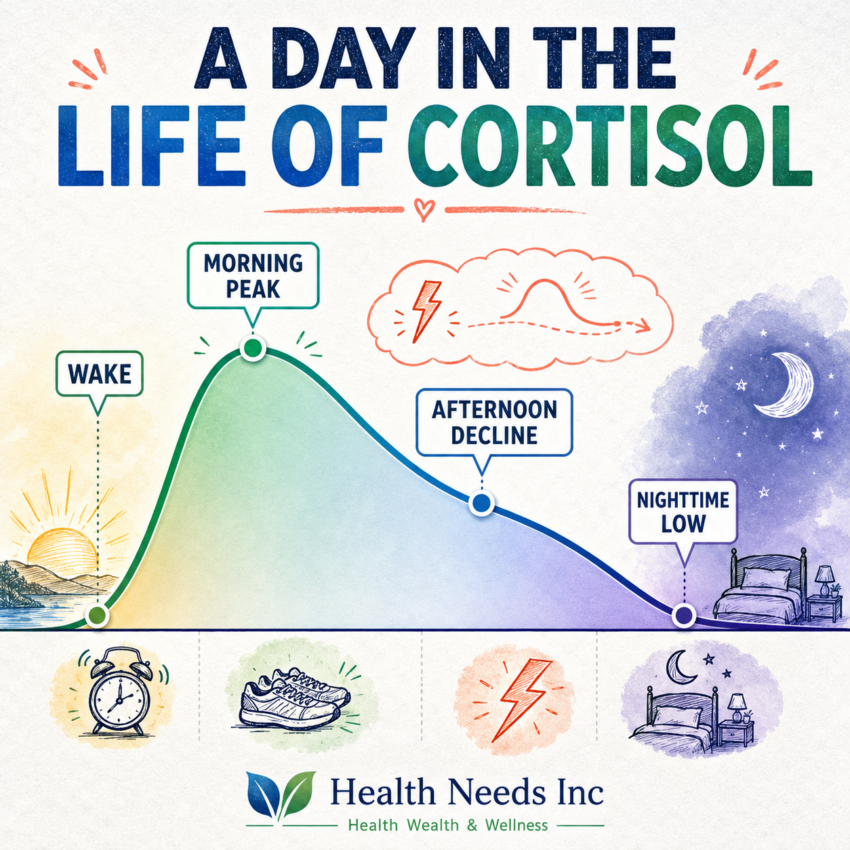
The rhythm matters as much as the amount. Researchers may examine the waking response, the slope across the day, total exposure, or whether cortisol properly falls at night.
A commercial home test that hands you one number and a discount code may not capture any of that.
When Cortisol Becomes a Real Problem
There are two broad problems: sustained cortisol excess and cortisol deficiency. Both deserve medical attention. Neither should be diagnosed from a social-media checklist assembled beside a picture of an inflamed cartoon abdomen.
True Cortisol Excess
Cushing’s syndrome means prolonged exposure to excessive cortisol. According to the National Institute of Diabetes and Digestive and Kidney Diseases, the most common cause is long-term, high-dose use of glucocorticoid medicines.
These include medications such as prednisone and dexamethasone used for inflammatory disease and other medical conditions.
The body can also produce excessive cortisol because of pituitary, adrenal, or other tumors. Cushing’s disease is the form caused by a pituitary tumor that produces too much ACTH.
These conditions are serious, but they are not synonymous with having a stressful month and wanting carbohydrates.
Cortisol Deficiency
Adrenal insufficiency occurs when the body does not produce enough cortisol. Causes include autoimmune damage to the adrenal glands, pituitary or hypothalamic problems, and sudden withdrawal after prolonged corticosteroid therapy.
The NIDDK overview of adrenal insufficiency lists fatigue, muscle weakness, loss of appetite, weight loss, and abdominal pain among common symptoms. Severe adrenal crisis can involve low blood pressure, vomiting, confusion, dehydration, or loss of consciousness and requires emergency care.
Symptoms: Useful Clues, Terrible Verdicts
Symptoms associated with cortisol problems are frustratingly nonexclusive.
Fatigue can reflect insomnia, anemia, infection, thyroid disease, depression, medication effects, sleep apnea, chronic pain, caregiving, or the entirely medical condition known as having too much to do.
Weight change, anxiety, low mood, poor concentration, and disrupted sleep are equally promiscuous symptoms. They occur across many conditions and ordinary life circumstances.
This is why “I have five signs of high cortisol” is a reason to look more carefully, not a diagnosis.
Patterns That Can Raise Concern About Cushing’s Syndrome
More specific patterns may include easy bruising, wide purple stretch marks, muscle weakness, a rounder face, increased fat around the neck or trunk with thinner limbs, high blood pressure, bone loss, menstrual changes, reduced fertility, or difficult-to-control blood sugar.
Not everyone has every sign.
If several progressive features appear together, especially during or after corticosteroid treatment, discuss them with a clinician. Bring a complete medication list that includes pills, injections, inhalers, creams, and supplements. “Steroid” is a category that likes disguises.
The Cortisol Reality Check
This is a decision aid, not a diagnostic test. Its purpose is to separate a likely lifestyle-stress conversation from a medication or medical evaluation that should not be delayed.
1. Check the Context
- Has sleep, caregiving, work, pain, illness, grief, or financial pressure recently changed?
- Are symptoms intermittent, or are they progressive and persistent?
- Do symptoms improve when the acute demand eases?
2. Check Every Medication Route
- Oral corticosteroids such as prednisone
- Steroid injections
- Inhaled or nasal corticosteroids
- Prescription skin creams
- Unregulated products with incomplete ingredient lists
3. Look for Medical Red Flags
- Progressive muscle weakness, easy bruising, wide purple stretch marks, or major body-composition changes
- Unexplained weight loss, low blood pressure, repeated vomiting, fainting, or severe weakness
- Symptoms that interfere with daily function or continue despite reasonable sleep and stress changes
4. Choose the Next Step
If the pattern points mainly to an overloaded life, use the seven-day audit below and address the actual load. If medication or red flags are present, contact a qualified health professional. If severe weakness, vomiting, confusion, fainting, or very low blood pressure occurs, seek urgent medical care.
Why Cortisol Testing Is More Complicated Than It Looks
A clinician does not usually diagnose Cushing’s syndrome from one ordinary morning blood draw.
The NIDDK describes several established approaches, including 24-hour urinary free cortisol, late-night salivary cortisol, and low-dose dexamethasone suppression testing. More than one test may be needed because no single test is perfect.
For suspected adrenal insufficiency, the ACTH stimulation test is commonly used. A clinician may also order ACTH, electrolytes, imaging, or other tests depending on the clinical picture.
Testing can be influenced by collection time, sleep pattern, acute illness, alcohol intake, pregnancy, estrogen-containing medication, kidney function, depression, obesity, and steroid exposure.
That does not make testing useless. It makes interpretation a medical task rather than a horoscope with saliva.
What About At-Home Cortisol Tests?
Home collection can be part of legitimate medical testing when ordered and interpreted appropriately, particularly late-night salivary testing.
Direct-to-consumer panels marketed for “adrenal fatigue” are another matter.
“Adrenal fatigue” is not the same as adrenal insufficiency and is not an established endocrine diagnosis. A graph with red and green zones can look impressively scientific while leaving the essential questions unanswered:
Was the right test used? Was it collected correctly? What medications or conditions affected it? What diagnosis is being considered?
How to Lower Cortisol Without Turning Life Into a Laboratory
If testing identifies a disorder such as Cushing’s syndrome, lowering cortisol requires treatment of the cause under specialist care. Lifestyle strategies do not dissolve a pituitary tumor, and chamomile tea should not be assigned neurosurgery.
If the concern is chronic everyday stress, the target is broader: reduce unnecessary activation, restore sleep and activity rhythms, and improve recovery.
The following strategies have reasonable evidence for stress, sleep, or overall health, even when no study proves that one habit will produce a precise cortisol reduction in every person.
1. Stabilize Sleep and Wake Times
Sleep and cortisol regulate each other. Poor sleep can disturb the daily cortisol pattern, while stress can make sleep harder.
Begin with wake time because it anchors the day. Get morning light when possible, move caffeine earlier, and reduce late alcohol, which can make a person sleepy before making sleep fragmented and vindictive.
2. Use Movement as Regulation, Not Punishment
Physical activity can temporarily increase cortisol. That does not mean exercise is harmful. The CDC notes that regular activity can improve sleep and reduce short-term anxiety, with benefits beginning below the full weekly target.
Match activity to current capacity. Walking, cycling, swimming, resistance training, chair-based movement, gardening, and mobility work all count.
If every workout leaves you flattened for two days, the program may need adjustment, not another motivational quote in military font.
3. Practice a Genuine Downshift
Slow breathing, progressive muscle relaxation, guided imagery, meditation, and yoga can help some people reduce perceived stress. The National Center for Complementary and Integrative Health describes preliminary evidence for diaphragmatic breathing and cautions that evidence varies by condition.
The useful practice is the one you will actually do.
Five minutes of slow breathing every day may be more valuable than purchasing a meditation cushion so expensive that it creates a fresh stressor.
4. Reduce the Demand, Not Only the Reaction
Stress management often becomes another job assigned to the stressed person. Breathe better. Think better. Buy lavender. Meanwhile, the unsafe workplace, impossible caregiving schedule, debt pressure, discrimination, pain, or unstable housing remains untouched.
Regulation skills help, but structural problems require structural responses. Ask what can be delegated, renegotiated, documented, treated, automated, paused, or ended. Sometimes the most evidence-based breathing exercise begins after saying no.
5. Protect Social Connection
Isolation removes a major form of emotional regulation. A conversation, shared meal, support group, faith community, therapy relationship, or reliable walking companion can make stress more manageable, especially when the source cannot be quickly removed.
Connection is not a decorative wellness extra. Humans regulate through other humans. This is inconvenient for an industry that would rather ship the solution in a bottle.
6. Treat Anxiety, Depression, Trauma, Pain, and Sleep Disorders
Persistent stress symptoms may be maintained by a condition that deserves direct treatment.
Cognitive behavioral therapy, trauma-informed care, treatment for depression or anxiety, pain management, and evaluation for sleep apnea can be more useful than chasing cortisol as a standalone target.
The goal is not to prove that symptoms are “psychological.” The brain, endocrine system, immune system, sleep system, and social world are not rival political parties. They communicate constantly.
Food, Caffeine, Alcohol, and the Cortisol Supplement Bazaar
No single food switches cortisol off. Regular meals with adequate protein, fiber-rich carbohydrates, healthy fats, and enough total energy can support general health and stable daily function.
Extreme restriction may add physiological and psychological stress, particularly when paired with hard training or inadequate sleep.
Caffeine affects people differently. If anxiety, palpitations, or insomnia are present, test a smaller dose or earlier cutoff.
Alcohol may feel calming in the first act and disrupt sleep in the second, a familiar plot structure for substances with excellent public relations.
Supplements marketed for cortisol commonly include ashwagandha, magnesium, phosphatidylserine, rhodiola, and assorted proprietary blends.
Evidence varies by product, dose, population, and outcome. “May reduce a measured marker in one study” is not the same as “treats your symptoms safely.”
Supplements can interact with medicines, affect the thyroid, liver, blood pressure, blood sugar, or sedation, and vary in quality.
Discuss them with a pharmacist or clinician, particularly if you take prescription medicines, have a health condition, are pregnant, or are preparing for surgery.
A Seven-Day Cortisol and Stress Reset
This is not a detox. Your liver was not waiting for a PDF. It is a short observation period designed to reveal the few pressure points worth changing first.
-
- Day 1: Record, do not repair. Note sleep and wake times, caffeine and alcohol, movement, symptoms, stress peaks, medications, and the situations surrounding them.
- Day 2: Anchor the morning. Wake at the planned time, seek daylight, eat according to your medical needs, and avoid opening the day with 40 minutes of televised catastrophe.
- Day 3: Add manageable movement. Choose 10 to 30 minutes that fits your capacity. The test is whether you can repeat it, not whether your watch awards a medal.
- Day 4: Create one recovery interval. Try five minutes of slow breathing, stretching, quiet music, prayer, meditation, or time outdoors.
- Day 5: Remove one amplifier. Move caffeine earlier, reduce late alcohol, silence nonessential notifications, or stop treating bedtime as the final shift of the workday.
- Day 6: Address one real demand. Make an appointment, ask for help, renegotiate a deadline, review a bill, or create one boundary.
- Day 7: Review the pattern. What improved? What persisted? What requires professional assessment rather than another week of self-experimentation?
Keep the smallest changes that clearly helped. If nothing changed, that is useful information too. Bodies are not vending machines where the correct habit produces the selected result before the snack gets stuck.
When to Talk With a Health Professional
Make a routine appointment if symptoms persist, worsen, interfere with daily life, or include progressive muscle weakness, unexplained bruising, wide purple stretch marks, major body-composition changes, difficult blood pressure or glucose control, unexplained weight loss, skin darkening, repeated dizziness, or unusual salt craving.
Also seek guidance if you use corticosteroid medication and have concerns about side effects. Do not stop it abruptly. A clinician may need to reduce the dose gradually because prolonged steroid exposure can suppress the body’s own cortisol production.
Seek urgent care for severe vomiting, profound weakness, confusion, fainting, dehydration, very low blood pressure, or rapid deterioration, especially with known adrenal disease or recent steroid withdrawal.
Adrenal crisis is an emergency, not an occasion to compare adaptogens.
Before the visit, write down symptom timing, medication names and routes, sleep pattern, recent illness, and major changes in weight, blood pressure, or blood sugar. Good clinical history often begins where vague hormone storytelling ends.
Wellness without the fog.
Get practical, skeptical wellness thinking without miracle powders, panic marketing, or a morning routine requiring airport-ground-crew discipline.
Final Thoughts: Lower the Alarm, Not the Hormone
Cortisol is not an invading substance. It is part of the machinery that wakes you, fuels activity, maintains circulation, manages inflammation, and helps you survive illness and danger. A body without enough cortisol is not enlightened. It is medically vulnerable.
The problem is dysregulation, sustained excess, deficiency, or a life that keeps pulling the alarm. Those are different problems. They require different responses.
If everyday stress is driving the concern, begin with sleep regularity, appropriate movement, real recovery, social connection, and changes to the demand itself. If symptoms are progressive, unusual, medication-related, or severe, move beyond wellness speculation and seek medical evaluation.
The mature goal is not a perfectly calm life. That creature has never been spotted outside an advertisement.
The goal is a system capable of rising when needed, settling when the demand passes, and receiving competent help when it cannot.
Cortisol does not need a public-relations campaign. It needs context.
FAQs About Cortisol
Cortisol helps regulate energy availability, blood pressure, metabolism, immune and inflammatory activity, and responses to illness, exercise, and psychological stress.
It also follows a daily rhythm linked to waking and sleep. Cortisol is necessary for survival, so the goal is not to eliminate it.
You cannot reliably determine cortisol status from fatigue, anxiety, poor sleep, weight gain, or a social-media checklist because these symptoms have many causes.
Clinicians assess the pattern, medications, examination findings, and appropriately timed tests. Suspected Cushing’s syndrome often requires more than one established test.
Acute physical or psychological stress can raise cortisol temporarily, which is part of normal adaptation.
Chronic stress may alter cortisol patterns, but it does not automatically mean a person has Cushing’s syndrome. Clinical hormone excess is a specific disorder that requires medical evaluation.
Regular sleep timing, suitable physical activity, relaxation practices, social support, and treatment of anxiety, depression, trauma, pain, or sleep disorders may help regulate the broader stress response.
Effects vary, and these strategies do not treat endocrine causes of cortisol excess.
Caffeine can temporarily affect cortisol and alertness, but the practical issue is often whether it worsens anxiety, palpitations, or sleep.
People vary in sensitivity. If symptoms are present, try a smaller amount or an earlier cutoff and discuss persistent concerns with a clinician.
Adrenal fatigue is not an established endocrine diagnosis and should not be confused with adrenal insufficiency, which can be serious and is diagnosed with medical testing.
Persistent fatigue deserves evaluation for common and treatable causes rather than an assumption that the adrenal glands have become tired.
No. Do not stop prednisone or another prescribed corticosteroid suddenly without medical guidance. Long-term use can suppress natural cortisol production, and abrupt withdrawal may cause adrenal insufficiency.
A clinician can determine whether and how the medicine should be tapered.
Severe vomiting, profound weakness, confusion, fainting, dehydration, or very low blood pressure can signal adrenal crisis, especially in someone with adrenal disease or recent steroid withdrawal.
Seek emergency medical care. Do not wait for a home cortisol test or attempt self-treatment.