
This article is for educational and informational purposes only. Not financial advice. Consult a certified financial planner for personal situations.
Why Smart People Still Feel Broken Around Money
The strange humiliation of being competent everywhere else — and why financial fragility haunts even the sharpest minds.

Many high‑income, high‑achieving individuals still feel broken around money, not because they lack intelligence, but because money bypasses logic and hits the nervous system.
Overanalysis and the illusion of control are elegant traps that turn smart people’s greatest strengths against them when managing finances.
Spending is often mood regulation, not rational choice, and intelligent people are expert rationalizers of impulsive behavior.
More income rarely fixes the feeling of being broken around money; lifestyle expands to swallow raises, leaving anxiety intact.
Simple systems (automated savings, budgets, emergency funds) outperform sophisticated strategies, but smart people often resist the boring stuff.
Separating your bank balance from your self‑worth is the real work. Feeling broken around money does not mean you are broken.
The Strange Contradiction of Feeling Broken Around Money
One of the stranger facts of modern adulthood is that many high earners still feel financially fragile. A remarkable number of people making strong incomes still live paycheck to paycheck, which should probably unsettle us more than it does. We like to imagine that intelligence naturally spills over into financial competence, as if the mind that can run a company division or dismantle a complicated argument should also be able to effortlessly manage a checking account.
But life keeps offering the opposite evidence. Some of the smartest people you know still open their banking app with a low‑grade sense of dread, a classic sign of feeling broken around money.
Competence in public, confusion in private. That tension is where the real story lives. Money has a way of bypassing intelligence and going straight for the nervous system. It is rarely just a matter of arithmetic. More often it is psychology wearing the mask of numbers. Fear, status, family history, and private mythology all arrive at the table before reason gets a chance to speak. That is why so many accomplished people secretly feel broken around money, it’s not a math problem; it’s an emotional one.
The contradiction is almost comic.
Why do brilliant professionals still feel financially fragile?
Because feeling broken around money has little to do with IQ or income. It’s about psychology, shame, and the hidden architecture of modern consumer culture.
When Intelligence Becomes Its Own Trap Around Money
One of the more elegant traps smart people fall into is over analysis. The same mind that excels in professional life often becomes a machine for manufacturing uncertainty when money enters the room. A straightforward decision like choosing an investment strategy can mutate into months of research, comparison, and hesitation. Books pile up. Tabs multiply. Podcasts whisper competing truths.
Meanwhile nothing actually happens. The intellect becomes its own obstacle. What looks like prudence is often avoidance in a more flattering outfit. Smart people can be exceptionally good at giving fear a respectable vocabulary.
That is precisely why so many continue to feel broken around money, they intellectualize instead of act.
The illusion of control deepens the feeling of being broken around money
Then there is the illusion of control, a favorite delusion of competent adults. People who are used to producing results through effort often assume money should obey the same logic. Work hard, make the right decisions, and the outcomes should line up neatly.
But money is attached to markets, accidents, illness, layoffs, timing, and plain bad luck. Reality refuses to honor our belief in mastery. That refusal can feel deeply personal. The problem is not just financial. It is philosophical. It forces a confrontation with the limits of control, and few things unsettle high‑functioning people more than discovering the world has not signed their contract with certainty. This is another reason intelligent individuals often feel broken around money, they can’t force the spreadsheet of life to behave.
The Emotional Life of Money: Spending, Shame, and Silence
Money has an emotional charge that smart people sometimes underestimate in themselves.
We like to imagine we make rational decisions, but spending is often less about logic than about emotional relief. Purchases become rewards, anesthetics, or symbols. Sometimes what looks like lifestyle is really mood regulation.
A designer purchase after a brutal week at work is not always about taste. Sometimes it is just stress looking for a costume. And intelligent people are often particularly skilled at rationalizing this. They can construct elegant explanations for impulsive behavior. The mind is remarkably talented at converting desire into philosophy. That cycle deepens the sense of being broken around money, because the rational brain colludes with the emotional one.
Then culture enters the picture and makes everything worse. We live inside a system that constantly asks people to look fine. Financial vulnerability remains oddly taboo. People will admit to burnout, heartbreak, and insomnia before they confess that they have no emergency savings or that debt is quietly eating them alive.
The silence creates the illusion that everyone else has figured it out. They haven’t. Many people are simply performing stability. This is part of the cruelty of consumer culture.
It encourages immediate gratification while demanding the appearance of control. People are urged to spend like winners and then privately blame themselves for the consequences. No wonder so many high achievers report feeling broken around money, the game is rigged to make you feel insufficient.

Why More Money Often Changes Nothing (If You Still Feel Broken Around Money)
High income does not necessarily protect against this. In fact, it can intensify it. More money often expands lifestyle rather than security. Raises become restaurants, travel, renovations, subscriptions, and monthly payments.
The feeling of scarcity survives the paycheck.
The number changes.
The anxiety stays.
That is because income and wealth are not the same thing. Income is flow. Wealth is structure. Without systems beneath it, even a strong income can dissolve into the atmosphere of modern life. Feeling broken around money persists because the internal relationship with money, not the external number, remains unrepaired. A 2022 survey by APA found that 72% of adults report feeling stressed about money regardless of income level, confirming that psychological patterns outweigh raw earnings.
Income changes the number, not the anxiety.
Why do raises rarely make the financial dread disappear?
Because feeling broken around money is driven by lifestyle creep, comparison culture, and the lack of automated systems, not a low salary.
Practical Ways to Stop Feeling Broken Around Money
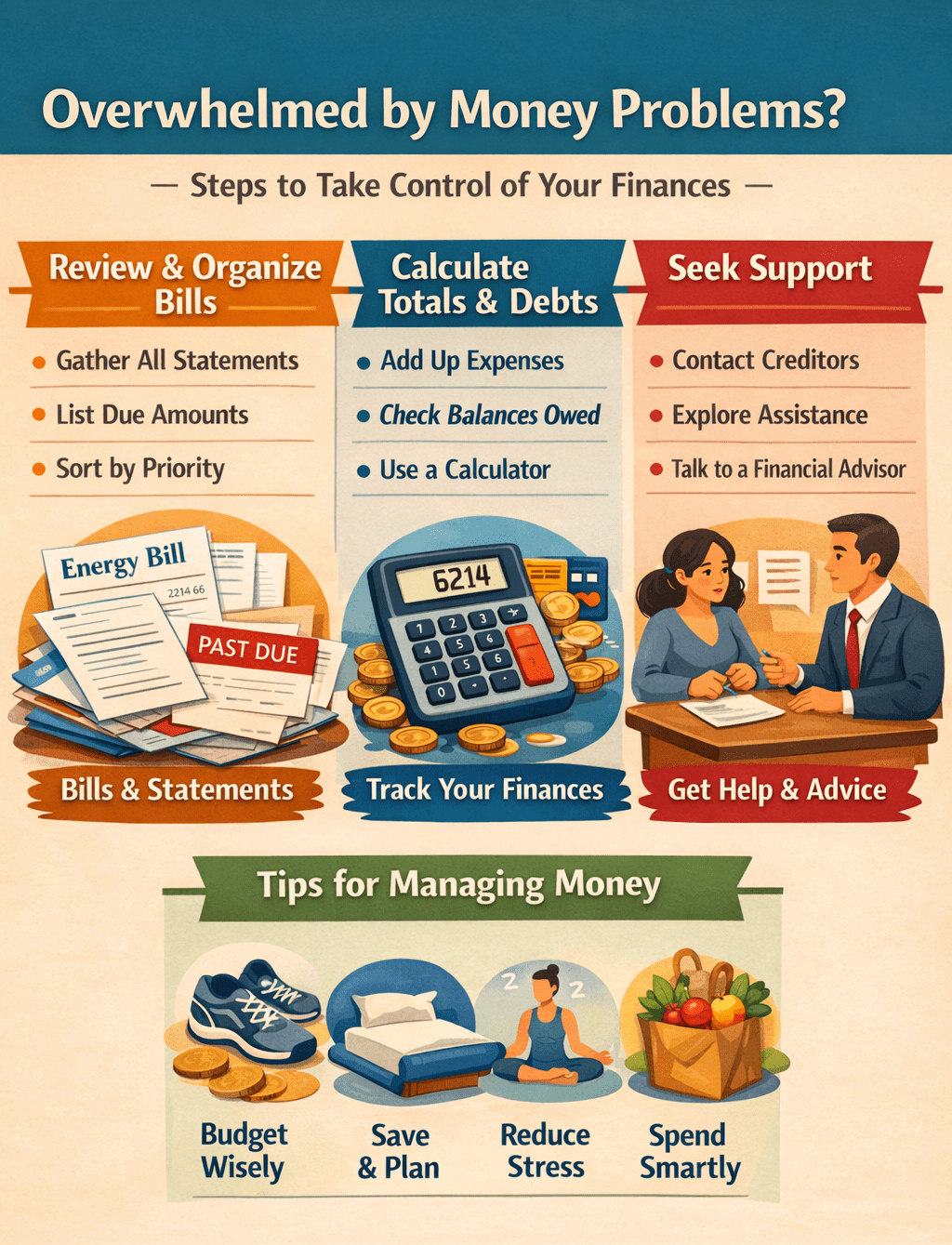
Systems Over Willpower: This is where the boring advice earns its dignity. Budgets matter. Automated savings matter. Emergency funds matter. None of it is glamorous, which is perhaps why so many intelligent people resist it. We tend to assume sophistication should require sophistication.
In reality, financial stability is often built from embarrassingly simple habits executed consistently. The boring things are doing most of the heavy lifting. Setting up an automatic transfer of 10–20% of each paycheck into a separate savings account is a tiny act that defeats the feeling of being broken around money over time.
Repairing the Belief Beneath the Behavior: What often needs repair is not just behavior but belief. Many people quietly equate money with worth. A shrinking account balance begins to feel like evidence of personal inadequacy. Every bad decision becomes moralized. Every bill feels accusatory.
This is where money stops being practical and becomes existential. The real work is separating finances from identity. Your bank balance is not a referendum on your intelligence, your virtue, or your value as a person. Feeling broken around money does not mean you are broken. More often it means you are living inside a culture expertly designed to keep people comparing, consuming, and quietly panicking. That is not failure. That is the atmosphere.

Repairing the Belief Beneath the Behavior
There is something darkly funny about the way we prioritize everything above our relationship with money. We worry about productivity, social status, and work achievements — while ignoring the very beliefs that keep us stuck. A 2023 study from Journal of Financial Planning found that financial shame is a stronger predictor of poor money management than low income or education.
Recognizing this absurdity is liberating: feeling broken around money is not a character flaw, it’s a symptom of a culture that ties worth to wealth. The shift happens when you stop asking “Why am I so bad with money?” and start asking “What system can I build that works even when I’m tired, busy, or emotional?”.
Smart people still feel broken around money because they try to think their way out, but money healing begins with structure, not intellect.
Frequently Asked Questions
It means experiencing shame, anxiety, or dread about your financial situation even when you are objectively competent and often high‑earning. It’s the gap between your professional success and your private financial panic.
Intelligence can become a trap: overanalysis, the illusion of control, and expert rationalization of impulsive spending. Smart people often try to think their way out of feeling broken around money instead of building simple systems.
Absolutely. More money often expands lifestyle rather than security. Without automated systems and emotional separation, even six‑figure incomes can leave people feeling financially fragile.
Start with small systems: automate savings, build a $1,000 emergency fund, track spending without judgment. Then do the deeper work of separating your self‑worth from your net worth.
Yes. Studies show that most adults experience financial shame, but few talk about it. The silence makes everyone feel alone, but feeling broken around money is far more common than advertised.
Notice the story you tell yourself. Replace “I’m bad with money” with “I haven’t built the right system yet.” That subtle shift moves you from shame to problem‑solving.