
This article is for educational and informational purposes only and is not medical advice. Consult a qualified healthcare professional before making significant changes to your diet, particularly if you have a medical condition.
What Are Macronutrients? Carbs, Protein, and Fat Explained
The straightforward science of carbohydrates, proteins, and fats, without the cult membership or the Instagram filter.
What Are Macronutrients, and Why Do They Actually Matter?
What are macronutrients?
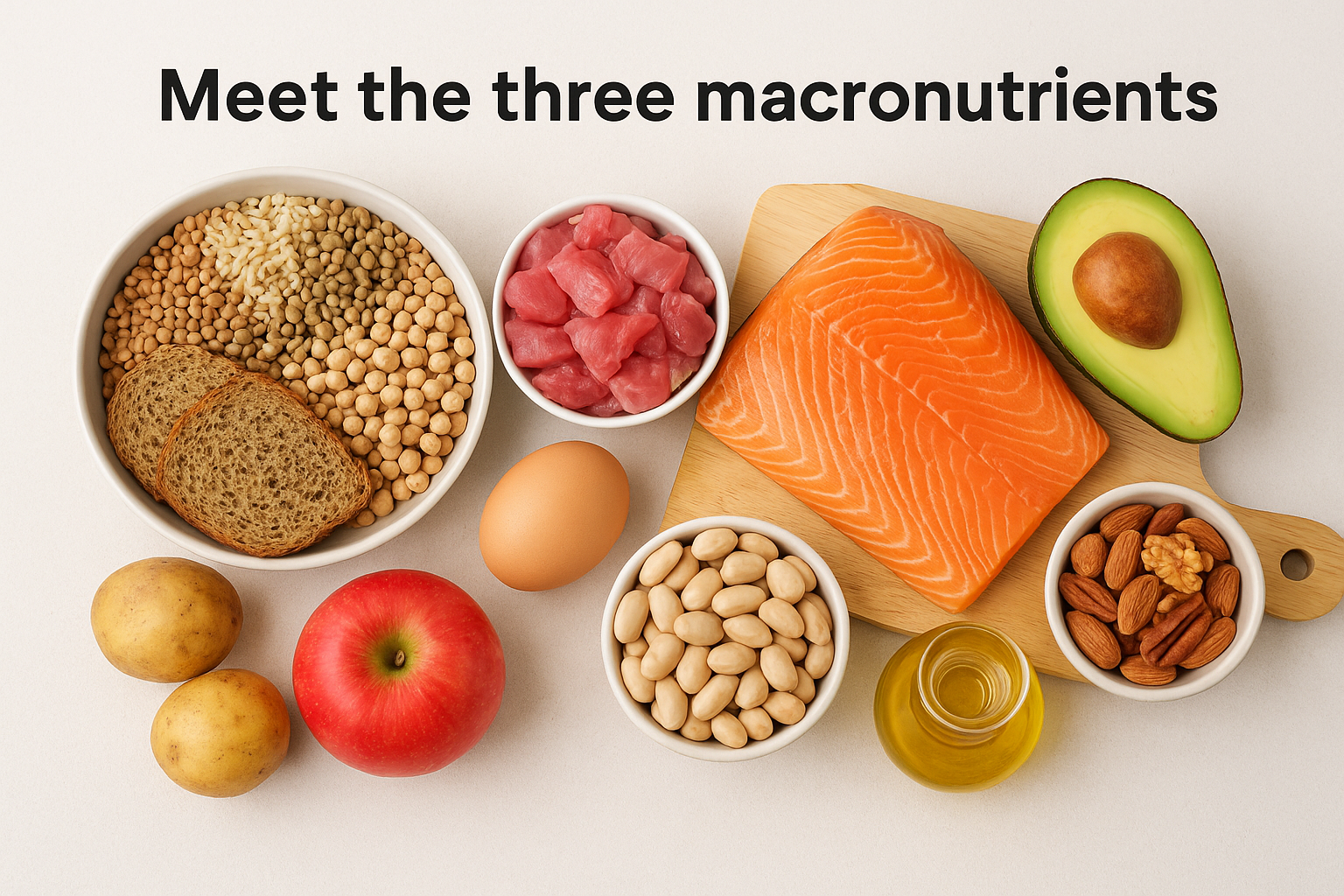
Macronutrients are the three categories of nutrients your body requires in large amounts: carbohydrates, proteins, and fats.
Every calorie in your diet comes from one of these three sources. According to the National Institutes of Health, each macronutrient performs distinct, irreplaceable functions, from fueling your brain to building tissue to regulating hormones. No single macronutrient is optional.
Key Takeaways
Macronutrients are carbohydrates, proteins, and fats, the three nutrient categories that supply all of your dietary calories.
Each macronutrient performs functions the others cannot replace. Cutting any one category too low for too long creates measurable biological problems.
How much you need varies by body size, activity level, and health goals. Your friend’s optimal ratio may leave you feeling terrible, and that is not a personal failing.
Weight gain results from total calorie surplus, not from carbohydrates specifically. The NIH has confirmed this. The low-carb craze is marketing dressed up as biology.
Visual portioning beats obsessive tracking for most people. Half plate vegetables, palm of protein, fist of starch, thumb of fat. No app required.
High-protein intake does not damage healthy kidneys. The concern applies to people with pre-existing kidney disease, not to the general population.
The Most Useful Thing You Can Learn About Food
You’ve seen the word “macros” in gym locker rooms, nutrition apps, and on the back of protein bars designed to look like candy bars (they’re not).
But understanding what are macronutrients doesn’t require a certification, a meal-prep Sunday ritual, or a subscription to anything. It requires about ten minutes and a willingness to replace mythology with mechanics.
Every calorie you consume comes from one of three sources: carbohydrates, proteins, or fats. That’s it. These three categories are what nutritionists call macronutrients, because your body needs them in large (“macro”) quantities to function.
Vitamins and minerals are important too, but they’re micronutrients, required in much smaller amounts and not a direct calorie source.
At Health Needs Inc., we approach nutrition the same way we approach everything: with evidence and without the theatrics.
No macro “hacking.” No demonizing entire food categories. Just the actual science, backed by the NIH and peer-reviewed research, not by anyone’s supplement revenue stream.
This article breaks down what each macronutrient does in your body, how much you need and why it varies, and how to eat in a way that covers all three without turning dinner into a math problem.
Why Macronutrients Matter
Your body doesn’t run on motivation or positive affirmations. It runs on chemical reactions that require specific raw materials, and those materials come from the food you eat. Every cellular process, from building muscle tissue to regulating your heartbeat to producing the hormones that govern your mood, depends on a steady supply of all three macronutrients.
Without adequate intake, your body doesn’t shrug and move on. It adapts in ways you’d rather it didn’t: cannibalizing muscle for energy when carbs and calories run too low, impairing hormone production when fat intake drops below functional thresholds, and compromising immune response when protein is chronically insufficient.
Beyond survival, macros directly shape how you feel hour to hour. A breakfast heavy in refined carbs but short on protein spikes blood sugar and then crashes it by mid-morning. Skip fat and you’ll be genuinely hungry two hours after a large meal. Nail all three in reasonable proportions and you’re working with your biology instead of against it. The CDC notes that balanced macronutrient intake supports immune function, cognitive clarity, and long-term disease prevention.
That’s the argument for caring. Now here’s what each one actually does.
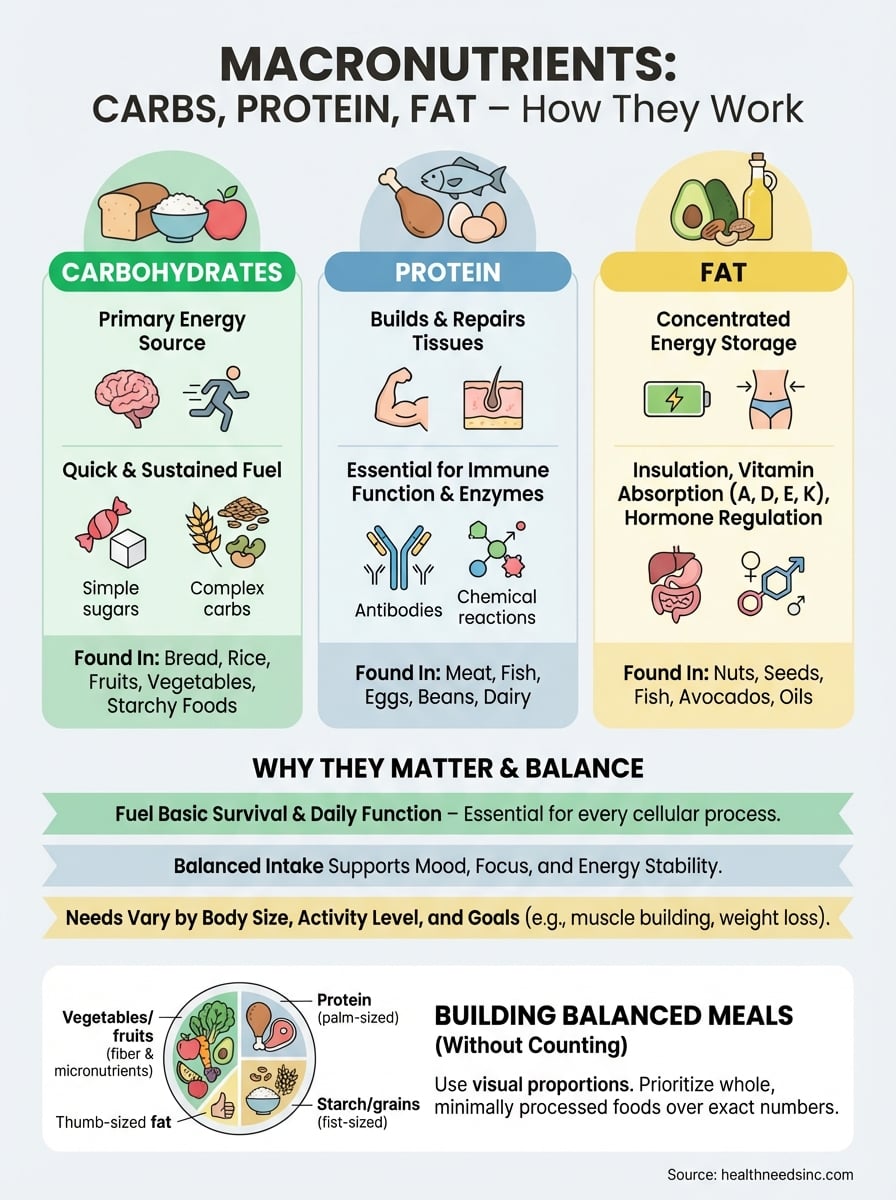
Carbohydrates: Your Body’s Preferred Fuel
Your brain and muscles prefer carbohydrates as their primary energy source, and for good reason. Glucose, the simplest form of carbohydrate, converts to usable fuel faster than either protein or fat. When your blood glucose drops, you feel it: sluggish thinking, irritability, the irrational urge to argue with your computer.
Not all carbohydrates behave the same way, and the distinction matters:
- Complex carbs (whole grains, legumes, vegetables) release glucose gradually, providing sustained energy and delivering fiber that supports gut health and satiety
- Simple carbs (table sugar, white bread, most processed snack foods) spike blood glucose quickly and fade just as fast, leaving you hunting for a follow-up hit
- Fiber, technically a carbohydrate, is not digested for energy but feeds the gut microbiome and slows glucose absorption, making everything run more smoothly
You’ll find carbohydrates in grains, legumes, fruits, vegetables, dairy, and anything with starch or sugar. The idea that carbs are inherently fattening is a myth addressed later in this article. The short version: it’s the total calorie picture, not the carbohydrate molecule, that determines body composition.
Protein: Builder, Repairman, Enzyme Factory
Your body uses protein to build and repair virtually every structural component it has: muscle fibers, skin cells, organ tissue, the antibodies in your immune system, and the enzymes that make digestion possible in the first place. It is doing construction work around the clock, and protein is the raw material.
Protein is composed of amino acids. Twenty amino acids exist; your body can manufacture eleven of them. The remaining nine are essential, meaning you must obtain them from food. Animal proteins (meat, fish, eggs, dairy) contain all nine in adequate ratios. Plant proteins generally don’t, which is why vegetarians and vegans need to combine sources strategically over the course of the day.
The NIH identifies protein as essential for immune function, hormone production, and cellular repair. It also has the highest thermic effect of any macronutrient, meaning your body burns more calories digesting protein than it does digesting carbs or fat. Useful information if you’re managing body weight.
Good dietary sources include:
- Meat and poultry
- Fish and shellfish
- Eggs and dairy
- Legumes (beans, lentils, chickpeas)
- Tofu, tempeh, and edamame
- Greek yogurt and cottage cheese
Fat: The Nutrient That Got Framed
Fat spent several decades in nutritional exile, blamed for heart disease, weight gain, and presumably the general decline of Western civilization. The science eventually caught up with the hysteria. Dietary fat, consumed in reasonable amounts from quality sources, is not the enemy. It’s the nutrient your body uses for concentrated energy storage, organ insulation, and absorbing the fat-soluble vitamins (A, D, E, and K) that would otherwise pass straight through you.
Fat also plays a central role in hormone production. Your body synthesizes steroid hormones, including cortisol, testosterone, and estrogen, from cholesterol. Drop dietary fat too low and hormone production follows. This is not a hypothetical; it’s a documented consequence of extreme low-fat dieting that shows up as fatigue, mood disruption, and reproductive irregularities.
The type of fat matters more than the total amount:
- Unsaturated fats (olive oil, avocado, nuts, most fish) support cardiovascular health and reduce systemic inflammation
- Saturated fats (butter, fatty meat, coconut oil) are not inherently harmful in moderate amounts but warrant awareness in the context of overall diet quality
- Trans fats (industrially produced, found in some processed foods) genuinely are problematic and worth actively avoiding
- Omega-3 fatty acids (fatty fish, flaxseed, walnuts) specifically support brain function, joint health, and anti-inflammatory pathways
Fat is also what makes food satisfying. The body registers satiety partly through fat digestion. Eat a low-fat meal and you’ll be back in the kitchen an hour later, philosophically confused about why.
How Much You Actually Need
Understanding what are macronutrients means accepting that “how much” doesn’t have a universal answer. Your body’s requirements depend on factors you can’t change, like age and body size, and factors you control, like activity level and health goals. Anyone selling you a single optimal macro ratio for all humans is selling something else.
The Baseline: Body Size and Activity Level
Your basal metabolic rate, the energy your body burns just keeping your organs functional, scales directly with body mass and muscle tissue. A 200-pound person doing manual labor has different fuel requirements than a 130-pound office worker. More muscle, more activity, more fuel needed across all three categories. The NIH recommends that physically active adults consume higher carbohydrate intake specifically to replenish glycogen stores depleted during exercise.
Adjusting for Specific Goals
Goal-based adjustments that are well-supported by research:
- Weight loss: Calorie deficit is the mechanism. Maintaining adequate protein (roughly 0.7g per pound of body weight) during a deficit preserves muscle mass while body fat decreases
- Muscle building: Requires a calorie surplus and higher protein, typically 0.8 to 1g per pound of body weight, distributed across meals
- Endurance performance: Higher carbohydrate intake supports sustained aerobic output and glycogen replenishment
- Managing blood sugar: Lower glycemic carb sources and balanced protein and fat at meals reduces glucose volatility
Medical conditions like type 2 diabetes or chronic kidney disease may require specific macronutrient adjustments under clinical supervision. Internet advice, including this article, does not substitute for that. See our contact page for referral guidance if you’re navigating a condition.
General Ranges Most Adults Tolerate Well
The USDA Dietary Guidelines and most major health institutions suggest the following ranges as a starting point, not a prescription:
- Carbohydrates: 45 to 65% of total calories
- Protein: 10 to 35% of total calories
- Fat: 20 to 35% of total calories
These are wide ranges, intentionally, because individual variation is real and biology isn’t standardized.
Building Balanced Meals Without Losing Your Mind
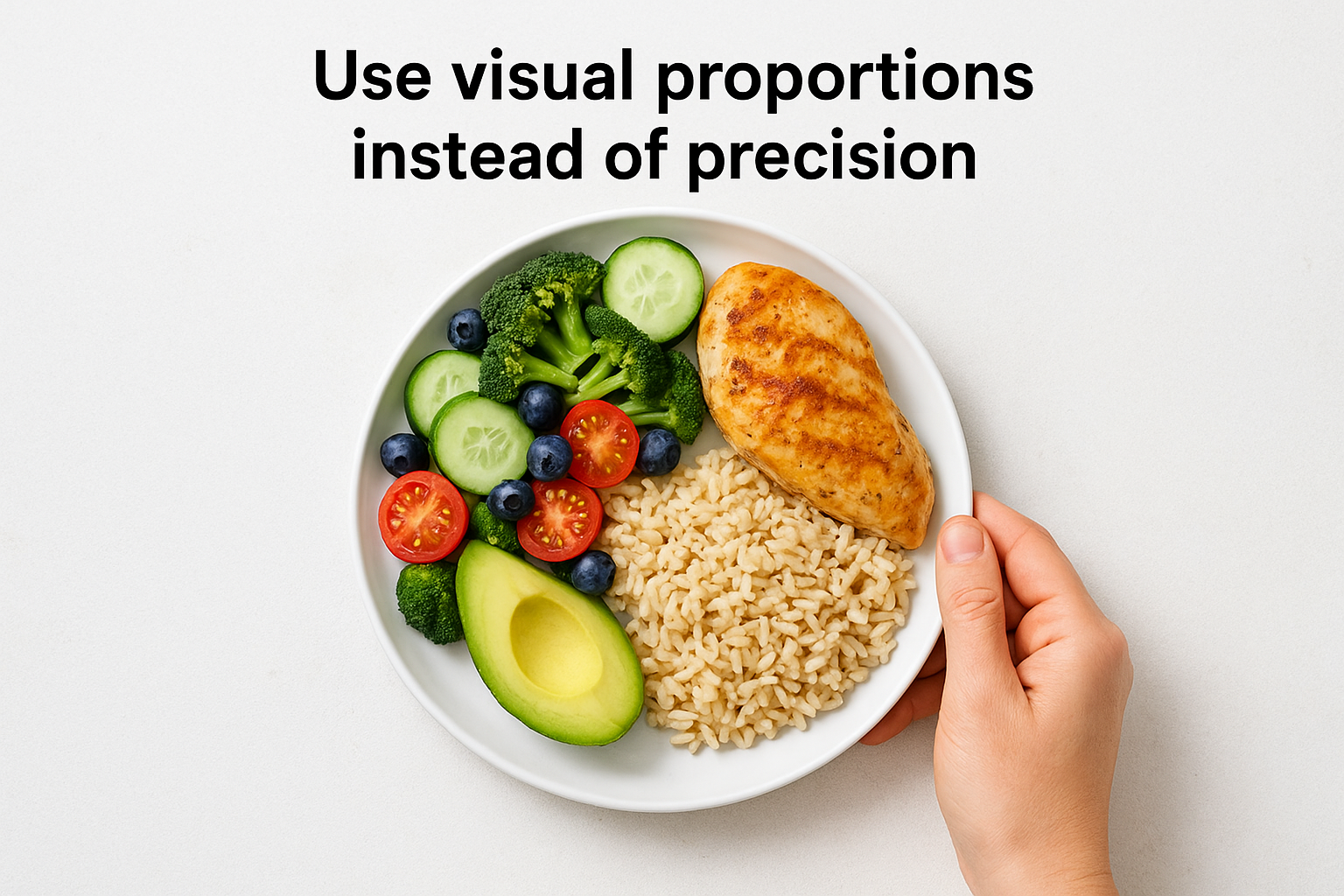
You don’t need a food scale or a tracking app to eat in a way that covers your macronutrient needs. Most people benefit more from internalizing a few visual cues than from converting every meal into a spreadsheet exercise. The goal is a sustainable eating pattern, one you can maintain without anxiety or a calculator.
1. Use Visual Proportions
The plate method works because it’s calibrated to human hands and plates, not laboratory precision:
- Fill half your plate with vegetables and fruit (fiber, micronutrients, volume)
- Add a palm-sized portion of protein (roughly 3 to 5 ounces)
- Add a fist-sized serving of whole grain or starchy vegetable
- Add a thumb-sized portion of fat from olive oil, avocado, nuts, or cheese
This approach naturally distributes macronutrients in functional ratios for most adults without requiring databases or apps. The USDA MyPlate model endorses balanced portions over precise tracking for general health maintenance.
2. Prioritize Food Quality Over Exact Numbers
Whole, minimally processed foods deliver macronutrients alongside vitamins, minerals, and fiber. A chicken breast with brown rice and roasted vegetables covers all three macros in reasonable proportions without a single calculation. Processed foods engineered for palatability tend to stack refined carbs and fats while skimping on protein and micronutrients, which is why eating them leaves you technically full but vaguely unsatisfied an hour later.
3. Anchor Meals Around Protein
Protein is the most satiating macronutrient and the most commonly underconsumed. Building each meal around a protein source first, then adding carbohydrate and fat, produces more stable energy and better satiety than building around carbs and adding protein as an afterthought. This isn’t ideology. It’s hunger management.
4. Don’t Fear Any Macronutrient
The wellness industry runs on demonization cycles. Fat was the villain in the 1980s. Carbs took over the role in the early 2000s. The science on neither held up as promised. A varied diet that includes all three macronutrient categories from quality sources is the pattern consistently associated with long-term health outcomes, across populations, cultures, and decades of research.
Clearing Up the Most Persistent Myths
Misunderstandings about what are macronutrients fuel everything from restrictive dieting trends to genuine health anxiety. These myths get repeated until they sound like established facts, which is how myths work. Here’s what the actual research shows.
Myth: Carbs Make You Fat
Your body stores excess calories as fat regardless of whether those calories came from bread, chicken, or avocado oil. The NIH confirms that weight gain results from consuming more calories than you burn, not from any specific macronutrient. Low-carb diets often produce initial weight loss because eliminating an entire food category creates a calorie deficit, not because glucose molecules have unique fat-storing properties.
Traditional Japanese and Mediterranean populations consume high-carbohydrate diets and maintain healthy body weights when total calories match energy expenditure. The carb-phobia is a cultural artifact of the 1990s diet industry, not a finding from nutrition science.
Myth: High Protein Damages Your Kidneys
This concern has a legitimate but narrow basis. People with existing chronic kidney disease need to limit protein under medical supervision, because impaired kidneys struggle to clear the nitrogen byproducts of protein metabolism. However, research consistently shows that healthy kidneys handle higher protein intake without issue. If your kidneys function normally, eating adequate protein supports muscle maintenance, satiety, and metabolic health, and does not cause kidney damage.
Myth: Dietary Fat Causes Heart Disease
The original research linking dietary fat to heart disease was conducted with significant methodological problems, selectively published, and backed by the sugar industry’s funding of the researchers who promoted it. (A detail the NIH has since documented.) The picture is substantially more complex: trans fats are genuinely harmful, highly processed carbohydrates contribute to cardiovascular risk, and unsaturated fats from whole foods are associated with positive outcomes. “Fat is bad” is not a finding. It’s a slogan.
Apps and Resources Worth Your Time
- Cronometer, a free app that tracks macros and micronutrients with hospital-grade food data. More accurate than most competitors, and useful for short diagnostic periods even if you don’t track long-term
- USDA FoodData Central (fdc.nal.usda.gov), the government’s nutrient database, free, comprehensive, no subscription required
- NIH Dietary Reference Intakes Calculator, a free tool for estimating your macronutrient targets by age, sex, and activity level
- MyPlate (myplate.gov), the USDA’s visual eating guide, a reasonable baseline for anyone who doesn’t want to track numbers at all
No hype. No detox kits. Just the research.
Join readers who get practical, science-backed wellness guidance delivered without the industry nonsense.
No spam, ever. Unsubscribe anytime.
Frequently Asked Questions
Macronutrients are the three categories of nutrients your body requires in large amounts: carbohydrates, proteins, and fats. Every calorie in your food comes from one of these three. They’re called “macro” because you need them in relatively large quantities, as opposed to micronutrients (vitamins and minerals), which are required in much smaller amounts.
No. Most people benefit more from understanding general principles and using visual portion guidelines than from precise tracking. Tracking can be useful for a short diagnostic period, to understand your habitual intake, or for specific performance goals like competitive athletics. For general health, eating a varied diet built around whole foods from all three macronutrient categories is sufficient without counting grams.
Consequences vary by macronutrient and duration. Chronically low carbohydrate intake impairs brain function, exercise performance, and mood. Insufficient protein slows tissue repair, weakens immunity, and leads to muscle loss over time. Very low fat intake disrupts hormone production, reduces absorption of fat-soluble vitamins (A, D, E, K), and impairs satiety signaling. Short-term deviations are generally not a concern. Sustained restriction of any macronutrient category produces measurable biological consequences.
There is no single ideal ratio, because calorie deficit is the primary mechanism of weight loss, and various macro distributions can produce that deficit. Research does consistently show that higher protein intake (around 30% of calories) during weight loss helps preserve lean muscle mass. Beyond that, the best ratio is the one that keeps you satisfied, sustains adequate energy, and is sustainable over time without feeling like a punishment.
Both fuel energy, through different pathways and at different timescales. Carbohydrates convert to glucose rapidly and are the preferred fuel for the brain and for high-intensity physical effort. Fats provide more calories per gram (9 vs 4) and are the dominant fuel source during low-intensity, sustained activity. The body uses both, often simultaneously, and the relative contribution depends on activity intensity, duration, and the macronutrient composition of recent meals.
Protein needs typically increase with age, not decrease. Muscle protein synthesis becomes less efficient after roughly age 50, which means older adults need more dietary protein than younger adults to achieve the same muscle maintenance response. Fat needs remain fairly stable. Carbohydrate requirements may decrease slightly if activity level drops, but adequate carbohydrate remains important for brain function and energy regulation at every age. Many older adults are chronically under-consuming protein, which accelerates age-related muscle loss (sarcopenia).
Final Thoughts
Understanding what are macronutrients doesn’t require a diet overhaul or a new relationship with a food scale. It requires recognizing that carbohydrates, proteins, and fats each perform distinct, non-negotiable functions in your body, and that the goal of eating is to cover all three in reasonable quantities from whole food sources, adjusted for how you actually live.
Ignore anyone who tells you a single macronutrient is to blame for all your problems. That’s not biology. That’s a sales pitch.
For a deeper look at how nutrition fits within the full picture of wellbeing, start with our 8 Dimensions of Wellness framework, which places food within the broader context of physical, mental, and social health. And if stress is eating your macro strategy alive before you even start, the research on understanding cortisol explains why, and what to do about it.