
Social Wellness: Building Relationships That Make Life Larger
Connection is easy to count. Much harder to count on.
 By Daniel Buck ·

A thousand followers can coexist quite comfortably with loneliness. Technology solved the problem of reaching people. It did not automatically solve the problem of knowing them.
Social wellness asks a more useful question: who can you enjoy life with, speak honestly to, and count on when something goes wrong? The answer rarely fits into a follower count.
Key Takeaways
- Meaningful connection depends on quality, reciprocity, belonging, and support, not popularity.
- Solitude, loneliness, and social isolation require different responses.
- Health associations matter, but no club or app guarantees protection from illness.
- Recurring, affordable, accessible contact gives relationships room to develop.
- Boundaries and safety matter as much as having company.
- Start with one missing kind of support and one manageable next step.
Key Takeaways
Table of Contents
01 What social wellness actually means
Social wellness is the ability to build and sustain relationships that offer belonging, mutual respect, practical support, and room to be yourself.
It includes close friendships, family relationships, neighbors, colleagues, and the communities you participate in. Popularity is optional. Having someone you can call when life becomes difficult is rather more useful.
The CDC describes social connection in terms of the structure, function, and quality of our relationships. That distinction helps: how many people you know, what support those relationships provide, and how those people treat you are different questions. A long contact list answers only the first.
Consider the person with a crowded calendar who cannot admit they are struggling. Compare them with someone who enjoys plenty of solitude but has trusted friends, a welcoming community, and a reliable emergency contact.
The second person may have a stronger social foundation, despite producing fewer photographs of restaurant tables.
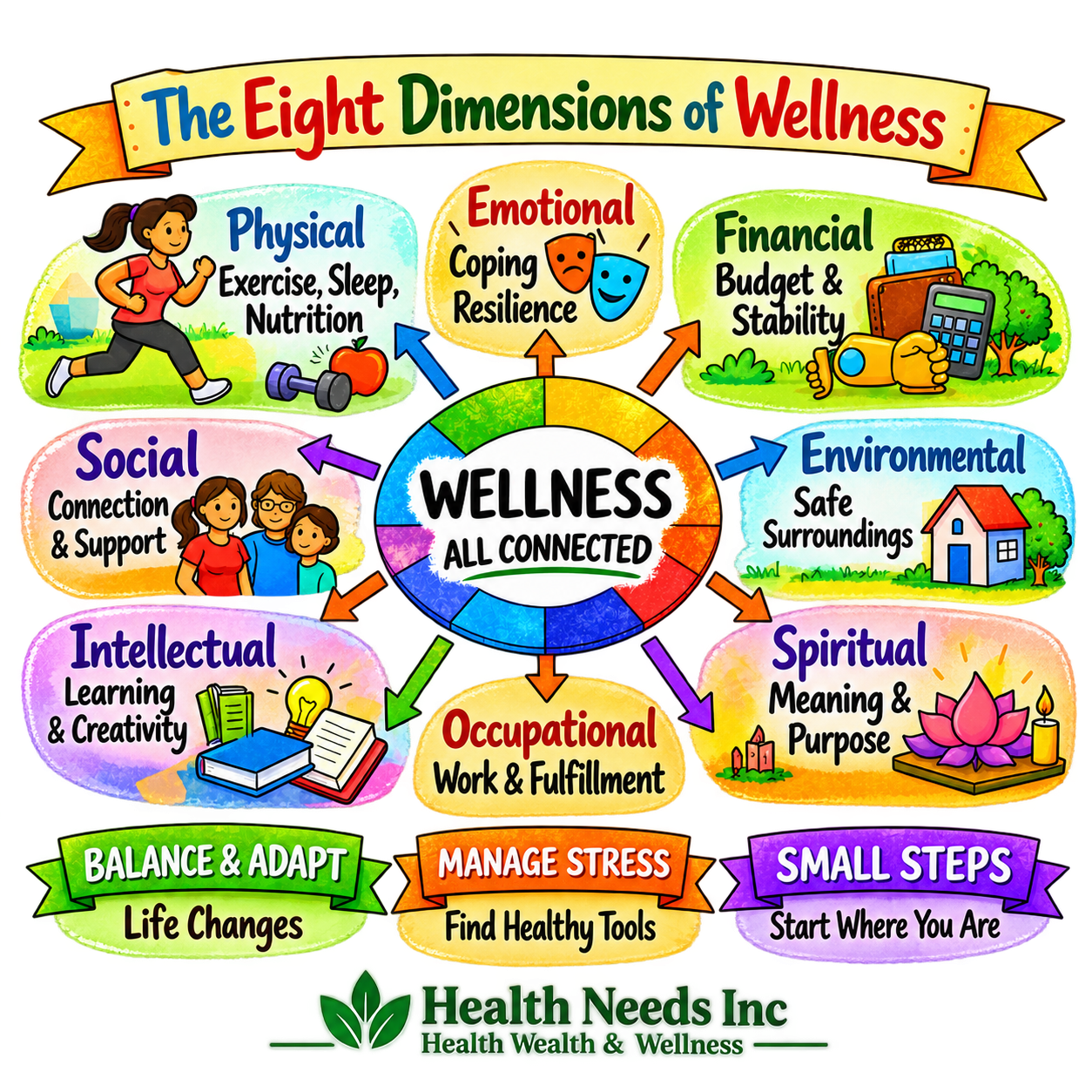
Social wellness belongs within HNI’s Eight Dimensions of Wellness because relationships influence daily life across the other dimensions. Money troubles can restrict participation; illness can interrupt routines; demanding work can consume the hours in which friendships would otherwise happen.
A connection problem sometimes begins somewhere else entirely.

02 Solitude, loneliness, and isolation are different
Solitude is time alone that you may choose and enjoy. Loneliness is the uncomfortable sense that your relationships do not meet your need for connection. Social isolation concerns a shortage of contact, relationships, or support. The CDC distinguishes loneliness from social isolation, and the distinction changes what help makes sense.
An afternoon alone with a book can be restorative. An afternoon alone because you cannot reach anyone, cannot leave home, or feel unwelcome everywhere is a different experience. The number of people in the room does not settle the question.
If you have regular contact but feel lonely, look at the quality and fit of that contact. Do conversations allow honesty? Are you always performing competence, cheerfulness, or agreement? Being known requires something more than being observed.
If you have little contact, examine the obstacles before judging your personality. Transportation, hearing difficulties, disability, caregiving, money, and inaccessible meeting spaces can shrink a social world. An invitation is not much use when the building has stairs you cannot climb.
Enjoying solitude also does not eliminate practical needs. Someone who prefers living alone still benefits from a person who knows how to reach them, a backup for emergencies, and opportunities to participate when they want to. Independence works better with a few dependable connections behind it.
Try completing two sentences: “I like being alone when…” and “I feel disconnected when…”. The answers may reveal that you need more choice, deeper conversation, or help reaching people. None of those requires becoming the loudest person at a dinner party.

03 What the health evidence can and cannot tell us
Research links social disconnection with poorer mental and physical health. The National Institute on Aging reviews these associations, including links with depression, cardiovascular problems, and cognitive decline. This makes connection a legitimate health concern, rather than decorative advice attached to a sleep article.
Possible pathways include stress, support with everyday tasks, and help maintaining routines. Someone who notices a change in your behavior may encourage you to seek care. Someone who offers a ride can make the difference between receiving care and postponing it. These are ordinary acts with consequential effects.
The wellness industry likes to turn this subject into a new optimization contest. Suddenly friendship needs a dashboard. Be skeptical of sweeping claims that a particular app, retreat, supplement, or membership will cure loneliness. Evidence that relationships matter is not evidence for every product sold in their name.
The CDC notes that more research is needed to identify which approaches work best for different people and settings. A walking group may help one person; another needs accessible transport, a grief group, or treatment for anxiety. Context is part of the intervention.
For readers, the implication is practical rather than dramatic. Treat persistent disconnection as worth addressing. Combine connection with the basics covered in HNI’s physical wellness guide, and seek appropriate care for health concerns. Friends are valuable. They are not a substitute for a clinician.

04 A useful look at your existing connections
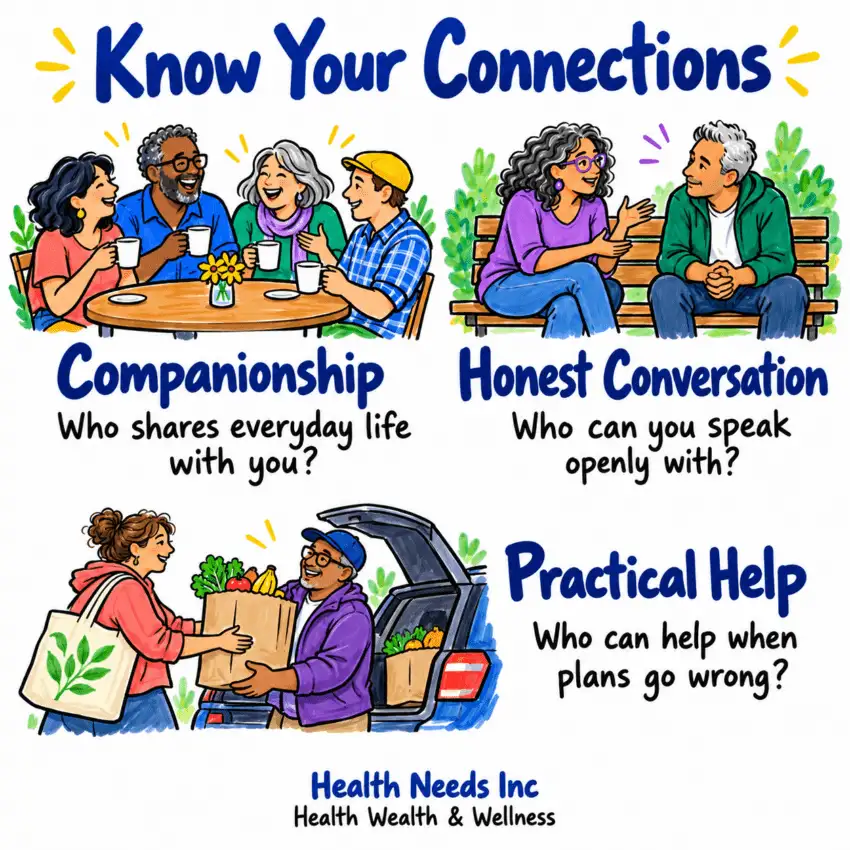
Before looking for more people, look at the relationships already present. On paper, write the names of people you could contact for companionship, honest conversation, practical assistance, and shared interests.
A name can appear in more than one category. This is an informal planning exercise, not a validated test or a diagnosis.
Notice the empty spaces. You may have companions but no one you trust with difficult news.
You may have a supportive relative but no local person who could help in an emergency. Identifying a gap gives you a task you can actually address.
Next, ask whether each relationship feels reasonably reciprocal and respectful. Reciprocity does not require equal effort every week. Illness, caregiving, and difficult periods change what people can offer. Over time, however, both people should matter.
Ask one final question: where is connection already happening with the least friction? Perhaps a neighbor stops to talk, an old friend still responds warmly, or a class includes people you enjoy. Strengthening an existing opening can be easier than starting an entirely new social life.
Turn one observation into one action. Ask the neighbor whether they would like a regular walk. Suggest a phone call to the old friend. Stay a few minutes after class rather than leaving immediately. Choose an action small enough that you are likely to repeat it.
Keep this exercise humane. Do not rank people as assets, downgrade a sick friend, or turn affection into performance management.
The point is to see where support exists and where it is missing. Friendship has enough administrative trouble without quarterly reviews.
05 Making and maintaining adult friendships
Adult friendship competes with calendars, fatigue, responsibilities, and the quiet assumption that everyone else already has enough friends.
Waiting for a spontaneous social renaissance can take a while. The calendar rarely sends one as an attachment.
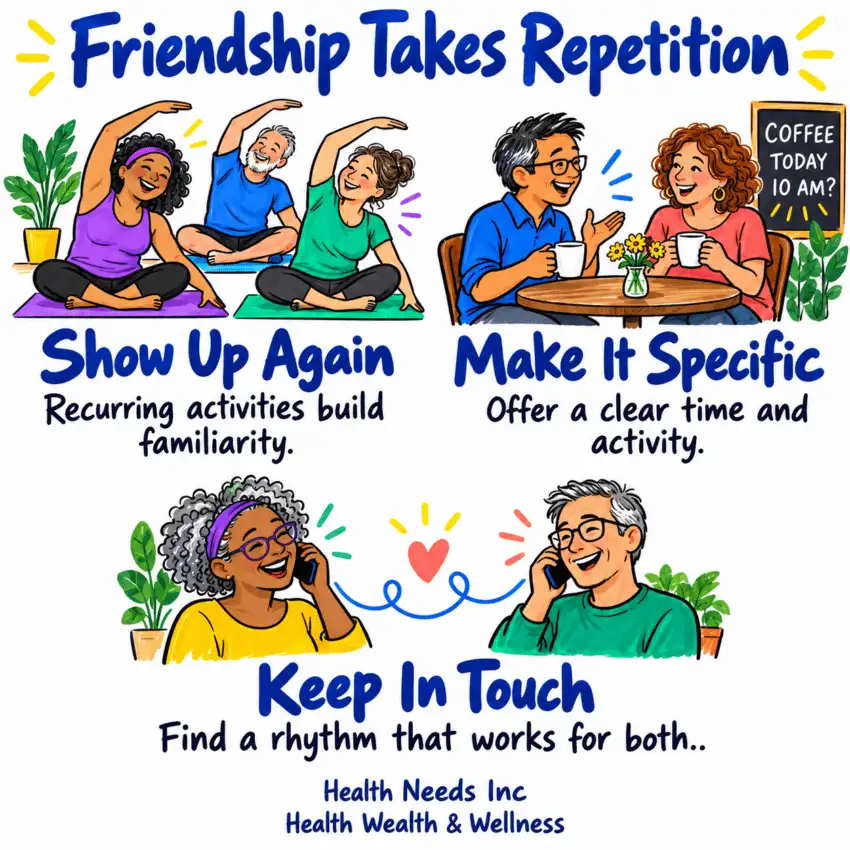
Recurring activities provide repeated chances to become familiar. The NIH Social Wellness Toolkit suggests shared interests, volunteering, and community participation as ways to make connections. Choose an activity you can afford, reach, and tolerate even if no friendship appears immediately.
A specific invitation is easier to answer than “We should catch up sometime.” Try “Would you like coffee after the class next Tuesday?” or “I’m walking Saturday morning. Interested?”
Give the other person a clear opportunity and an easy way to decline.
Some invitations will fail. People have complicated lives, and a declined coffee is not a comprehensive assessment of your worth.
If someone repeatedly declines without suggesting another time, give them space and put your effort elsewhere. Persistence should not become a hostage negotiation.
Existing friendships also need maintenance. A short call, a message about something they care about, or a modest recurring plan can keep contact from becoming an annual exchange of apologies. Ask what rhythm works for both of you rather than assuming everyone wants constant messaging.
Reconnecting can begin without an elaborate confession: “I thought of you today. Would you like to catch up?” If there was actual harm, acknowledge it plainly.
If life simply became busy, you do not need to prosecute the missing years before offering a conversation.
06 Belonging beyond your closest relationships
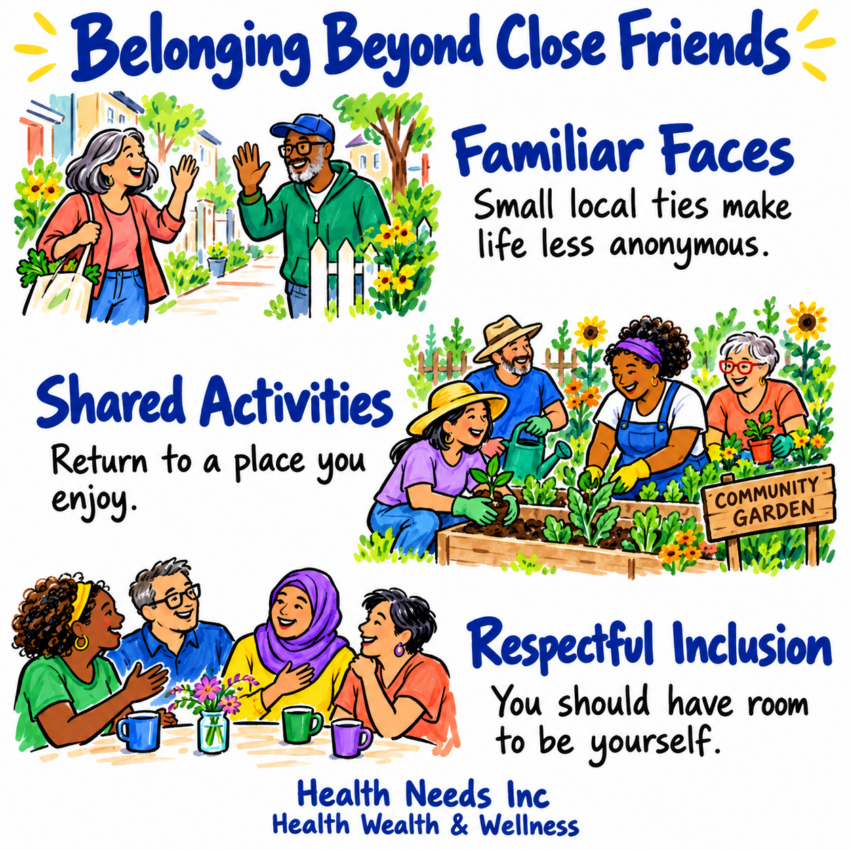
A close friend cannot reasonably supply an entire social world. Communities offer other kinds of connection: familiar faces, shared activity, civic participation, and opportunities to contribute. These ties may be less intimate while still being meaningful.
Belonging does not require agreement on everything. It does require enough mutual respect that participation does not depend on hiding essential parts of yourself. If a group repeatedly leaves you feeling unsafe or diminished, another setting may be a better fit.
Small local connections matter too. Knowing a neighbor’s name, exchanging a few words at a familiar shop, or helping with a neighborhood project can make daily life less anonymous. These interactions need not become intimate friendships to make a place feel more inhabited.
07 Communication, listening, and repairing conflict
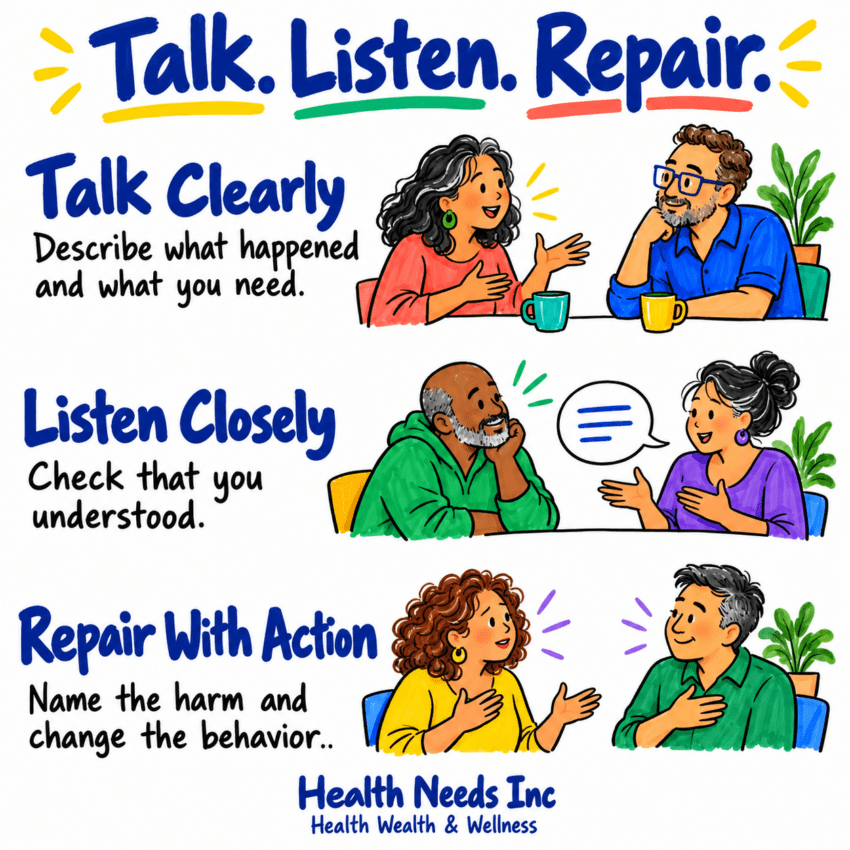
People often think they have communicated because they have said something with considerable conviction.
The listener may have received an entirely different message. Relationships contain two separate interpretations of the same conversation, which is an efficient arrangement for producing confusion.
Not every conflict can be repaired, and communication advice has limits. Where threats, coercion, or fear are present, the priority is safety and specialized support. Do not treat mistreatment as a puzzle you must solve by finding a more elegant sentence.
08 Boundaries and relationships that cost too much
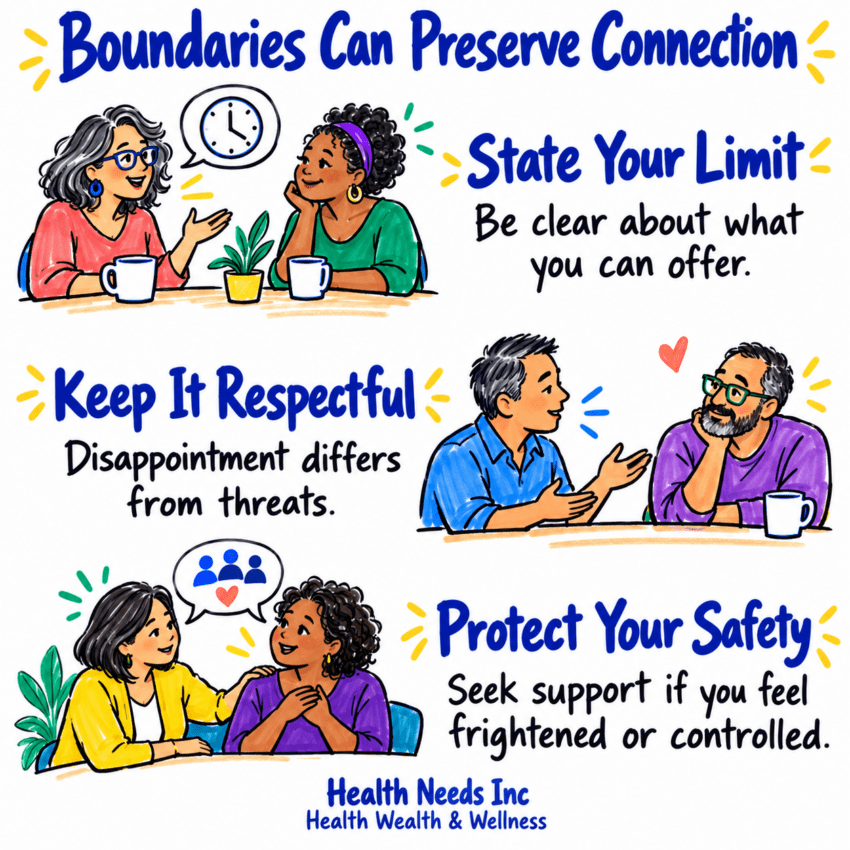
A boundary describes what you can offer, what you will accept, and what you will do when a limit is crossed. It is clearer when attached to your own behavior: “I can talk tomorrow, but I cannot keep taking calls during work.” The other person may dislike the limit. Discomfort alone does not make it unreasonable.
Ordinary disappointment differs from retaliation, surveillance, humiliation, or threats. The NIH’s relationship guidance emphasizes respect, communication, and recognizing unhealthy relationships. More contact is not automatically better when the contact itself is harmful.
Avoid diagnosing everyone who irritates you. The internet has made clinical vocabulary widely available and restraint considerably rarer. A forgetful friend is not necessarily manipulative; a disagreement is not automatically abuse. Look at patterns, severity, and your ability to disagree safely.
At the same time, you do not need a diagnosis to take your experience seriously. If you feel frightened, controlled, or repeatedly demeaned, seek confidential help from an appropriate professional or support service. If someone monitors your devices, consider using a device they cannot access when seeking help.
Money and family expectations deserve especially clear conversations. HNI’s discussion of children as a retirement plan examines the trouble with assuming love automatically includes unlimited practical and financial capacity. Affection is real. So are rent, work schedules, and exhaustion.
09 Rebuilding after retirement, relocation, or loss
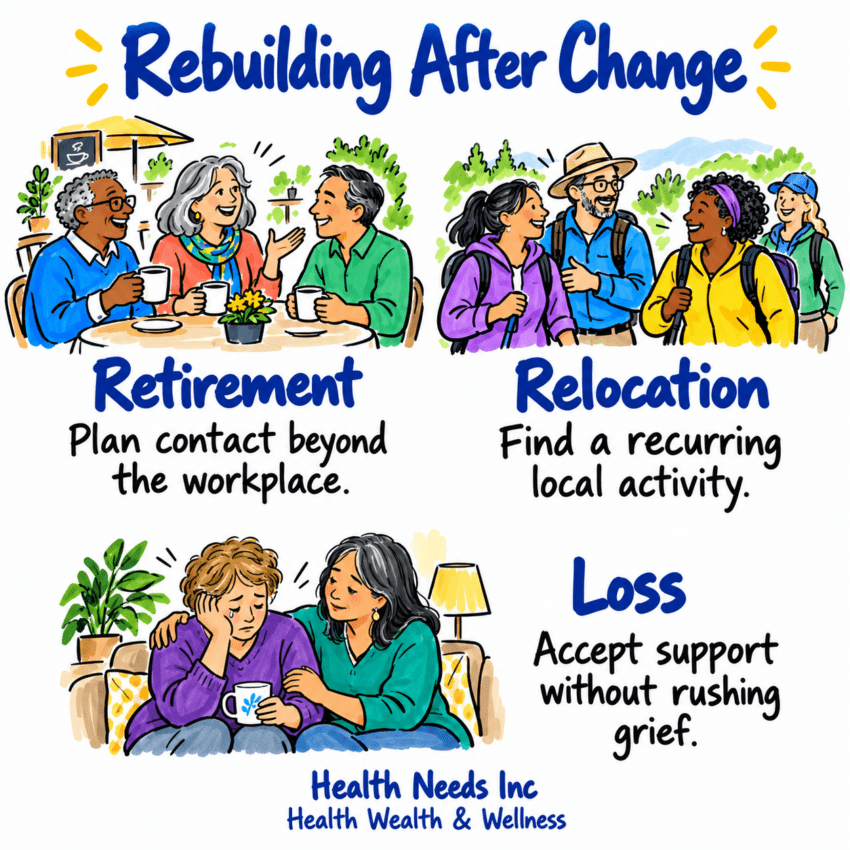
Major changes can remove the settings that kept relationships alive. Retirement may end daily contact with colleagues; relocation separates you from familiar places; divorce can divide a social circle.
Bereavement can change both your closest relationship and the ordinary routines around it.
Do not confuse losing a setting with losing the ability to connect. Often the task is to rebuild opportunities for repeated contact. Pick something with a regular time and a manageable commitment, then allow yourself a period of adjustment.
Retirement planning should include a description of an ordinary week. Who will you see? What activities bring you into contact with others?
Which work friendships might continue if you arrange them deliberately? HNI’s retirement planning pillar addresses the financial foundation; the social foundation deserves its own practical attention.
After a death, other relationships do not replace the person who died. They may offer company, practical assistance, and a place to speak honestly about grief. You can accept an invitation and still be grieving. You can decline one without announcing permanent withdrawal from humanity.
Tell trusted people what would help. “Could you come with me to the appointment?” or “I would appreciate a call on Sundays” gives them something concrete to do. Many people care and are spectacularly uncertain about how to show it.
If distress is persistent, overwhelming, or interfering with daily life, discuss it with a qualified professional. HNI’s emotional healing article offers a related perspective without requiring you to perform recovery on someone else’s timetable.
10 When access, health, and money get in the way
“Get out more” assumes you can get out, can afford the outing, and will find a welcoming place when you arrive. Those assumptions are often wrong. Social wellness advice becomes useless when it mistakes an access problem for insufficient enthusiasm.
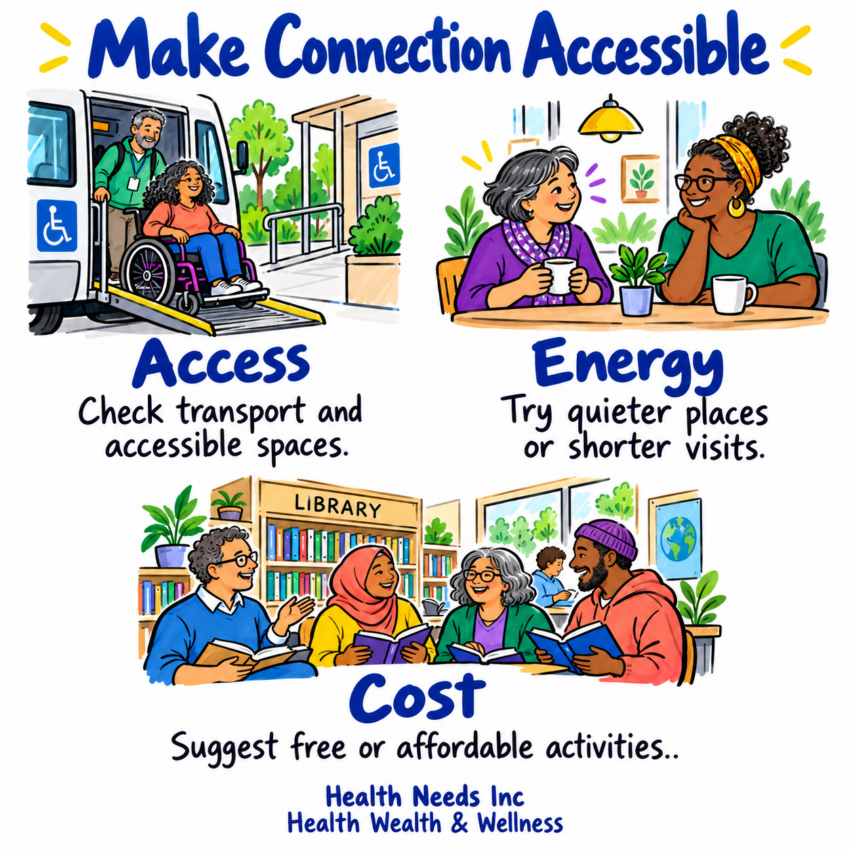
Name the actual obstacle. If transportation is unreliable, a local service or a nearer activity may help. If hearing makes noisy conversation exhausting, suggest a quieter venue and discuss hearing concerns with a healthcare professional. If fatigue limits your energy, shorter visits may be more workable.
Cost also shapes participation. Restaurants, travel, memberships, and gifts can make friendship feel like a subscription with unexpected charges. Suggest free or inexpensive alternatives clearly, without apologizing for having a budget.
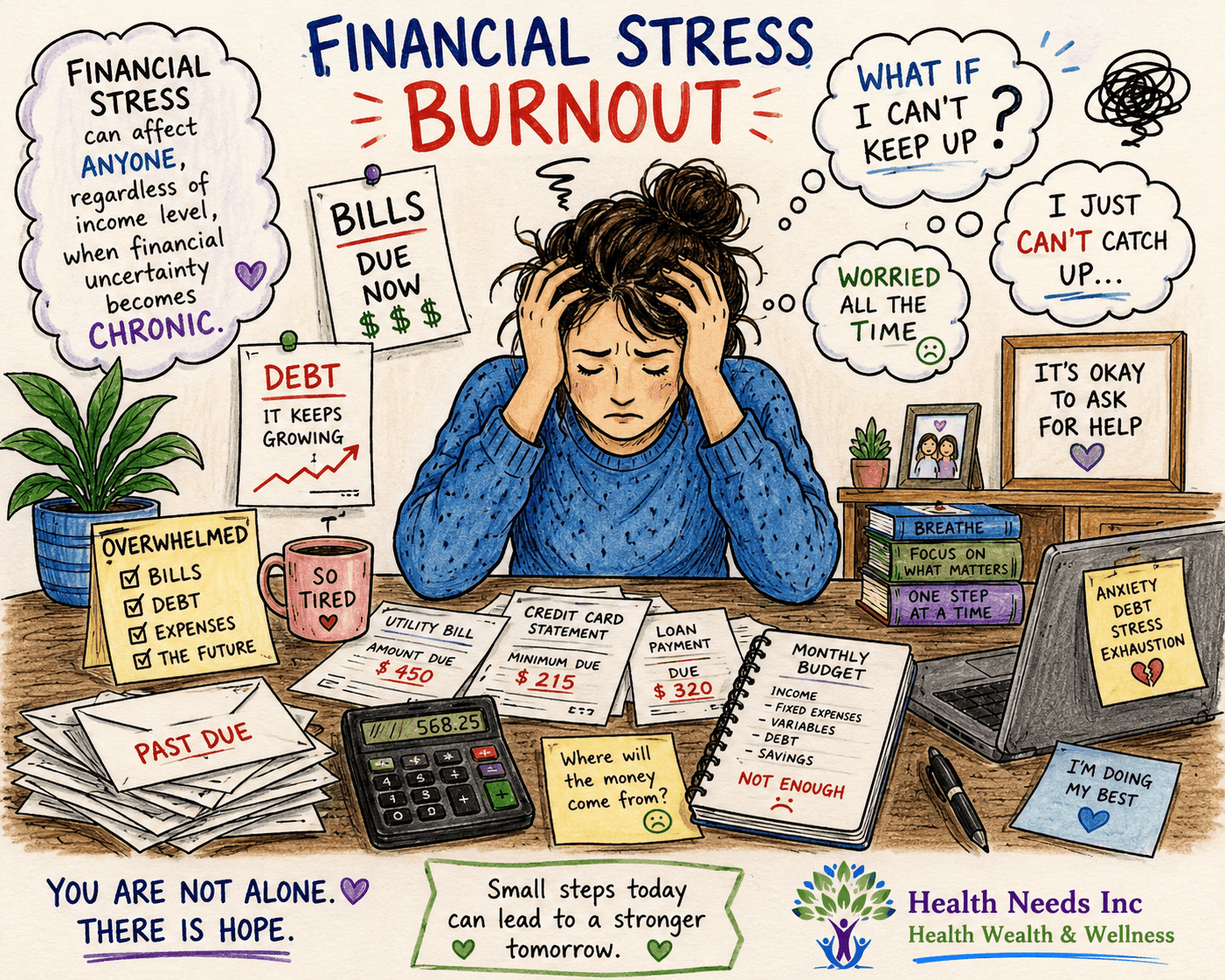
The connection between financial pressure and withdrawal is explored in HNI’s money stress and mental health article. You do not have to disclose every detail of your finances to say, “That is beyond my budget. Could we meet at the library event instead?”
Caregiving may leave little time for relationships unrelated to the person receiving care. Ask about respite services, share tasks where possible, and tell friends which kinds of contact fit your current life. A brief call can be more useful than another invitation you cannot accept.
Organizers have responsibilities too. Accessible entrances, clear costs, quieter options, and invitations that include newcomers can change who gets to participate. A community is not inclusive merely because its brochure uses the word frequently.
11 Digital connection without confusing attention with care
Calls, texts, video chats, and online groups can keep relationships available across distance or limited mobility. The NIA includes communication technology among ways to stay connected. The useful question is what the technology helps you do.
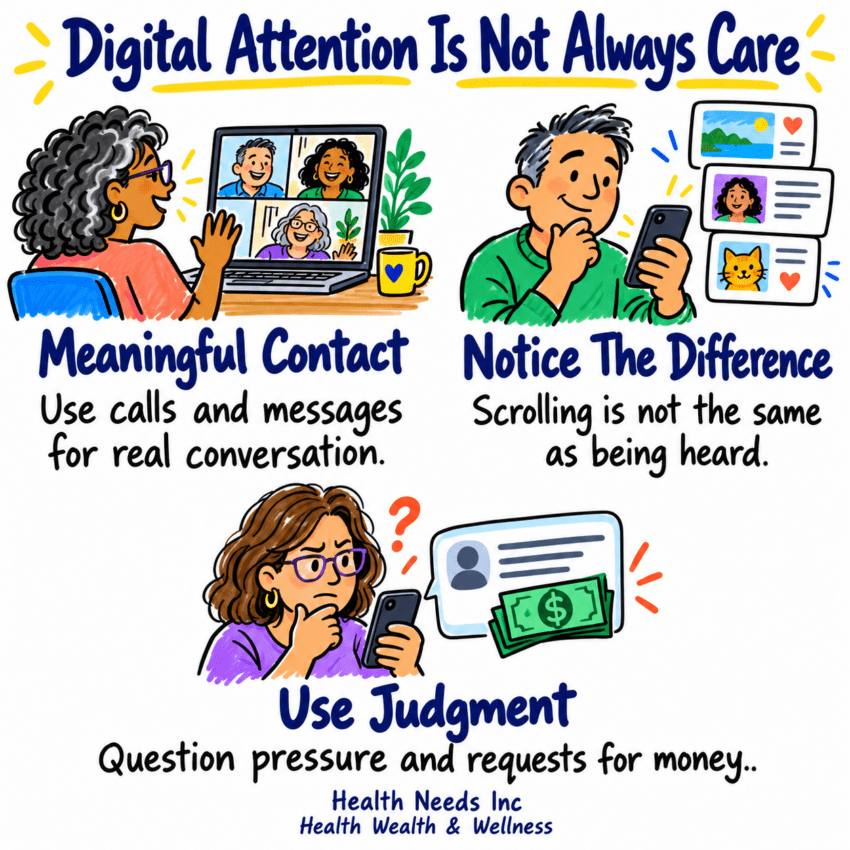
A video call with someone who listens may provide meaningful connection. An hour of watching strangers display their vacations may leave you feeling worse. Both count as screen time, which is why screen time alone is a blunt measure.
Try using technology to initiate or sustain a specific relationship. Arrange a call, share something relevant to a friend, or find an accessible group with clear moderation. Notice whether the activity leads to reciprocal conversation or mostly keeps you scrolling.
Online intimacy also requires judgment. The Federal Trade Commission warns about romance scams in which apparent affection becomes a request for money.
Do not send money, gift cards, wire transfers, or cryptocurrency to an online romantic contact you have not met. Discuss suspicious requests with someone you trust.
Be similarly careful with communities selling belonging through pressure. Urgent fees, promises of a transformed life, and demands to distance yourself from skeptical friends warrant scrutiny.
Feeling welcomed should not suspend your right to ask questions.
Technology works best here when it supports relationships you can evaluate and sustain. A notification confirms that software knows where to find you. It does not confirm that someone knows how you are doing.
12 Volunteering, shared purpose, and being useful
Connection can develop through doing something alongside other people. Volunteering, mentoring, community projects, and shared learning give conversation a starting point beyond introductions. You have a task in common, which can ease the pressure to manufacture immediate chemistry.
The NIH discusses contribution and social bonds, including opportunities to share skills and support others. That is a promising direction, not a guarantee that any volunteer role will improve anyone’s wellbeing. The fit and conditions still matter.
Ask what the role involves, how much time it requires, whether training is provided, and what expenses you might face. Choose something compatible with your health, interests, and schedule. Good intentions do not make an exhausting commitment sustainable.
Contribution does not require a formal title. Helping a neighbor, teaching a skill, participating in a local project, or bringing a meal can create useful contact. Keep offers specific and realistic so that generosity does not become another source of resentment.
You also deserve relationships in which you are valued when you are not producing anything. Being useful can open a door; it should not become the rent you must pay to remain welcome. People with illness, disability, or limited energy are entitled to belonging too.
If you have spent years being the dependable helper, practice receiving modest help. Let someone bring the groceries or listen without immediately solving their problems in return. Mutual care includes letting the relationship move in both directions.

13 Introversion, social anxiety, and getting support
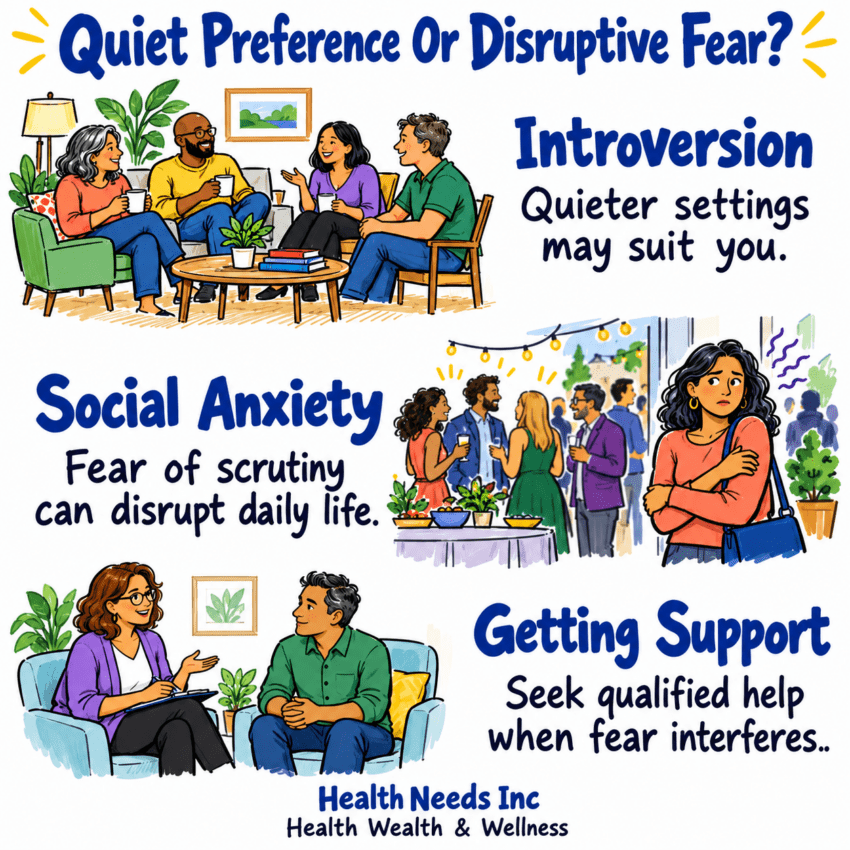
Introversion is not a defect to repair. Some people prefer smaller groups, quieter settings, and more time alone. A workable social life can respect those preferences while providing dependable contact and support.
Social anxiety is different from simply enjoying quiet. The National Institute of Mental Health explains social anxiety disorder as involving significant fear of scrutiny in social situations. If fear or avoidance interferes with your daily life, a qualified professional can assess what is happening and discuss evidence-based treatment.
For ordinary nervousness, reduce the size of the first step. Attend a familiar activity, arrive with someone you trust, or begin with one brief conversation. You need not start with a room full of strangers and a name badge that appears to have been designed as punishment.
Choose settings that suit you. A small discussion group may be easier than a loud reception; a shared task may be easier than unstructured mingling. The aim is meaningful connection, not proving you can endure every conceivable social environment.
Getting help and building relationships can happen together. You do not need to solve your entire inner life before accepting a coffee invitation. You also do not have to expect coffee to solve your entire inner life.
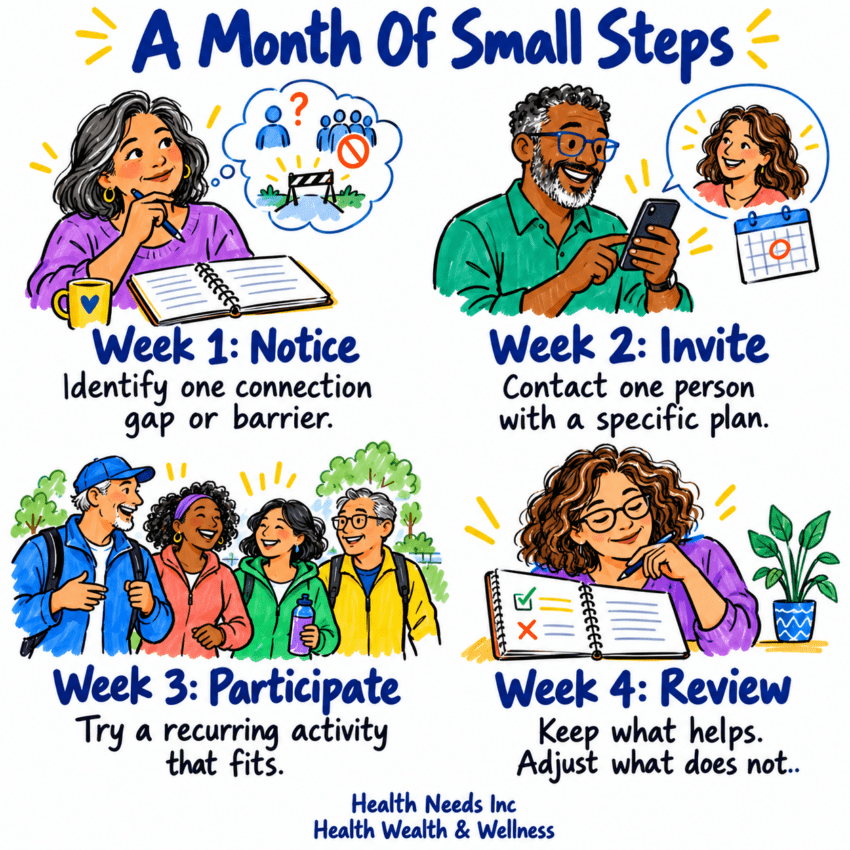
14 A realistic month of rebuilding connection
Treat the next month as an experiment, not a deadline for becoming socially fulfilled. This is an editorial planning suggestion, not a treatment protocol. Its purpose is to make the next steps visible and manageable.
Keep one manageable routine if it helps: a regular call, a shared walk, a class, or an occasional meal. Add depth gradually. Your social life does not need a spectacular launch; it needs enough room in ordinary life to keep happening.
15. A life with people in it
Social wellness is built through contact that becomes familiarity, familiarity that allows trust, and trust that can carry both ordinary enjoyment and difficult news. It needs time, access, and mutual effort. It also needs relationships in which you are allowed to be a person rather than a permanently cheerful service provider.
We have become astonishingly good at broadcasting ourselves. Being known remains slower work. A useful social life gives you people with whom you can stop broadcasting for a while.
Frequently Asked Questions
It is the ability to build and sustain relationships that provide belonging, mutual respect, support, and room to be yourself. Both close relationships and community ties can contribute.
Yes. Chosen solitude can coexist with dependable relationships. Consider whether you have the contact and support you want, including practical help when needed.
There is no universal number. Look at whether you have meaningful connection, people you trust, and support that fits your circumstances. A count cannot measure relationship quality.
No. Loneliness concerns how disconnected you feel; social isolation concerns limited contact or support. You can experience either one without the other.
Choose a recurring activity that fits your interests, budget, and access needs. Make a specific, modest invitation to someone you enjoy talking with. Allow familiarity to develop without demanding immediate closeness.
Consider whether your relationships allow honesty and provide the kind of connection you need. More events may not address a lack of trust or emotional support. Persistent distress is worth discussing with a qualified professional.
Yes, reciprocal online relationships can provide connection. Evaluate how the interaction affects you and use care with privacy, money requests, and pressure. Scrolling and meaningful conversation are different activities.
Work may have provided regular contact and a sense of belonging. Plan recurring opportunities outside work and deliberately maintain the work friendships you value.
Quieter settings and smaller steps may suit ordinary nervousness. If fear or avoidance interferes with daily life, seek professional assessment rather than treating it as a personality failure.
Seek professional support when loneliness or distress persists, worsens, or disrupts everyday life. In the United States, call or text 988 for emotional distress or suicidal crisis; use emergency services for immediate danger.
More Deep Dives




Glossary of Key Terms
- Social wellness
- Building and sustaining relationships and communities that support belonging, respect, and everyday life.
- Loneliness
- A distressing gap between desired and experienced connection.
- Social isolation
- Limited relationships, contact, or social support.
- Solitude
- Time alone, which may be chosen and enjoyable.
- Reciprocity
- Mutual care and effort over time, without requiring identical contributions.
- Boundary
- A limit on what you can offer or accept, expressed through your own choices and behavior.
- Belonging
- Feeling accepted and able to participate in a relationship or community.
- Social support
- Emotional, practical, or informational help available through relationships.