⭐ TL;DR
The kids as retirement plan myth is comforting because it sounds like family, but it becomes risky when it replaces actual planning.
-
Adult children may help, but they may also be carrying mortgages, childcare costs, debt, health issues, or their own retirement gap.
-
Caregiving is real work, not free background music, and long-term care can overwhelm even loving families.
-
The better plan is to discuss roles, documents, housing, care costs, and paid backup before a crisis starts handing out clipboards.
The comforting version says family will figure it out. The grown-up version says love is real, adult children are already overloaded, and vague expectations are where resentment goes to get a mortgage.
For educational purposes only. Not financial, tax, legal, caregiving, or retirement planning advice. Family support, long-term care, housing, benefits, taxes, and elder care decisions vary by household. Consult qualified financial, legal, tax, and care professionals before making major plans.
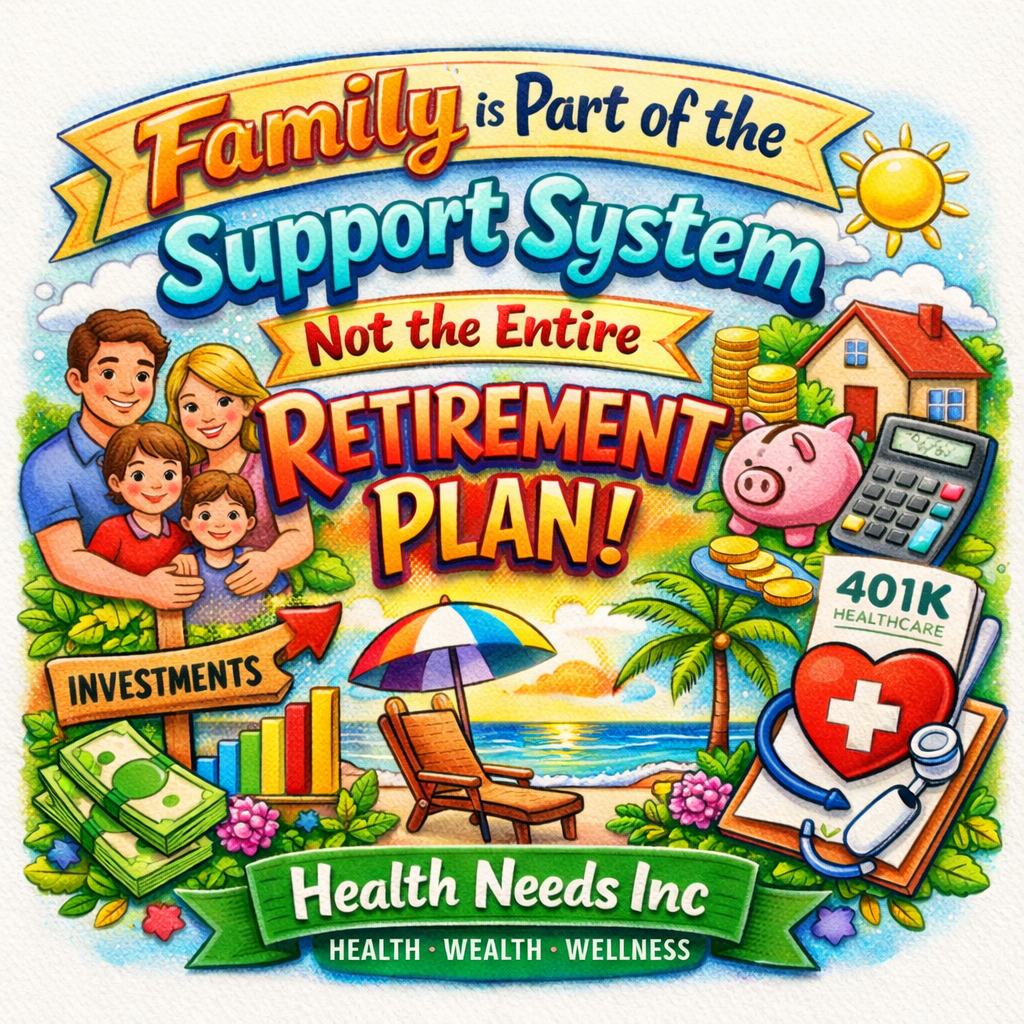
The loving answer is not the lazy answer.
Is relying on your children a good retirement plan?
- The kids as retirement plan myth is the belief that adult children will naturally provide housing, money, caregiving, transportation, paperwork help, and emotional support in old age.
- Family support can matter deeply, but it is not a reliable substitute for retirement savings, legal planning, insurance decisions, long-term care planning, housing strategy, and clear conversations.
- The better plan is to protect the relationship by making children part of the conversation, not the emergency fund, nursing staff, housing department, and unpaid case manager.
Adult children are not a financial product. They may love you fiercely, but love does not create spare bedrooms, paid leave, cash reserves, or nursing skills on command.
Caregiving is already widespread. AARP and the National Alliance for Caregiving estimate that 63 million Americans were family caregivers in 2025.
Long-term care risk is real. The Administration for Community Living says someone turning 65 today has almost a 70 percent chance of needing some type of long-term care services and supports.
Vague expectations damage families. The problem is usually not helping. The problem is assuming help without discussing money, time, housing, medical decisions, boundaries, and siblings.
The better plan is layered. Build retirement income, emergency reserves, legal documents, housing options, paid-care backup, and family roles before a crisis turns everyone into amateur administrators.
Kids as Retirement Plan Myth: The Quiet Assumption Nobody Prices
The kids as retirement plan myth rarely shows up in a spreadsheet. It shows up as a shrug. “The kids will help.” “We are a close family.” “We will figure it out.” “I do not want strangers taking care of me.” “My daughter is good with paperwork.” “My son has room.”
Those sentences may be true. They may also be wildly incomplete.
A child can love you and still be unable to fund your care. A daughter can be generous and still have a mortgage, teenagers, a job, student loans, menopause, a bad back, and a calendar that looks like it was attacked by bees.
A son can have a guest room and still not have the emotional or practical capacity to become a 24-hour care coordinator.
The myth is not that children ever help parents. Many do.
The myth is that their help can safely replace planning. That is where affection becomes arithmetic, and arithmetic is not famous for respecting sentimental assumptions.
Family support works best when it is specific. Who will handle medical appointments? Who will manage bills?
Who has legal authority? Who can provide transportation?
Who lives nearby? Who can take time off work?
Who can help financially without damaging their own retirement? Who cannot help, even if they feel guilty?
These are not cold questions. They are the questions that keep love from turning into an unpaid operations department.
For more on how half-true retirement beliefs become expensive, see our guide to Retirement Planning Myths That Cost People Money. The children-as-safety-net idea belongs in the same family of myths because it contains a comforting truth wrapped around a dangerous assumption.
Signs You’re Relying Too Heavily on Your Children
- You have not estimated future care costs.
- Your estate documents are not updated.
- You assume a child will move in if your health changes.
- You do not know who would make medical decisions if you could not.
- Your retirement budget requires family assistance to work.
- You have not discussed caregiving boundaries, housing preferences, or paid care options.
None of these signs means your family is doomed. It means the plan is still fog wearing a sweater.

Why This Myth Feels So Reasonable
The kids as retirement plan myth is powerful because it does not feel like a financial shortcut. It feels like family. And family is one of the few words that can make otherwise sensible adults ignore math while nodding solemnly near a casserole.
There are cultural reasons for this. In many families, caring for elders is considered a moral duty, not a service category.
Parents raised children, sacrificed, paid bills, drove to practices, packed lunches, sat through school concerts, and endured teenage opinions. The idea that children might later provide support can feel less like a plan and more like the natural turning of the wheel.
That emotional logic matters. It should not be mocked. There is dignity in intergenerational care.
There is meaning in showing up for aging parents. There is also a difference between love and logistics.
Modern retirement is longer, more medically complex, and more expensive than the nostalgic version in our heads. Families are smaller.
Adult children often live farther away. Workplaces are less forgiving than family stories suggest.
Housing costs can be brutal. Many middle-aged adults are raising children while also helping parents.
Pew Research Center found that 54 percent of Americans in their 40s have a parent age 65 or older and are either raising a young child or financially helping an adult child.
That is the sandwich generation, although “sandwich” makes it sound tidier than it is. A sandwich has structure. This is more like being hit with a deli tray while trying to refinance a mortgage.
The feeling behind the myth is often honorable. The structure underneath it is often missing. That is the problem.
Adult Children Are Already Carrying Their Own Retirement Risk
The Sandwich Generation Is Already Stretched
The most dangerous part of using children as a retirement plan is that it quietly transfers risk from one generation to another. Parents who under-plan do not make the risk disappear.
They hand it to adult children, usually at the exact stage of life when those children are trying to build their own financial stability.
Many adult children are not sitting on excess cash, spare time, and unused emotional bandwidth. They are paying for housing, health insurance, childcare, college, debt, transportation, groceries, and their own retirement contributions. Some are divorced.
Some are disabled. Some are single parents.
Some are trying to recover from years of inflation. Some look successful from the outside because their house has good lighting and their phone knows how to hide panic.
Why Financial Stress Gets Passed Down
The Federal Reserve’s 2024 household well-being report found that only 35 percent of non-retirees thought their retirement savings were on track. That matters because asking adult children to fund parental care may reduce their ability to save for their own old age.
Then the problem becomes hereditary, like eye color but with more paperwork.
This is how the myth multiplies. One generation assumes the next generation will catch them. The next generation drains savings, reduces retirement contributions, cuts work hours, or leaves the workforce to provide care.
Then they arrive at retirement with fewer assets and quietly hope their own children can help later. The family has not solved the problem. It has franchised it.
When One Child Becomes the Default Caregiver
There is also the sibling problem. Families rarely divide care with the grace of a well-run cooperative. One child lives nearby.
One has more money. One has more guilt. One has more opinions.
One “helps emotionally,” which often means sending texts that begin with, “Have you tried…” from three states away. Without a plan, the most available child becomes the default child. Default children age in dog years.
The hidden assumptions parents often make
-
- My children will have enough money to help.
- My children will live nearby when I need them.
- My children will agree on what should happen.
- My children will be able to take time off work.
- My children will know how to manage medical, legal, and insurance paperwork.
- My children will not resent the role if it becomes larger than expected.
- My children will not damage their own retirement by supporting mine.
Some families can meet some of these assumptions. Almost no family should leave all of them unstated.
Common Mistakes Parents Make When Planning for Retirement
Most retirement planning mistakes do not begin with laziness. They begin with optimism that never gets translated into numbers.
Parents may assume Social Security will cover more than it does, Medicare will cover more long-term care than it will, or a paid-off house will solve every future housing problem.
The Social Security Administration is a useful starting point for understanding claiming rules and retirement benefits. It is not a substitute for a full household spending plan.
Likewise, Medicare.gov can clarify coverage rules, but it will not magically turn family caregiving into a funded care system.
Mistakes That Turn Into Family Burden
- Waiting too long to discuss housing and care preferences.
- Assuming Medicare covers routine long-term custodial care.
- Letting old wills, powers of attorney, or beneficiary forms sit untouched.
- Keeping adult children in the dark about debts, accounts, policies, and passwords.
- Treating home equity as a plan without deciding when or how it might be used.
- Assuming siblings will divide care evenly because that sounds fair in theory.
These mistakes are fixable. They are much easier to fix before a crisis turns the family group text into a municipal emergency alert system.
Caregiving Is Work, Even When Nobody Sends an Invoice
What Family Caregiving Actually Includes
Caregiving often gets described in soft words: helping, checking in, being there, pitching in, doing what families do. Those words are not wrong. They are just incomplete.
Caregiving is labor. It has hours, tasks, stress, opportunity costs, and consequences.
AARP and the National Alliance for Caregiving estimate that 63 million Americans are family caregivers in 2025. AARP also reported that family caregivers provided 49.5 billion hours of care in 2024, with an estimated economic value of $1 trillion.
That number is not just impressive. It is a warning label. A society does not get $1 trillion in unpaid care because the task is small and everyone has a free Thursday.
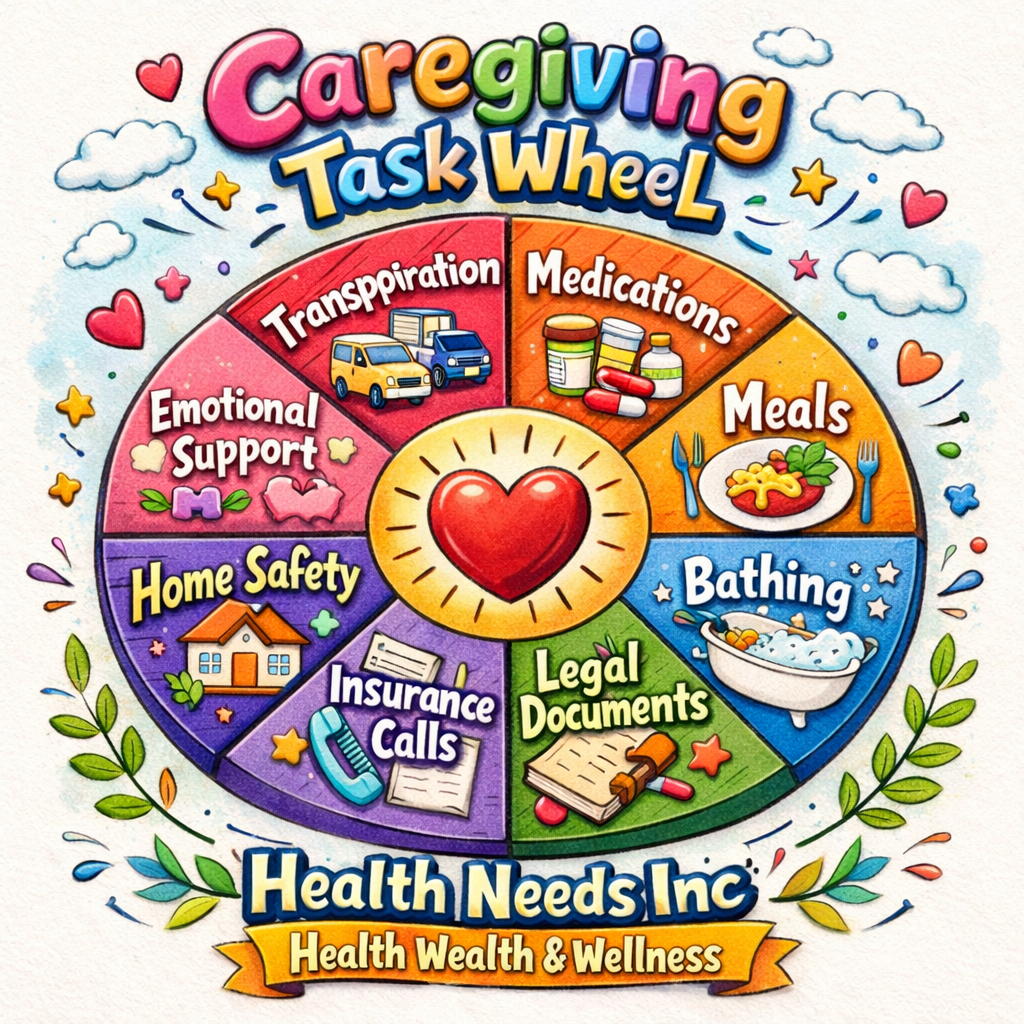
Caregiving can include medication management, bathing help, meal preparation, transportation, insurance calls, appointment scheduling, wound care, mobility support, bill paying, home safety changes, dementia supervision, and emotional management.
It can also include the recurring family ritual known as “arguing with a portal password while someone asks why the printer hates them.”
The Hidden Financial Cost of Caregiving
The cost is not only money. Caregivers may lose wages, reduce hours, turn down promotions, use vacation time for medical appointments, pay for supplies, drive long distances, and absorb chronic stress.
They may also become the family translator between doctors, insurers, siblings, pharmacies, home health agencies, and the parent who insists everything is fine while standing beside a ladder.
Emotional and Career Costs of Providing Care
That does not mean children should never help. It means parents should stop pretending unpaid care is free. It is paid in time, income, sleep, marriage strain, career momentum, and sometimes the adult child’s own health.
The Long-Term Care Gap Is Where the Myth Breaks
What Long-Term Care Really Means
Most families can imagine occasional help. Fewer families have honestly priced sustained care. That is where the kids as retirement plan myth starts making little grinding noises.
Long-term care is not one thing. It can mean help at home, adult day services, assisted living, memory care, skilled nursing, or unpaid family care wrapped around paid services. The National Institute on Aging offers practical guidance on these care options. The Administration for Community Living says someone turning 65 today has almost a 70 percent chance of needing some type of long-term care services and supports during the rest of life.
Some people need little or none. Some need years. Nobody receives a calendar invitation from biology.
What Medicare Doesn’t Cover
Medicare is often misunderstood here. Medicare can cover certain medical services and limited skilled care under specific conditions, but it does not function as a broad long-term custodial care plan. Medicaid may help people who qualify, but eligibility rules and care options vary, and relying on Medicaid without understanding the tradeoffs is not the same thing as having a plan.
Why Families End Up in Crisis Mode
The hard question is not, “Will my children help if something happens?” Many will. The hard question is, “What happens if I need help bathing, transferring, eating, dressing, managing dementia symptoms, or being supervised for safety every day for years?” That is not a family favor. That is a care system.
Without a plan, families often improvise under pressure. Someone moves in. Someone quits a job.
Someone burns through savings. Someone pays privately until the money gets thin.
Someone applies for benefits during a crisis. Someone discovers that siblings have very different definitions of “we should help Mom.” Then everyone learns that panic is a poor project manager.
The Relationship Strain Is the Part Nobody Wants to Admit
Money plus care plus guilt is a volatile little soup. Families can survive it, but pretending it is harmless does not make it harmless.
Parents may feel abandoned when children cannot provide the level of support they imagined. Adult children may feel trapped by expectations they never agreed to. Siblings may compare sacrifices.
Spouses of adult children may resent the financial or time burden. Grandchildren may receive less attention. Everyone may feel guilty, and guilt is famously bad at budgeting.
The emotional damage often comes from mismatched assumptions. A parent believes, “I raised you, so you will take care of me.” The adult child believes, “I will help, but I cannot become the whole plan.” Both may love each other.
Both may feel betrayed. The betrayal came from the undefined contract, not from a lack of affection.
There is also dignity to consider. Many older adults do not actually want their children performing intimate care tasks or managing every financial detail. They want control, privacy, and choice.
A good retirement plan does not remove family. It creates enough structure that family can show up as family, not just exhausted unpaid staff.
This matters for wellness, not just money. Our guide to the 8 Dimensions of Wellness makes the same broader point: financial stress leaks into emotional, social, physical, and family well-being.
A retirement plan that protects relationships is not cold. It is humane.
How to Talk to Adult Children About Aging
The solution is not to announce at Thanksgiving that you have updated your long-term care assumptions while someone is carving turkey. Timing matters. So does tone.
The goal is not to make your children feel responsible for your aging. The goal is to remove mystery before mystery becomes expensive.
Start with values. Where would you prefer to live if your health changes?
What matters most: staying home, staying near family, preserving assets, avoiding burden, maintaining privacy, protecting a spouse, or having professional care available? Different values produce different plans.
Then move to documents. Adult children cannot efficiently help if they do not know where accounts are, which insurance policies exist, who the doctors are, what medications are current, where passwords are stored, or who has legal authority.

A shoebox full of statements is not an estate plan. It is a scavenger hunt with beneficiaries.
Finally, discuss roles. One child may be good with money. Another may be better at medical advocacy.
Another may be emotionally supportive but financially unable to contribute. Another may not be safe or reliable in a caregiving role. Naming reality early is kinder than discovering it during a discharge meeting.
Questions worth answering before a crisis
-
- Who has power of attorney for finances?
- Who has health care proxy or medical decision authority?
- Where are insurance policies, account lists, passwords, and legal documents stored?
- What care options are affordable if living alone becomes unsafe?
- Can any child help financially without harming their own household?
- Which tasks should be handled by paid professionals instead of family?
- What boundaries would protect both the parent and adult children?
This conversation may feel awkward. So does a hospital hallway argument over who is taking Dad home. Choose your awkward.
What to Discuss During a Family Meeting
- Housing preferences if living alone becomes unsafe.
- Financial expectations and what support is realistic.
- Medical decision makers and backup contacts.
- Caregiving boundaries for each adult child.
- Paid care options, local services, and emergency plans.
- Emergency contacts, physician lists, pharmacy details, and medication lists.
- Estate planning documents and where they are stored.
The Family Caregiver Alliance has caregiver education and planning resources that can help families turn a vague promise to help into a more realistic plan.
Financial Planning Strategies That Reduce Family Burden
Reducing future burden is not about becoming rich enough to control every variable. It is about removing avoidable confusion, avoidable debt, and avoidable emergency decisions.
The CFP Board provides resources for finding credentialed financial planning help, and the Consumer Financial Protection Bureau offers consumer guidance on older adult financial protection.
Ways Parents Can Reduce Future Burden
- Increase retirement savings where possible.
- Eliminate high-interest debt before retirement.
- Downsize housing if the current home is too expensive or hard to maintain.
- Build emergency reserves for repairs, medical costs, and family travel.
- Purchase appropriate insurance when it fits the household and budget.
- Organize legal documents, account lists, and beneficiary information.
- Research local care providers before care is urgently needed.
None of this guarantees a frictionless old age. It does, however, reduce the chance that your children must become detectives, bankers, chauffeurs, and crisis managers in the same terrible week.
Estate Planning Documents Every Family Should Have
Estate planning is not just about who gets the toaster when everyone is sad. It is about who can legally act when you cannot.
Families often discover too late that love does not grant authority. Banks, hospitals, insurers, and care providers usually want documents, not vibes.
Documents to Review Before a Health Crisis
- A current will or trust, depending on the household.
- Financial power of attorney.
- Health care proxy or medical power of attorney.
- Advance directive or living will.
- HIPAA authorization for medical information access.
- Updated beneficiary designations on retirement accounts, life insurance, and bank accounts.
- A secure list of accounts, passwords, policies, debts, doctors, medications, and professional contacts.
For families dealing with cognitive decline, the Alzheimer’s Association has dementia caregiving resources that can help with planning, safety, and family communication.
Frequently Overlooked Retirement Costs Beyond Healthcare
Healthcare gets most of the attention because it is large, confusing, and arrives with paperwork that appears to have been formatted by a raccoon. But it is not the only cost that can push parents toward adult children.
Transportation, home repairs, property taxes, insurance premiums, dental care, hearing aids, mobility changes, technology help, and paid household support can all matter.
The CDC Healthy Aging resources and broader NIH aging and health research can help families understand how health, mobility, prevention, and function affect planning over time.
Costs Families Forget Until They Arrive
- Home modifications such as ramps, bathroom changes, lighting, and fall-prevention updates.
- Transportation if driving becomes unsafe.
- Dental, vision, and hearing expenses.
- Housekeeping, meal delivery, yardwork, snow removal, and repairs.
- Technology support, fraud prevention, and account monitoring.
- Travel costs for adult children who live far away.
- Temporary paid care after surgery, illness, or a hospital discharge.
A retirement budget that ignores these categories often becomes a family budget later. The bill does not disappear. It changes mailing addresses.
A Better Retirement Plan Than Hoping the Kids Will Absorb It
Build Multiple Income Sources
A better plan does not exclude children. It protects them from becoming the plan by default.
Start with your own retirement income and spending. Social Security, pensions, retirement accounts, taxable savings, home equity, insurance, and part-time work all matter. So do debts, housing costs, taxes, health care, and inflation.
If your plan only works when adult children quietly fill the gaps, the gaps are not solved. They are disguised.
Create a Long-Term Care Funding Strategy
Next, build a care reserve. This does not have to mean one specific product.
It may include dedicated savings, home equity strategy, long-term care insurance, hybrid life and long-term care coverage, Medicaid planning with an elder law attorney, downsizing, moving closer to support, or choosing housing designed for aging.
The right answer depends on assets, health, age, family structure, and tolerance for tradeoffs.
Professional Help Can Protect Family Relationships
Then professionalize the tasks that should not automatically fall on children. That might mean hiring help for home maintenance, bill organization, transportation, housekeeping, meal delivery, care management, legal documents, tax work, or Medicare decisions.
Paying for some support can preserve family energy for the parts only family can provide.
Protect Your Children’s Retirement Too
Also protect the adult child’s retirement. A child who stops saving, cuts work hours, drains emergency savings, or takes on debt to support a parent may look noble in the moment and financially wounded later. The oxygen-mask rule applies.
If helping you breaks your child’s future, the family has not created security. It has moved insecurity downstairs.
For stress management around family money conversations, see our guide to Understanding Cortisol. Retirement planning is partly math, but family planning is also nervous system management with legal documents.
Useful Tools and Sources for Family Retirement Planning
Useful Kids as Retirement Plan Myth Resources
- AARP and National Alliance for Caregiving: Caregiving in the U.S. 2025, useful for understanding the current scale of unpaid family caregiving.
- AARP: Valuing the Invaluable 2026, useful for the economic value and hours of unpaid family care.
- Administration for Community Living: How Much Care Will You Need?, useful for long-term care risk and planning basics.
- Medicare.gov: Long-Term Care Coverage, useful for understanding what Medicare does and does not cover.
- Pew Research Center: Sandwich Generation, useful for understanding pressure on adults supporting both older parents and children.
- Federal Reserve: Economic Well-Being of U.S. Households in 2024, useful for retirement savings and emergency savings context.
- National Institute on Aging: Long-Term Care, useful for care options and practical elder care planning.
- Eldercare Locator, useful for finding local services and support resources for older adults and caregivers.
- Social Security Administration, useful for retirement benefit and claiming information.
- AARP Research, useful for caregiving, aging, and retirement research.
- Consumer Financial Protection Bureau: Older Adults, useful for fraud prevention and elder financial planning.
- CDC Healthy Aging, useful for healthy aging and prevention resources.
Retirement without the fog.
Get practical retirement and wellness thinking without product hype, panic marketing, or golf-shirt certainty.
Final Thoughts on the Kids as Retirement Plan Myth
The kids as retirement plan myth is seductive because it sounds warm. And sometimes it begins warmly. A child drives to appointments.
A daughter organizes medications. A son helps with bills. A daughter-in-law makes meals.
A grandchild visits. This can be beautiful.
But beauty is not capacity. Love does not guarantee money, time, health, proximity, training, legal authority, or agreement among siblings. A family can be loving and still be unprepared.
A child can be devoted and still be overwhelmed. A parent can deserve care and still need a better plan than assumption.
The goal is not to eliminate family from retirement. The goal is to stop using family as a substitute for retirement planning. Save what you can.
Clarify documents. Discuss housing.
Price care. Build reserves.
Understand Medicare and long-term care limits. Talk to your children before a crisis, not after everyone is already tired and someone is holding a hospital discharge folder like it contains ancient curses.
The best version of family support is chosen, discussed, and supported by structure. The worst version is assumed, delayed, and delivered under panic. Your children may help you in old age.
Many will want to. Give them the gift of not making your entire retirement depend on whether they can.
FAQs About the Kids as Retirement Plan Myth
It is not wrong to hope for family support. The problem is relying on that support without discussing specifics. Adult children may be able to help with visits, transportation, paperwork, advocacy, or emotional support, but that does not mean they can provide housing, money, daily care, or long-term supervision.
The healthiest approach is to talk clearly about roles, limits, and backup plans.
Relying on kids is risky because their future money, location, health, marriage, job flexibility, and caregiving capacity are uncertain. Adult children may also be raising children, supporting partners, paying debt, or trying to save for their own retirement. A plan that depends on their sacrifice may create stress for both generations.
Yes. Adult children can be part of a good plan when their role is realistic and clearly discussed.
They may serve as emergency contacts, advocates, helpers, transportation support, or decision-makers under legal documents. They should not be treated as the only source of money, care, housing, and crisis management unless everyone has openly agreed and planned for it.
Discuss where you want to live, who has financial power of attorney, who has medical decision authority, where documents are stored, what insurance exists, what care you can afford, and what each child can realistically do. It is also important to discuss what you do not want, such as becoming a financial burden or forcing one child into the default caregiver role.
Medicare does not generally pay for ongoing custodial long-term care, such as help with bathing, dressing, eating, and supervision when those are the main services needed. It may cover certain skilled services under specific conditions. Families should not assume Medicare will cover years of home care, assisted living, memory care, or nursing home support.
Start by understanding your income, spending, debts, insurance, housing options, and likely care needs. Build emergency reserves where possible. Keep legal documents current.
Consider long-term care funding strategies, downsizing, professional help, or moving closer to services. Most importantly, talk to your children early so the plan is shared instead of discovered during a crisis.
Family values matter, but values still need logistics. Even when children want to provide care, they need clarity about money, time, housing, medical decisions, sibling roles, and paid backup.
A plan does not reject family duty. It gives family duty a structure that protects the parent, the adult child, and the relationship.