For educational purposes only. Not financial, tax, legal, caregiving, or retirement planning advice. Retirement income, health care, housing, taxes, long-term care, and family decisions vary by household. Consult qualified financial, legal, tax, insurance, and care professionals before making major plans.
Why Retirement Spending Does Not Decline in a Straight Line
⭐ TL;DR
Retirement spending often declines with age, but it rarely falls in a smooth, predictable line.
-
Travel and entertainment may slow down while housing repairs, family support, inflation, health care, and long-term care create sudden increases.
-
A useful retirement plan separates regular living costs from flexible lifestyle spending and unpredictable financial shocks.
-
The goal is not to forecast every bill until age 97. It is to build enough flexibility that one roof, dental procedure, or family emergency does not send the entire plan into witness protection.
Retirement spending may trend downward over time. Real households still have roofs, relatives, prescriptions, inflation, and appliances with dramatic timing.
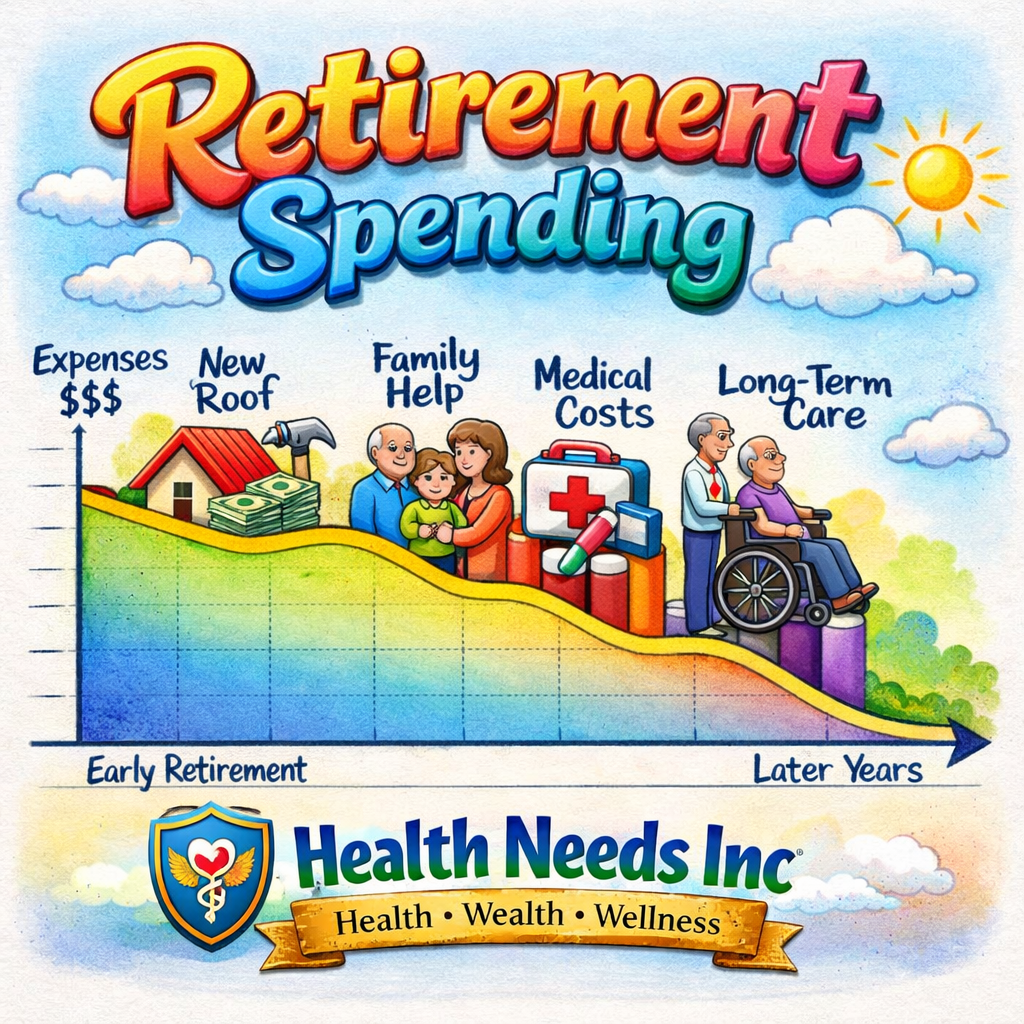 Retirement spending usually trends over time. It rarely behaves like a smooth line.
The average trend is not your personal schedule.
Does retirement spending decline as people age?
- Average household spending often falls at older ages, especially in travel, transportation, clothing, and entertainment.
- Individual households still face irregular increases from housing, health care, caregiving, family support, inflation, and long-term care.
- A stronger plan uses spending ranges, flexible categories, and shock reserves instead of assuming one smooth annual decline.
Retirement spending does not fall evenly. Average expenses may decline over time, but individual years can still contain large increases.
Flexible spending usually falls first. Travel, dining, clothing, and entertainment are easier to reduce than housing, taxes, insurance, and food.
A paid-off house is not free housing. Property taxes, insurance, repairs, utilities, and accessibility changes can still create major spikes.
Health and care costs follow their own curve. Routine medical costs may rise gradually, while long-term care can reverse years of declining spending.
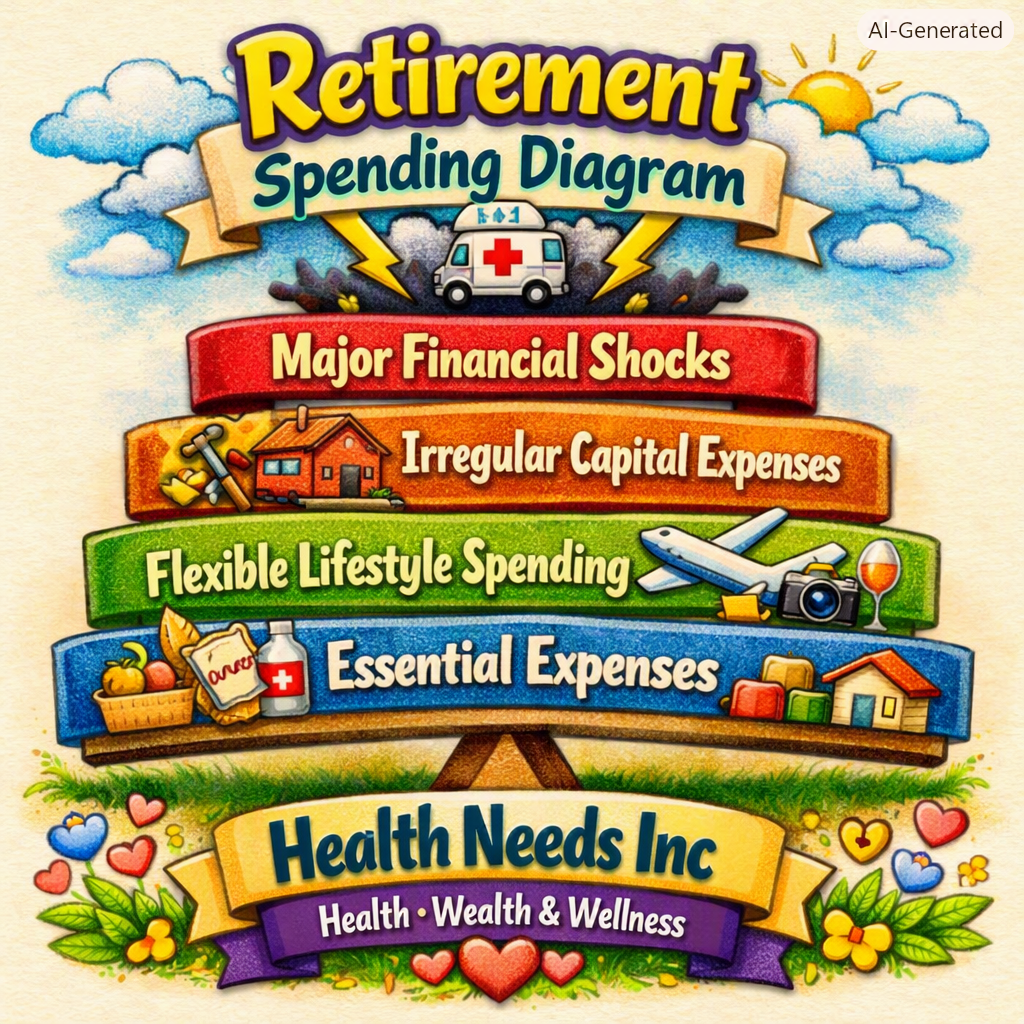
The stronger plan is layered. Separate essential expenses, flexible lifestyle spending, irregular purchases, and major financial shocks.
Retirement planning software often presents spending as a remarkably well-behaved line.
You retire. You spend a certain amount. Inflation raises that amount every year. Eventually, the spreadsheet ends with either money remaining or an alarming red box suggesting you should cancel lunch.
Real retirement spending is not that polite.
Some expenses decline. Others remain stubbornly level. A few disappear and are replaced by entirely new categories. Then an air conditioner fails, a grandchild needs help, a spouse develops a health problem, or the house announces that it has reached the “expensive noises” stage of ownership.
That is why retirement spending patterns usually look less like a straight line and more like a mountain road designed by someone with unresolved feelings.
Government expenditure data do show that average household spending tends to decline at older ages. Bureau of Labor Statistics research on older Americans’ spending patterns found lower total expenditures among households headed by someone age 75 or older than among households headed by someone ages 55 to 64. But the same research also found that spending categories move differently: transportation and clothing generally declined, while health care consumed a larger share of spending at older ages.
The important word is average.
An average can describe a population. It cannot tell you when your furnace will surrender.
The Retirement Spending Decline Is Real, but Incomplete
There is a reasonable basis for expecting spending to fall during retirement.
Commuting costs may disappear. Payroll taxes stop. Retirement contributions are no longer deducted from income. Some households finish paying a mortgage. Business clothing, convenience meals, and work-related travel may decline.
Later, leisure spending may also fall. People may travel less, drive fewer miles, replace vehicles less frequently, and spend less on clothing or entertainment.
That sounds wonderfully tidy.
It is also where retirement articles often become overconfident.
The fact that an older group spends less on average does not mean every individual household experiences a smooth annual decline. It does not mean spending falls at the same rate. It does not mean a healthy 76-year-old homeowner will spend like the statistical average. And it certainly does not mean health care, housing, or family costs received the memo.
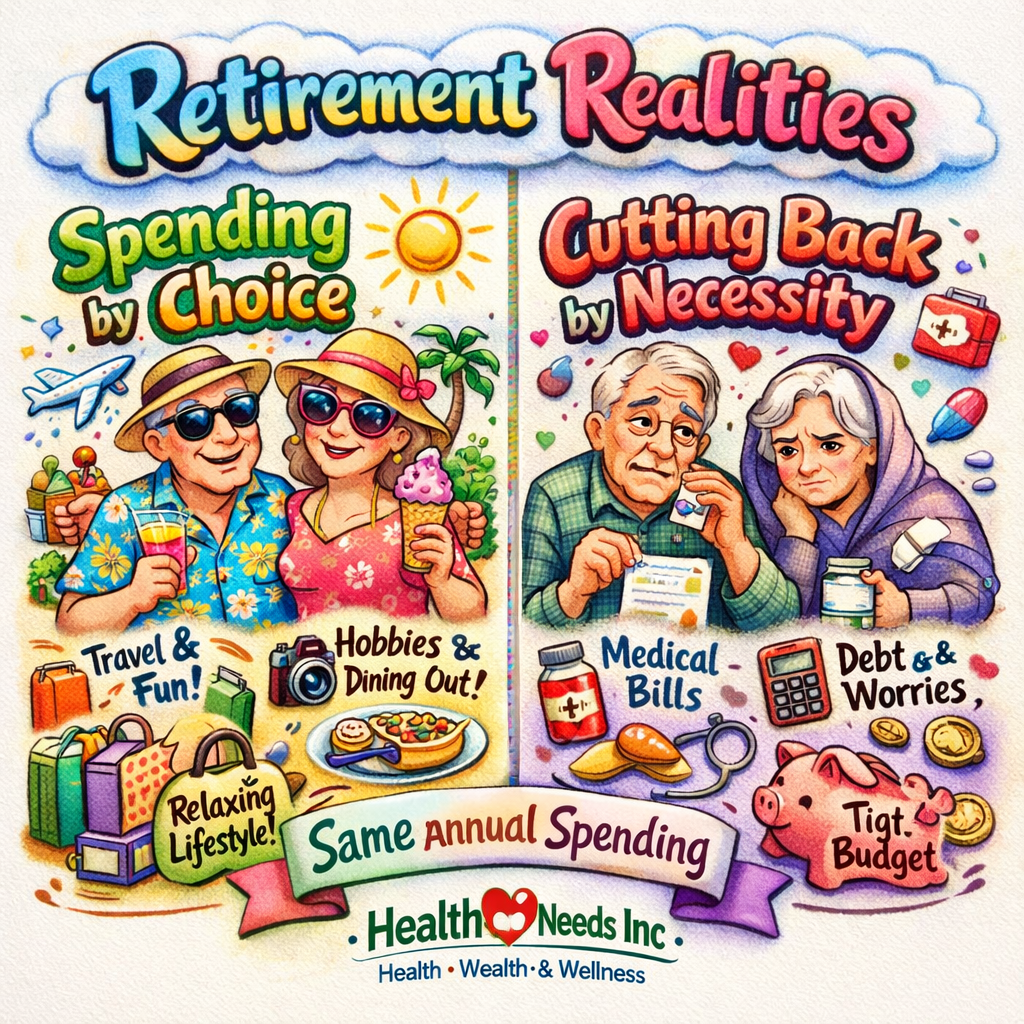
Lower spending may represent choice. It may also represent limitation.
A household may spend less because it no longer wants to travel. Another may spend less because mobility, widowhood, inflation, or depleted savings made travel unrealistic.
Those are not the same retirement experience, even when they produce the same number in a data table.
Retirement Spending Patterns Usually Move in Phases
Retirement is often described as one financial period. In reality, a 25- or 30-year retirement can contain several different lives.
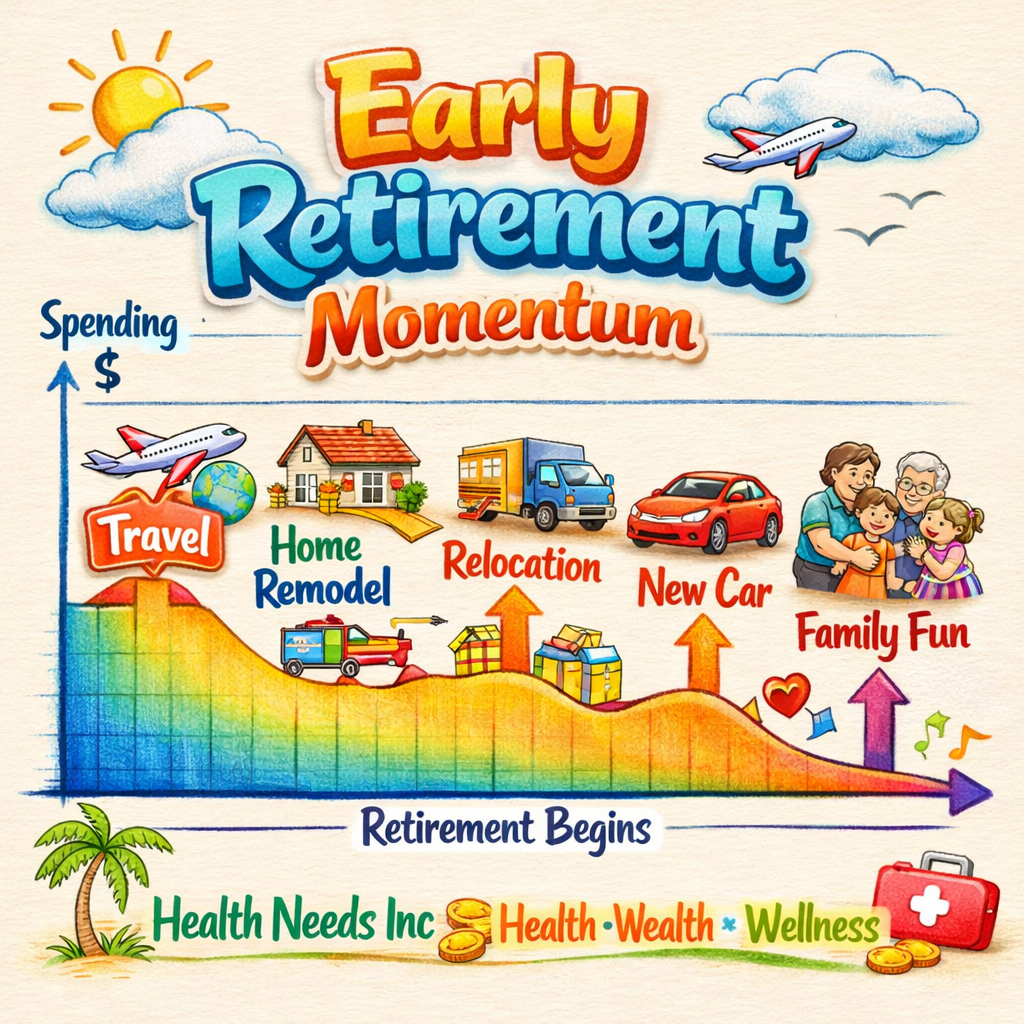
The first phase often begins with energy, plans, and a suspicious number of luggage purchases. New retirees may travel, renovate the house, relocate, buy a vehicle, pursue hobbies, or help children and grandchildren.
This is sometimes called the active or “go-go” stage.
Spending can remain close to pre-retirement levels or even increase temporarily. A retiree may finally have enough time to do all the things work previously prevented, which is delightful except for the part where many of those things accept credit cards.
The middle phase may bring slower travel, fewer major purchases, and more time at home. Discretionary spending often declines. Transportation costs may fall. Entertainment becomes more local. The household may settle into a quieter routine.
Then later retirement may bring increased spending on health care, household help, transportation services, home modifications, assisted living, or long-term care.
This general pattern is sometimes described as a retirement spending smile: higher spending early, lower spending in the middle, and possible upward pressure later from health or care needs.
The smile is useful as a concept. It should not become another rigid prediction dressed as insight.
Some retirees never have a high-spending travel phase. Some remain active well into their 80s. Some experience major medical or family expenses immediately after retiring. Others remain healthy, live in a manageable home, and experience remarkably stable costs.
Retirement has tendencies, not choreography.
Why Early Retirement Can Be More Expensive Than Expected
Many retirement projections assume the first year is an ordinary year with fewer work expenses.
It may not be.
Retirement can release years of delayed demand. People replace the aging car. They renovate the kitchen. They take the long-planned trip. They move. They furnish a second home. They join clubs, take classes, buy equipment, or discover that hobbies are simply retail categories with emotional branding.
None of this is necessarily irresponsible.
The problem comes when recurring spending is confused with temporary spending.
A $20,000 retirement trip does not mean the household needs an additional $20,000 every year. Similarly, a major home renovation is not part of the normal grocery-and-utilities budget.
Separate the First Years Into Three Spending Groups
- Normal annual living expenses.
- Temporary retirement-transition expenses.
- Optional lifestyle upgrades.
This prevents the first few enthusiastic years from distorting the entire long-term plan.
It also allows people to spend deliberately instead of interpreting every large purchase as evidence that retirement is failing.
Retirement Spending Tools
- Bureau of Labor Statistics Consumer Expenditure Surveys, useful for comparing broad spending categories by household age.
- Social Security benefit calculators, useful for estimating a major source of retirement income.
- Medicare Plan Compare, useful for reviewing premiums, coverage, and prescription costs.
- Consumer Financial Protection Bureau retirement resources, useful for budgeting, debt, and retirement-income decisions.
Housing Costs Do Not Retire When You Do
The phrase “my house is paid off” has ended more retirement-budget conversations than it should.
A paid-off mortgage is valuable. It is not the same as free housing.
Property taxes continue. Homeowners insurance continues. Utilities continue. Maintenance becomes more important as both the house and its owners age.
Roofs, heating systems, plumbing, driveways, appliances, tree removal, storm damage, and accessibility modifications do not appear in smooth monthly installments. They arrive in large, impolite chunks.
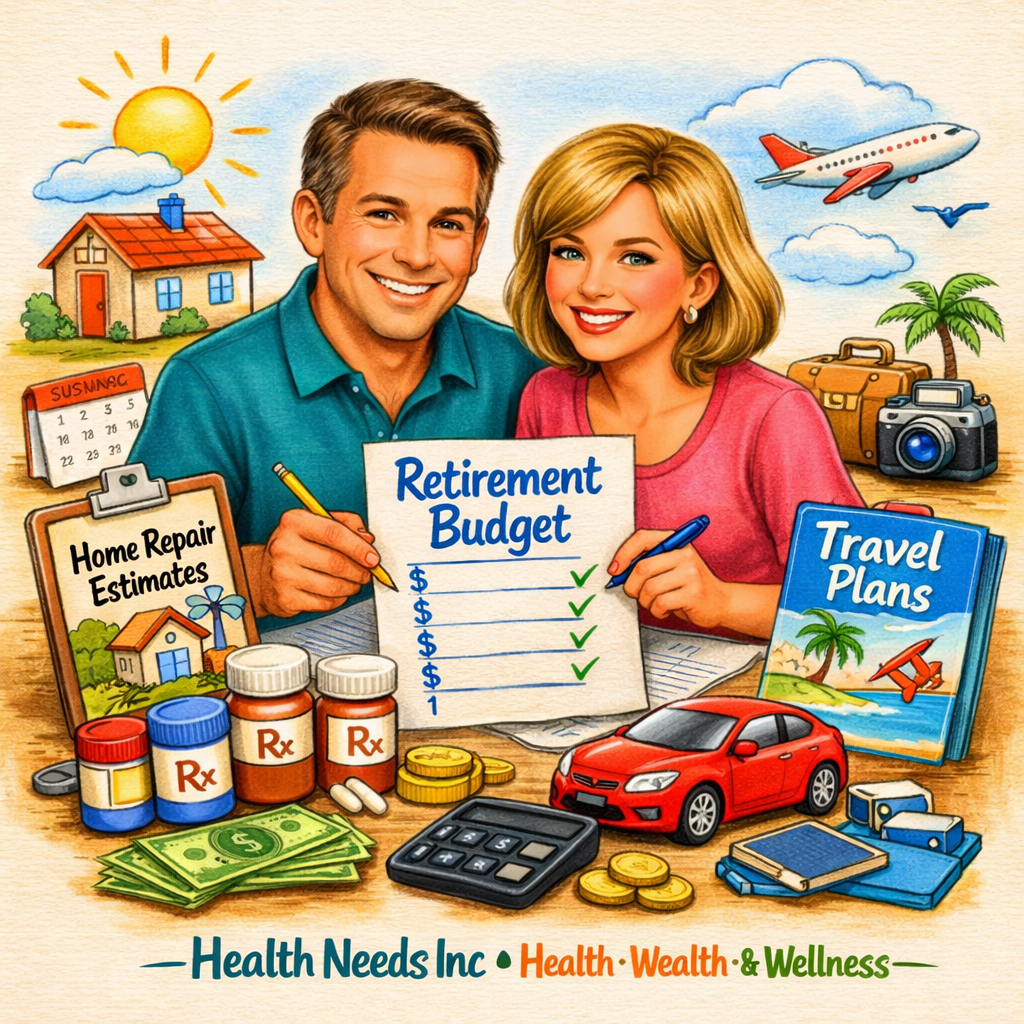
Housing remains one of the largest spending categories for older households. That is why retirement spending does not decline neatly even after a mortgage disappears.
A household may enjoy several low-cost years and then spend $18,000 on a roof.
On a chart, that looks like a spike.
In real life, it looks like six contractors returning calls in completely different dialects of pessimism.
A useful housing reserve should cover more than routine maintenance. It should recognize that older adults may eventually need grab bars, safer flooring, improved lighting, bathroom modifications, lawn help, snow removal, housekeeping, or a move to more manageable housing.
Downsizing may reduce some costs. It can also create moving expenses, closing costs, repairs, new furniture, association fees, and the discovery that smaller homes in desirable areas have also heard of inflation.
Health Care Spending Has Its Own Trajectory
Health care is one of the clearest reasons retirement expenses do not move in a straight line.
Some costs begin immediately at retirement. Others grow gradually. Some appear after a diagnosis. Others arrive because Medicare coverage is broader than many people expect in some areas and considerably narrower in others.
Premiums, deductibles, copayments, prescriptions, dental care, vision care, hearing services, mobility devices, and uncovered treatments can all affect spending.
The spending pattern is also uneven.
One year may involve only premiums and routine visits. The next may include dental implants, hearing aids, physical therapy, a hospital deductible, and multiple trips to specialists who all have separate parking philosophies.
CMS national health expenditure data show why medical spending deserves separate attention from general household inflation. Health care inflation also does not necessarily match general inflation. A retirement plan using one broad inflation number may hide the fact that some categories grow faster than others.
The solution is not to predict every diagnosis.
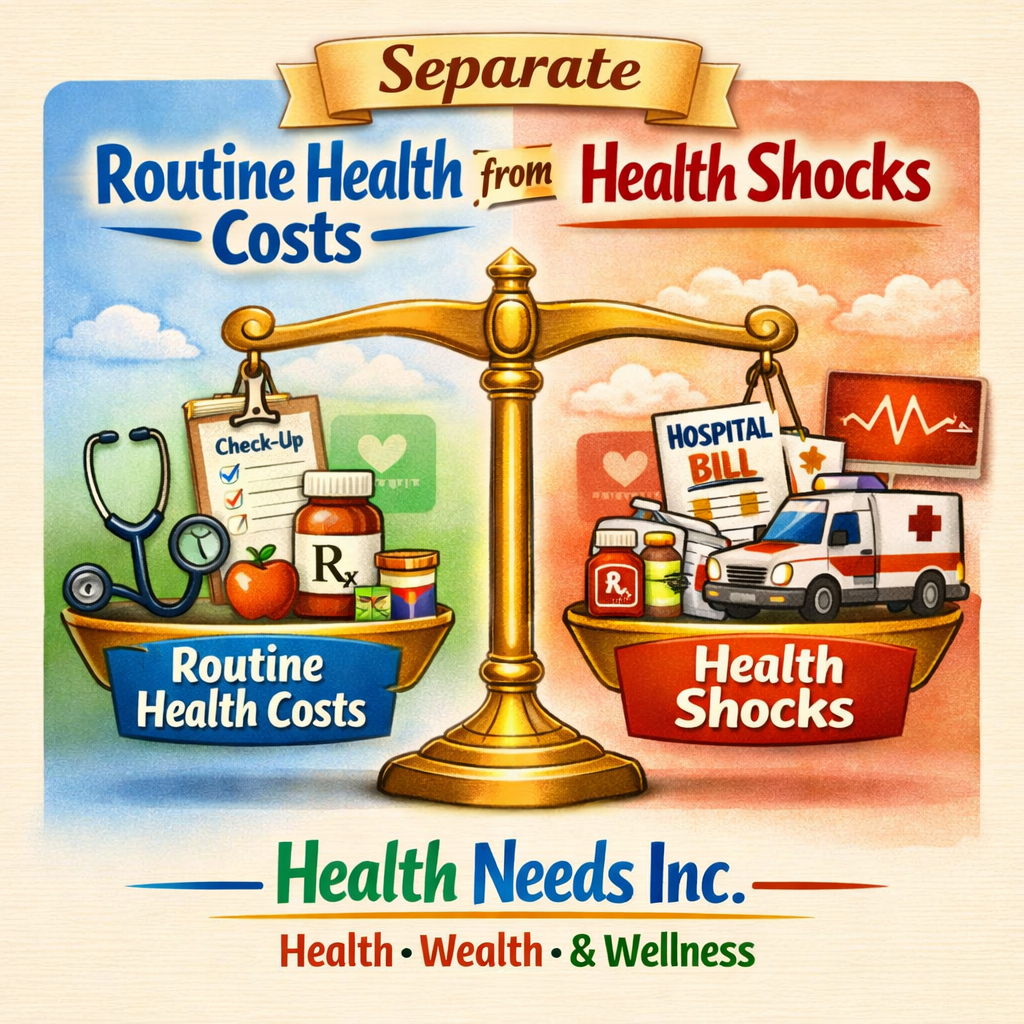
It is to separate routine health costs from health shocks.
Routine costs belong in the regular annual budget. Shocks require reserves, insurance, flexible withdrawals, or other funding sources.
For more on false certainty surrounding future expenses, see Retirement Planning Myths That Cost People Money.
Long-Term Care Can Reverse the Spending Decline
The largest threat to a smooth downward spending line is sustained care.
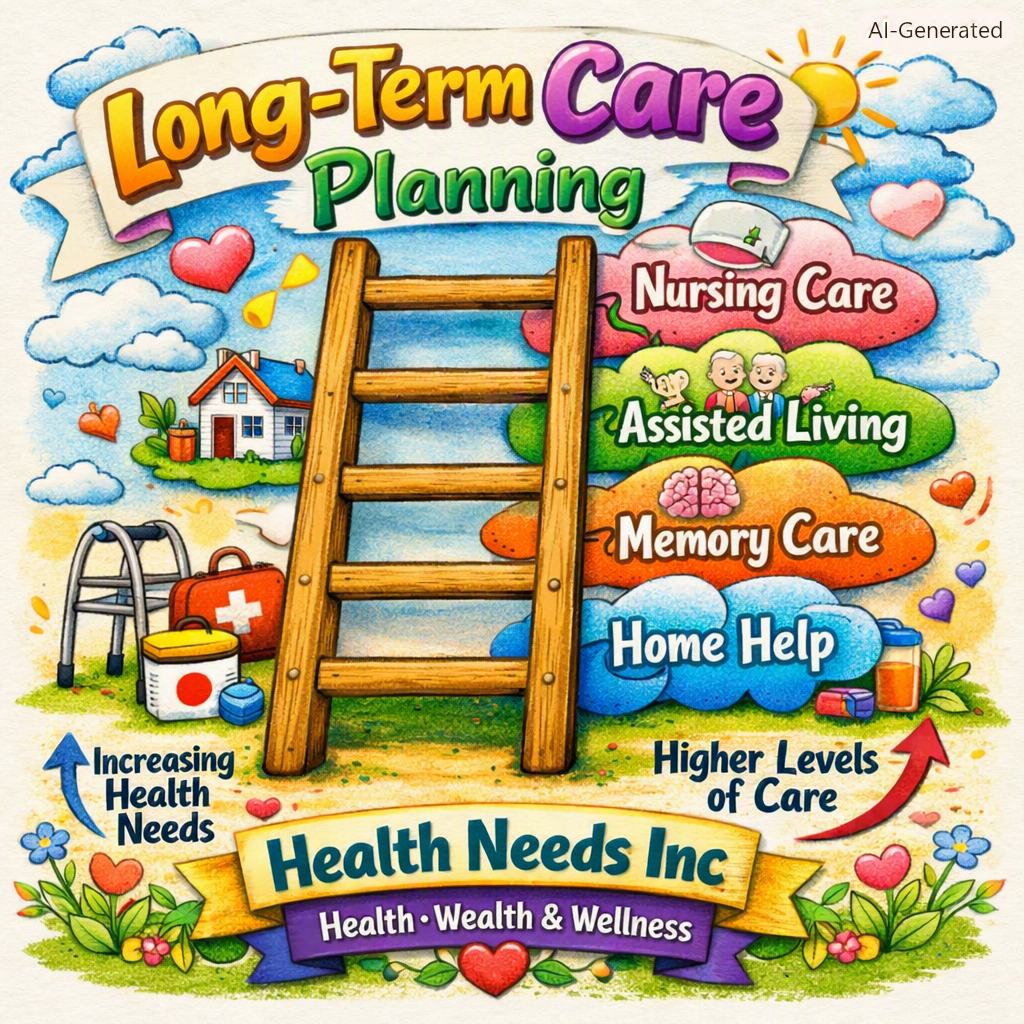
Long-term care may involve help at home, adult day care, assisted living, memory care, nursing care, or unpaid family assistance combined with paid services. The National Institute on Aging outlines the major forms of long-term care and where they may be provided.
This is not the same as ordinary medical spending.
Medicare explains that it generally does not cover ongoing custodial long-term care. A retiree may therefore face significant expenses for assistance with bathing, dressing, eating, mobility, supervision, or household tasks.
A household could experience years of declining discretionary spending and then face a large increase because one spouse needs daily assistance.
This is where simple age-based spending assumptions become dangerous.
The plan may have correctly predicted fewer vacations and lower transportation costs. It may still fail because nobody created a funding strategy for care.
That strategy may include dedicated savings, long-term care insurance, hybrid insurance, home equity, Medicaid planning with qualified legal guidance, family support, or a decision to relocate closer to services.
No single approach fits everyone.
Pretending the risk does not exist fits no one.
Family Spending Can Rise When the Family Needs Help
Retirement plans are usually built around the retiree’s expenses.
Families remain annoyingly present.
Adult children may experience job loss, divorce, disability, housing problems, or high childcare costs. Pew Research Center has documented the pressure facing many adults supporting both older parents and children. Grandchildren may need tuition support. Aging siblings or parents may need assistance. A retired couple may suddenly find itself paying for travel, caregiving, or temporary housing near a relative.
These costs are often labeled “unexpected,” even when helping family has been a lifelong pattern.
The problem is not generosity. The problem is treating generosity as financially invisible.
Questions for a Family-Support Policy
- How much can we give each year without weakening our security?
- Are gifts coming from income, cash reserves, or investments?
- Will we provide loans?
- Are we willing to pay recurring expenses?
- Could helping one child create expectations among siblings?
- Are we funding a temporary emergency or a permanent lifestyle gap?
Generosity without boundaries can become another form of retirement-spending volatility.
For a deeper look at family assumptions, see Kids as Retirement Plan Myth: Why Love Still Needs a Plan.
Inflation Does Not Affect Every Retiree the Same Way
Retirement projections often apply one inflation rate to all spending.
That is mathematically convenient and personally inaccurate.
A household spending heavily on health care, insurance, rent, food, and home services may experience a different inflation reality from a household spending more on travel, entertainment, and electronics.
The Bureau of Labor Statistics Consumer Price Index tracks broad price changes, but individual retirees experience inflation through the categories they actually buy. Inflation also changes behavior.
When prices rise, retirees may delay travel, keep vehicles longer, switch brands, cancel services, or reduce gifts. Essential expenses remain. Flexible expenses absorb the damage.
This means total spending may appear stable even while the household’s quality of life declines.
A retiree spending $60,000 this year and $60,000 next year has not maintained the same lifestyle if prices increased and the household cut activities to compensate.
That distinction matters.
Nominal spending is the number leaving the account. Real spending reflects what the money actually buys.
A good plan tracks both.
Widowhood Changes the Shape of Retirement Spending
A two-person retirement budget does not simply divide in half after one spouse dies.
Some costs decline. Food, travel, personal expenses, and certain health costs may fall.
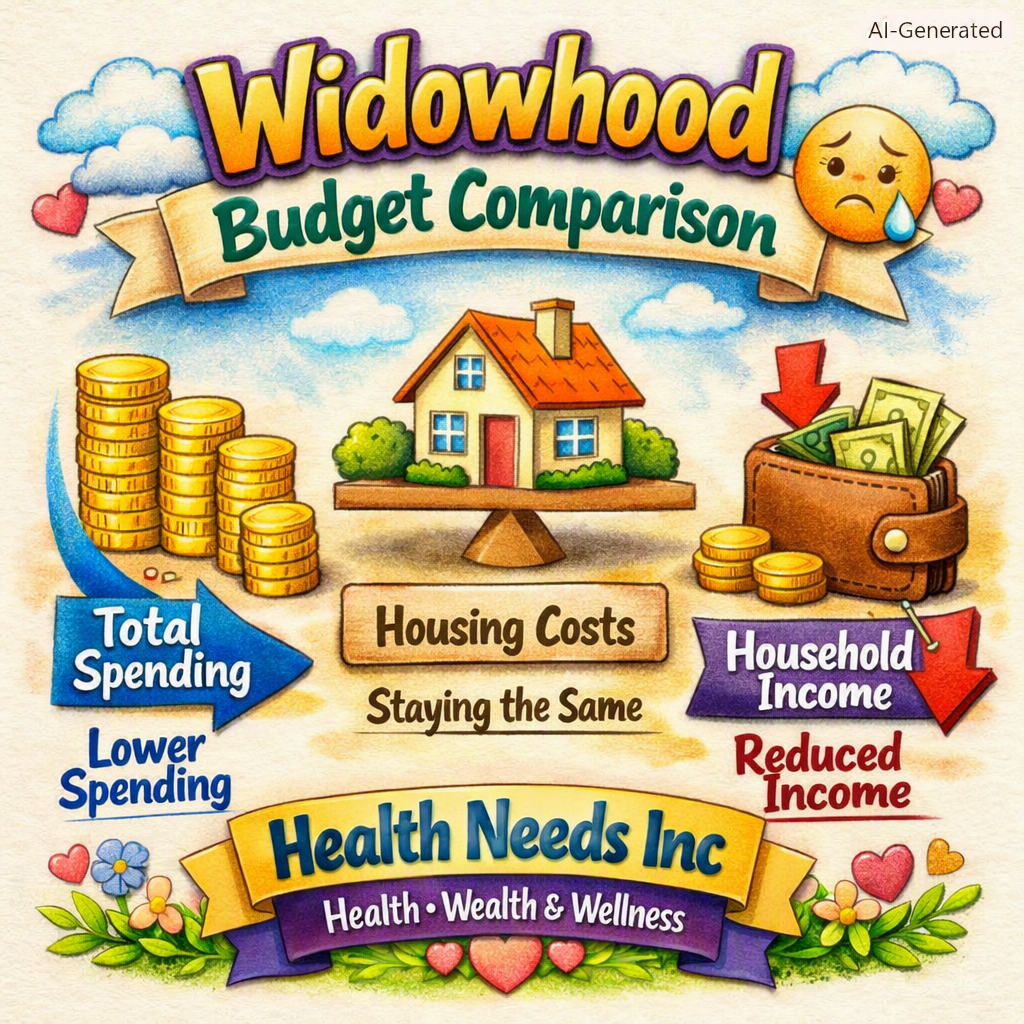
Other costs remain nearly unchanged. Property taxes, housing insurance, internet service, maintenance, and many utilities do not politely reduce themselves by 50%.
Income may also fall. One Social Security benefit usually ends, although the surviving spouse generally keeps the larger eligible benefit. The Social Security Administration’s retirement information can help households review benefit estimates and claiming considerations. Pension income may decrease depending on the survivor option selected.
The result can be a household with lower total spending but greater financial pressure.
Widowhood may also create one-time costs: funeral expenses, legal assistance, relocation, home repairs, account changes, or paid help for tasks previously handled by the deceased spouse.
This is another reason average spending by age can mislead.
The household may be older and spending less while also being less secure.
Fear Can Cause Spending to Fall Too Quickly
Not every decline in retirement spending is evidence of efficient aging.
Sometimes retirees underspend because they are afraid.
After decades of saving, switching to withdrawals can feel psychologically wrong. Account balances fluctuate. News headlines predict disaster with the emotional restraint of a smoke alarm. Nobody knows exactly how long retirement will last.
Conservative spending can protect against longevity risk. The Consumer Financial Protection Bureau retirement resources can help households organize income, debt, and spending decisions without relying on one rigid rule.
Extreme underspending can produce a different failure: a retirement spent denying reasonable enjoyment to preserve money that was intended to support life.
The goal is not maximum spending.
It is sustainable spending aligned with the household’s values.
A plan should be able to answer both questions:
- How much can we safely spend?
- What are we preserving the money for?
Without the second answer, “safety” can become an endless postponement of living.
A Better Way to Model Retirement Spending
Instead of using one fixed spending number, divide retirement expenses into four layers.
Layer 1: Essential Spending
These are the expenses required to maintain basic life and housing:
-
- Food
- Utilities
- Housing costs
- Insurance
- Taxes
- Basic transportation
- Routine health care
- Minimum debt payments
Essential spending should ideally be supported as much as possible by reliable income sources such as Social Security, pensions, annuities, or conservative portfolio withdrawals.
Layer 2: Flexible Lifestyle Spending
These expenses improve retirement but can be adjusted:
-
- Travel
- Dining out
- Entertainment
- Hobbies
- Gifts
- Club memberships
- Vehicle upgrades
- Home decorating
Flexible spending is the household’s pressure-release valve. During weak markets or high-cost years, this layer can decline without threatening basic security.
Layer 3: Irregular Capital Expenses
These expenses are predictable in category but unpredictable in timing:
-
- Roof replacement
- Major vehicle purchase
- Heating or cooling systems
- Appliances
- Dental work
- Home modifications
- Moving expenses
These should not be hidden inside the ordinary monthly budget. Create a separate annual reserve or sinking fund.
Layer 4: Major Shocks
-
- Long-term care
- Major uninsured health costs
- Family emergencies
- Extended caregiving
- Natural disasters
- Significant legal expenses
- Loss of a spouse
Major shocks require contingency planning rather than false precision.
The household may use cash reserves, insurance, home equity, portfolio assets, or outside assistance. The important step is deciding which resources are available before the shock arrives wearing a name badge.
Review Spending Annually, Not Once at Retirement
A retirement budget should be treated as a living system. The Bureau of Labor Statistics Consumer Expenditure Surveys can provide a useful national comparison, but household records should remain the primary planning evidence.
Review it at least once a year and after any major life event. The FINRA retirement planning resources provide additional guidance on income, investing, and withdrawal considerations.
- Did essential spending rise faster than expected?
- Are we spending less because our preferences changed or because fear took over?
- What large home or vehicle expenses are approaching?
- Have health costs changed?
- Are we supporting family more than planned?
- Has widowhood or caregiving changed the household?
- Can we afford more discretionary spending?
- Do withdrawals need to adjust after market gains or losses?
- Is the home still financially and physically appropriate?
The review does not need to become a ceremonial gathering of spreadsheets and despair.
Its purpose is to detect changes early.
Retirement planning is not about choosing a spending number at 65 and defending it until death. It is about making a series of informed adjustments while life continues behaving like life.
Retirement without the fog.
Get practical retirement and wellness thinking without product hype, panic marketing, or golf-shirt certainty.
Final Thoughts on Retirement Spending Patterns
Retirement spending often declines.
It just does not decline in a straight line.
Travel may fall while health care rises. Transportation may decline while home maintenance spikes. A mortgage may disappear while property taxes, insurance, and repairs continue. One quiet year may be followed by a new roof, a family emergency, and a dental bill apparently priced by jewelers.
The practical lesson is not that retirement planning is impossible.
It is that planning should reflect the shape of real life.
Use broad spending phases instead of one rigid number. Separate essential costs from flexible lifestyle expenses. Set aside money for irregular purchases. Build a strategy for health and long-term care risks. Review the plan regularly.
Most importantly, do not confuse a population average with a personal destiny.
Your spending may decline with age. It may rise in certain years. It may remain stable longer than expected. It may change after widowhood, illness, relocation, or a shift in priorities.
A durable retirement plan does not require spending to behave perfectly.
It requires the plan to keep working when spending does not.
FAQs About Retirement Spending Patterns
Yes, average retirement spending often decreases with age, particularly in discretionary categories such as travel, transportation, clothing, and entertainment. However, individual households may experience temporary increases from health care, home repairs, family support, relocation, or long-term care. The average trend should be used as a planning reference, not a guaranteed personal schedule.
The retirement spending smile describes a possible pattern in which spending is higher during active early retirement, declines during the quieter middle years, and rises later because of medical or care expenses. Not every household follows this shape. Health, wealth, housing, family structure, and personal preferences can produce very different patterns.
New retirees may travel, renovate a home, relocate, purchase a vehicle, begin expensive hobbies, or complete activities postponed during their working years. These costs may be temporary rather than permanent. Separating transition expenses from normal annual spending prevents the early years from distorting the long-term budget.
No. A mortgage-free homeowner still pays property taxes, insurance, utilities, repairs, maintenance, and possibly association fees. Older homeowners may also need accessibility improvements, household help, landscaping, snow removal, or major system replacements. Housing can remain one of the largest retirement expenses even without a mortgage.
Separate routine health costs from major health shocks. Routine expenses include premiums, prescriptions, deductibles, dental care, vision care, and regular appointments. Larger reserves or insurance strategies may be needed for major procedures, sustained care, or long-term assistance. Do not assume general inflation accurately captures future medical costs.
A temporary reduction in flexible spending can help protect a portfolio after market losses, particularly early in retirement. Essential expenses should remain funded, while travel, gifts, dining, or major optional purchases may be delayed. The appropriate adjustment depends on the retiree’s income sources, withdrawal rate, reserves, portfolio, and time horizon.
Review the plan at least annually and whenever health, housing, income, family responsibilities, or marital status changes. Compare actual spending with projections, identify upcoming capital expenses, and determine whether discretionary spending can safely rise or should temporarily fall. Retirement planning works best as an adjustment process, not a one-time calculation.