When one person becomes responsible for every family problem, keeping the peace can become another name for keeping them quiet.
TL;DR · Key Takeaways
- Scapegoating means assigning someone unwarranted blame. It describes a pattern; it does not diagnose a family.
- Repeated humiliation, intimidation, isolation, and punishment for raising concerns deserve attention, regardless of anyone’s diagnosis.
- You can accept responsibility for your own behavior without accepting responsibility for someone else’s abuse.
- Speaking privately to a safe person counts as speaking up. Public disclosure is not a requirement.
- The next useful step may be a boundary, outside support, or a practical safety plan. There is no universal contact prescription.
General information about family conflict and emotional abuse, not individual diagnosis or treatment. If you fear retaliation, seek confidential support before confronting anyone.
01 The family peace that somebody else pays for
Some families keep the peace by making one person pay for it.
An insult is delivered. Someone objects. Within minutes, the discussion has migrated from the insult to the outrageous behavior of the person who noticed it.
Now the injured party must apologize for upsetting dinner. The original offense has quietly collected its coat and left.
In a family organized around appearances, this reversal can become familiar: the person describing a problem becomes the problem. Everyone can return to normal, provided one person agrees that normal was acceptable.
Viral posts call this the work of a “narcissistic family.” The label travels faster than the evidence. You can recognize repeated blame, humiliation, and silencing without diagnosing everyone involved or claiming to know what each relative intends.

02 What family scapegoating actually means
The National Library of Medicine describes scapegoating as directing hostility or frustration toward a person or group with unwarranted blame. Applied to family life, the useful question is whether one member repeatedly receives blame that the facts do not justify.
Consider a hypothetical example: a daughter asks her siblings to share their mother’s care. Instead of discussing schedules, they revive her divorce, criticize her temperament, and declare that she has always divided the family.
Her request may be negotiable. Her delivery may be imperfect. Neither makes a lifetime character prosecution a reasonable substitute for discussing Tuesday’s appointment.
One disagreement does not establish a pattern. Neither does being outvoted. Look at what happens repeatedly, how evidence is handled, and whether accountability is available to everyone.
03 “Narcissistic” is doing too much work
Online, “narcissist” can mean almost anyone who behaved selfishly and has not yet apologized to the satisfaction of the algorithm.
Narcissistic personality disorder is a clinical diagnosis involving a persistent pattern and specific criteria. A difficult parent, a controlling sibling, or a humiliating family gathering does not supply enough information to make it.
For the reader, the more practical questions concern conduct:
- Are you threatened or humiliated?
- Are you pressured to conceal harm?
- Are your relationships or resources being controlled?
- Does raising a specific concern reliably bring retaliation?
You do not need a diagnostic label to object to being mistreated.
04 Conflict, blame, and abuse are different questions
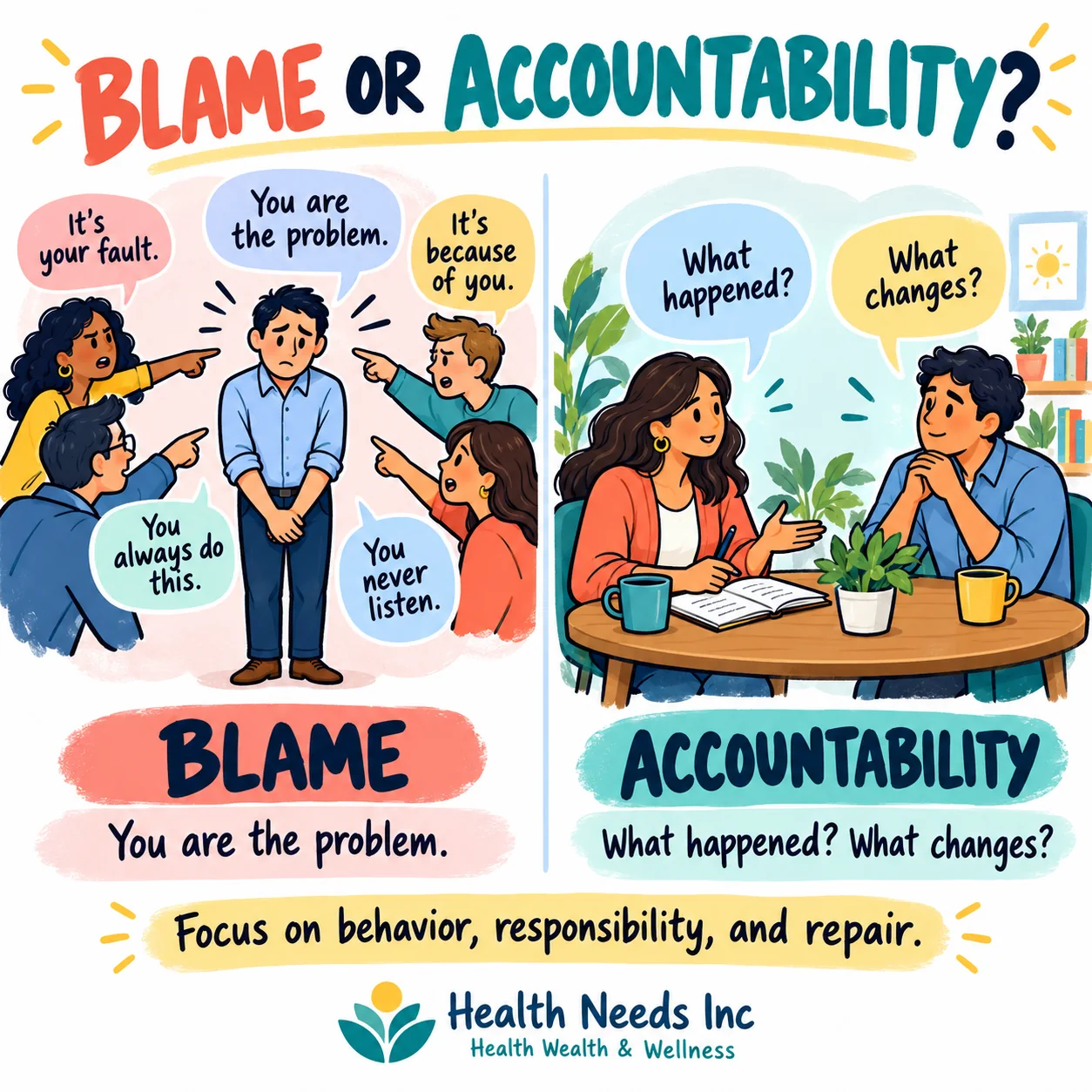
Ordinary conflict can be painful. People remember events differently, become defensive, and occasionally say foolish things with the confidence of a constitutional scholar.
The important distinction is whether the relationship allows correction, disagreement, and repair.
| What to examine | Conflict with room for repair | A concerning pattern |
|---|---|---|
| The subject | A specific event stays discussable | Your entire character replaces the event |
| Responsibility | Different people can acknowledge their part | Responsibility repeatedly lands on you |
| Evidence | Messages and facts can change the discussion | Contrary evidence is dismissed without consideration |
| Disagreement | You can object without punishment | Objection brings threats, humiliation, or exclusion used as leverage |
| Repair | An apology is followed by changed behavior over time | You must surrender the concern before contact resumes |
This comparison is an observation aid, not a diagnostic test. A single serious threat can require help even without a long history; an awkward conversation does not automatically constitute abuse.
The National Domestic Violence Hotline’s guide to emotional abuse identifies threats, humiliation, intimidation, and isolation in intimate relationships. Within a wider family, the practical questions remain what is happening, what power is involved, and whether you can disagree safely.
HNI’s emotional wellness guide explores recognizing feelings and choosing a response. Managing your reaction does not make you responsible for someone else’s conduct.
05 When the family story matters more than the person
If one person is declared unreasonable, everyone else can avoid examining an unreasonable arrangement.
“We are a close family” may be an honest description. It can also become an instruction: do not mention anything that complicates the brochure.
Relatives need not share a secret plan. One may benefit from the arrangement. Another may fear conflict, rely on someone financially, or believe that silence keeps everyone together.
The result can still leave one person carrying the cost. Understanding those possibilities may help you see the situation more clearly, but it does not oblige you to absorb another insult while completing a postgraduate degree in everybody else’s motives.
06 You do not have to be flawless to deserve protection
Perhaps you shouted. Perhaps you handled something badly. Perhaps you owe an apology.
None of that makes you responsible for someone else’s threats, humiliation, or coercion. “I should not have shouted” and “You should not have threatened me” can both be true.
Accountability concerns what you actually did. Scapegoating makes your character responsible for the entire atmosphere.
You can be imperfect and still be treated unjustly. You do not have to win a character contest before your treatment matters.
07 A five-step worksheet: what happened, and what do I need next?
Choose one recent incident and work through these five prompts. The aim is to decide what needs attention next, on your own or with someone you trust.
Copy the prompts into a private notebook or notes app only if safe. This webpage does not collect or save your answers.
Safety first: Do not keep notes where someone monitoring your device or belongings can discover them. If documentation creates danger, skip it and seek confidential support through a safer channel.
- Describe one event. Record what was said or done, as specifically as you can. “My brother called me selfish after I declined another overnight shift” is more useful than “They all hate me.”
- Separate what you know from what you suspect. “Two relatives stopped replying after the argument” describes what happened. Why they stopped may remain unclear.
- Name the consequence. Did you lose sleep, money, transport, access to care, or contact with someone important? What needs attention now?
- Identify your controllable response. You might end an insulting call, decline a task you cannot perform, or move practical arrangements into writing.
- Choose one outside support. Identify a trusted friend, therapist, health professional, advocate, or relevant adviser who can help examine the situation.
Completed example: “I declined a second overnight care shift. My brother called me selfish. I can cover Friday, but I need the other shifts assigned. My next step is to ask a trusted friend to help me prepare a clear response.” This is an illustration, not a recommended script for someone who fears retaliation.
Look first at the practical problem the page reveals. Is it a dispute you can discuss, a limit you need to set, or a situation in which fear and dependence make outside help more urgent?
Look for relationships built on mutual respect and practical support, including people outside the family dispute. One trustworthy person can be a more useful starting point than trying to persuade the entire group.
08 Boundaries need a practical verb
“Please respect me” expresses a reasonable wish. It does not tell you what happens when the next insult arrives.
These examples are options, not instructions to confront someone unsafe. Where retaliation could affect housing, money, transport, or care, plan with appropriate support first.
A usable boundary identifies an action you can take:
- “If the conversation becomes insulting, I will end the call.”
- “I can handle one appointment this week. I cannot cover all of them.”
- “I will discuss the expenses. I will not discuss them while being shouted at.”
Mayo Clinic Health System’s boundary guidance emphasizes distinguishing your responsibilities from other people’s thoughts, feelings, and actions. A boundary cannot guarantee that a relative agrees or behaves differently.
Some people need shorter visits or written communication. Others need greater distance. The decision depends on the behavior and your circumstances, not somebody else’s recovery script.
If a conversation leaves you overwhelmed, practical coping techniques for anxiety may help you regain enough composure to choose your next step. Coping skills should support action, not make mistreatment easier to endure.
09 When caregiving turns an old role into a new obligation
In midlife and later life, family tensions can acquire an administrative department.
An aging parent needs help. An adult child needs housing. One sibling lives nearby, so everyone quietly promotes proximity into permanent availability.
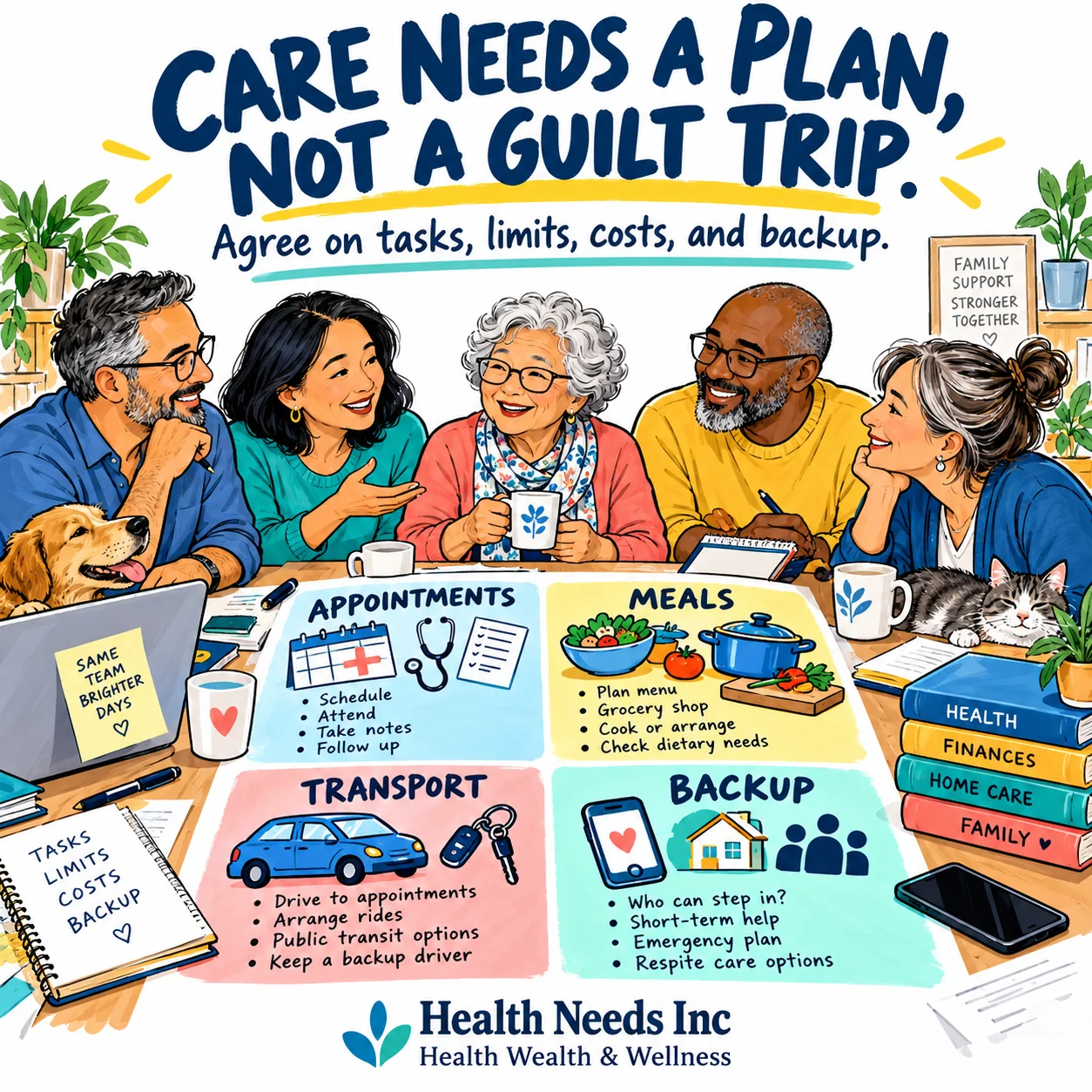
Keep practical questions visible: Who is doing which task? Who has agreed to pay? Who has decision-making authority? What happens if the current caregiver becomes ill?
HNI’s guide to planning long-term care explains why care needs named tasks, agreed limits, funding, and backup before exhaustion makes the decisions.
Being called “selfish” does not create another twenty hours in the week. A written division of tasks may expose the gap between what relatives praise and what they actually provide.
If an older person faces threats, neglect, or financial exploitation, seek help from a local adult protective services agency or an elder-abuse support service rather than treating it only as a communication dispute. MedlinePlus’s elder-abuse guidance identifies emotional and financial abuse, as well as neglect, as forms of elder abuse that can occur within families.
10 Speaking up does not require a public trial
Breaking silence may mean telling one safe person what happened. It may mean speaking to a therapist, seeking professional advice, or declining to repeat a false story.
It does not require a family group message, an online exposé, or a confrontation timed for maximum emotional impact.
A safety plan addresses concrete needs: somewhere to go, access to money and medication, transport, and someone who knows what is happening. The Hotline provides personalized safety planning for intimate-partner abuse; other family situations may call for an elder-abuse service, social worker, or another appropriate local professional.
If you are in immediate danger, contact emergency services. If devices or accounts may be monitored, seek help through a safer device or channel when possible.
Silence chosen to protect yourself is different from silence imposed to protect someone else. You get to consider timing, audience, and consequences.
11 Quick reader quiz: recognition without diagnosis
Choose an answer, then open + to check it. This checks understanding, not your family.
1. Several relatives agree you caused the dispute. Does that prove it?
- Yes, agreement proves the facts.
- No, it proves you are the scapegoat.
- Neither conclusion follows from agreement alone.
Answer: C. Agreement is not proof. Look at specific events and evidence.
2. Which statement is a boundary you can act on?
- “You must understand me.”
- “I will end the call if the insults continue.”
- “Everyone must admit I am right.”
Answer: B. A boundary describes your action. Use it only when reasonably safe.
3. Do you need a diagnosis or a family vote before seeking help?
- A diagnosis is required.
- The family must agree.
- Neither is required.
Answer: C. You can seek support about harmful behavior without either.
12 A life beyond the assigned role
You may never get the admission you want. A family can preserve its preferred version of events long after you stop participating in it.
That is painful. It also changes the task. Instead of preparing another closing argument, you can begin asking what makes daily life safer, less exhausting, and more honest.
Our article on emotional healing without pretending to be unbroken considers how to build a workable present without erasing what happened.
Family loyalty can include truth, accountability, and care for the person who is hurting. When loyalty requires somebody’s continued mistreatment, the word is being asked to conceal too much.
You do not have to keep paying for everybody else’s peace.
Frequently asked questions
Is family scapegoating a diagnosis?
No. It describes unwarranted blame, not a diagnosis of you or your relatives.
Can someone care about me and still behave harmfully?
Yes. Look at their actions, accountability, and lasting change, rather than affection alone.
Do I have to forgive or reconcile?
No. Decisions about contact should reflect safety, practical needs, your wishes, and evidence of change.
What if I depend on my family for housing, money, or care?
Seek confidential support and plan around that dependency before confronting someone or changing contact.
Sources
- National Library of Medicine. Scapegoating, MeSH definition. Supports the definition of unwarranted blame, not a prevalence claim.
- Merck Manual Professional Edition. Narcissistic Personality Disorder. Supports the clinical nature and criteria of diagnosis.
- National Domestic Violence Hotline. What is emotional abuse?. Supports examples of nonphysical abuse in intimate relationships.
- Mayo Clinic Health System. Setting boundaries for your well-being. Supports distinguishing responsibilities and limits of control.
- MedlinePlus. Elder abuse. Supports family contexts and categories of elder abuse.
- National Domestic Violence Hotline. Create your personal safety plan. Supports personalized planning in relationship abuse.
Wellness without the noise.
Evidence, skepticism, and useful ideas for everyday life.
Signup opening soon. No email is collected here yet.