For educational purposes only. This article does not provide medical advice, diagnosis, treatment, or individualized guidance about drugs, supplements, laboratory testing, hormones, or longevity clinics. Discuss health decisions with a qualified clinician who knows your medical history, medications, risks, and goals.
The Longevity Elite: When Getting Older Became a High-Stakes Contest
★ TL;DR
Healthy aging is a worthy goal. Turning it into a biometric tournament is something else entirely.
-
The longevity elite track sleep, glucose, blood, body composition, supplements, and biological-age scores as if mortality were a quarterly performance review.
-
Some measurements are clinically useful. Others are promising research tools being sold to individuals before anyone knows how much a single score should change medical care.
-
The strongest evidence still favors unglamorous basics: movement, strength, sleep, nutritious food, preventive care, social connection, and not smoking.
-
A longer life is not automatically a better life. Healthspan, function, relationships, purpose, affordability, and freedom from obsessive monitoring matter too.
The wealthy once collected yachts, estates, and contemporary art. Now they collect biomarkers and compare resting heart rates before breakfast.
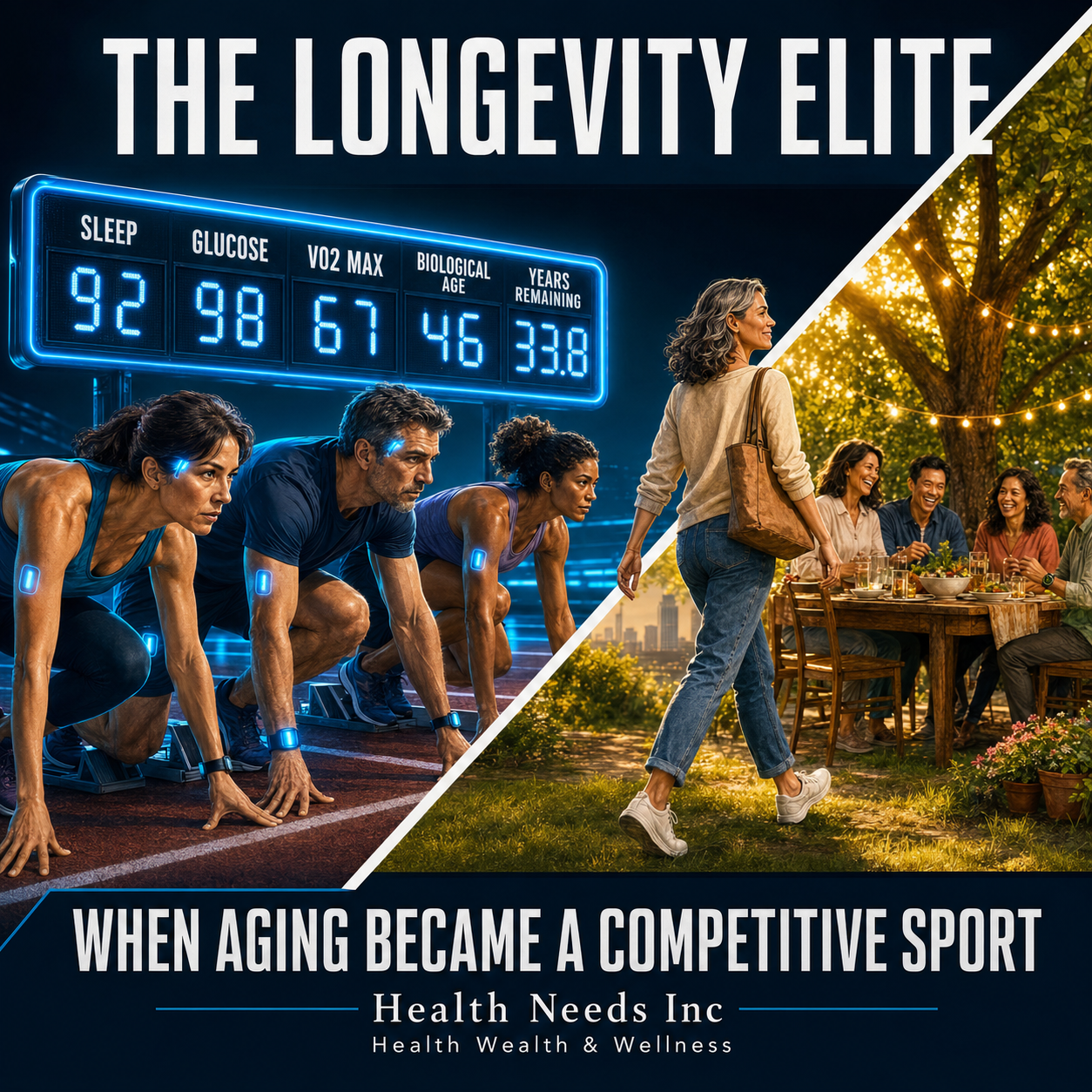
Health span is useful. Longevity theater is expensive.
What does “the longevity elite” mean?
-
- The longevity elite are affluent enthusiasts who treat aging as an optimization project measured through intensive testing, wearables, supplements, restrictive routines, and experimental interventions.
- Their interest can accelerate research and normalize prevention, but it can also oversell uncertain biomarkers, encourage unnecessary treatment, and turn health into conspicuous consumption.
- The sensible goal is not to win aging. It is to preserve function and meaning while using evidence in proportion to what it can actually prove.
Longevity has become a status language. Expensive testing and disciplined routines can signal control, wealth, and membership in a future-facing tribe.
Biological age is not one settled fact. Different clocks measure different patterns, and a population-level association may not provide reliable instructions for one person.
More data can create more medicine. Intensive screening may find useful risks, harmless abnormalities, false alarms, or problems that would never have caused symptoms.
Experimental is not the same as fraudulent. Rapamycin, aging clocks, and other interventions deserve serious research. Research promise is not yet a personal guarantee.
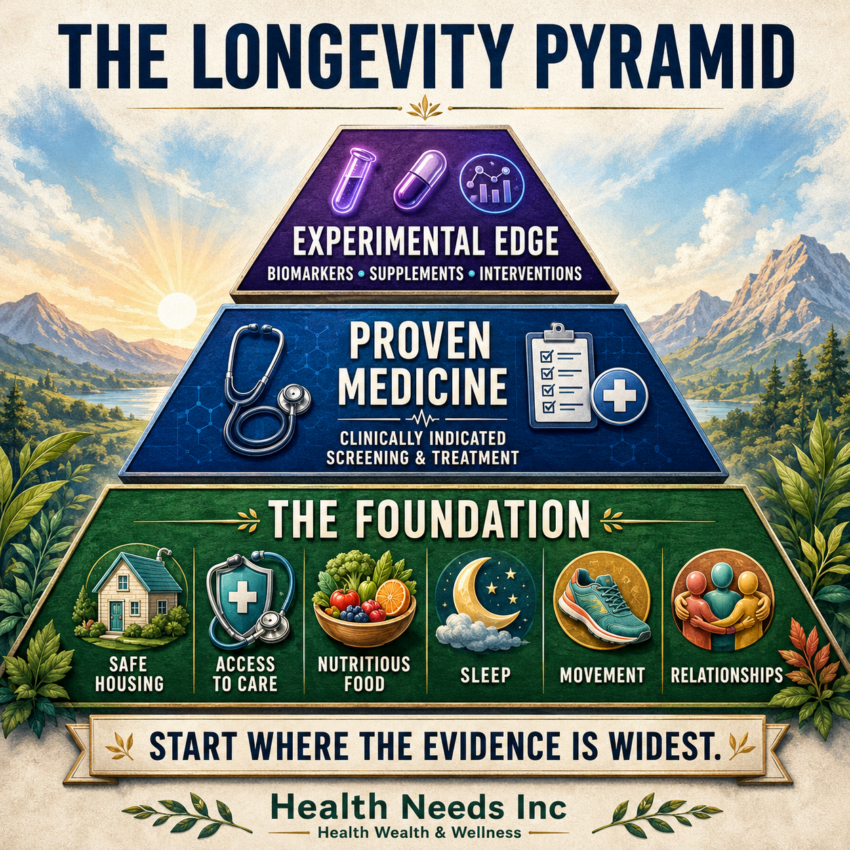
Ordinary prevention remains formidable. Exercise, sleep, food, clinical care, relationships, and safer environments lack theatrical lighting but have much stronger practical footing.
At 6:03 a.m., the longevity competitor has already received judgment.
The ring disliked his sleep. The mattress detected insufficient recovery. His glucose monitor objected to dinner. An app has converted all three grievances into a readiness score, which is a remarkably efficient way to make waking up feel like failing a licensing exam.
Breakfast may involve several capsules, a precisely engineered protein target, and the emotional atmosphere of a laboratory mouse with excellent credit.
None of this is automatically foolish. Sleep matters. Blood pressure matters. Muscle matters. Preventive care matters. Scientific attempts to understand aging may produce important treatments for disease and disability.
But somewhere between taking a walk and hiring a concierge physician to calculate the age of your methyl groups, healthy aging became competitive. The objective is no longer merely to remain capable, connected, and alive. It is to age more slowly than the other people at the dinner table.
This is the world of the longevity elite, where discipline meets capital, mortality meets software, and the oldest human fear receives a premium subscription tier.
When Healthy Aging Became Total Optimization
Traditional preventive medicine asks familiar questions. Is your blood pressure controlled? Are recommended screenings current? Do you move, sleep, eat reasonably, avoid tobacco, and treat known disease?
Optimization culture asks whether every available variable has been measured, ranked, and improved. Its subject is not quite a patient. It is a platform undergoing continuous updates.
The new longevity routine may include continuous glucose monitoring, repeated imaging, genomic analysis, body-composition scans, metabolic testing, sleep wearables, hormone panels, microbiome reports, biological-age clocks, cryotherapy, infrared light, oxygen chambers, saunas, cold plunges, restrictive eating windows, and enough supplements to make breakfast rattle.
Some tools have legitimate medical uses. Some provide useful motivation. Some are plausible but unproven for lifespan extension. Others are ordinary wellness products wearing a lab coat because cotton photographs better than uncertainty.
The problem is not measurement itself. The problem is the quiet shift from information that serves a decision to information as an identity.
Once that happens, a person can become healthier on paper while life becomes narrower in practice. Dinner is no longer dinner. It is a postprandial glucose event. Sleep is not rest. It is a score. A birthday is not a celebration. It is chronological-age slander.
For a practical alternative to bodily scorekeeping, see Physical Wellness Without the Fitness Cult Nonsense.
Longevity Is the New Form of Conspicuous Consumption
Wealth has always purchased distance from ordinary vulnerability. Better housing, safer neighborhoods, time, food, education, and medical access can all improve health. Those advantages are substantial and real.
The longevity economy adds something more theatrical. It allows wealth to be displayed as biological seriousness.
Yesterday’s status object sat in a driveway. Today’s may arrive as a beautifully designed lab report showing low inflammation and a biological age nine years below the number on the driver’s license. The message is not simply “I am healthy.” It is “I am managing existence better than you.”
This explains why longevity culture often resembles both medicine and luxury fitness. It rewards visible discipline. It creates specialized language. It offers exclusive clinics, invitation-only summits, elite testing packages, and protocols complicated enough to require staff.
Complexity does useful social work. It makes an expensive life-extension routine look less like fear and more like engineering.
Control is the emotional product. The human body remains unpredictable, but the dashboard gives unpredictability columns, trend lines, and a soothing shade of green.
The appeal is understandable. Death is offensive to the managerial mind. It ignores calendars, net worth, and carefully optimized morning routines. Longevity culture responds by turning mortality into a project plan.

Biological-Age Clocks Are Interesting, Not Oracles
Chronological age is crude but honest. It tells you how long you have existed. Biological age attempts to estimate how your body compares with expected patterns of aging using blood chemistry, physical performance, DNA methylation, proteins, or combinations of measures.
These tools are scientifically interesting. Certain clocks are associated with disease, disability, or mortality risk across populations. Researchers may eventually use them to understand mechanisms, identify risk, or test whether an intervention affects aging-related processes.
The phrase “your biological age,” however, suggests one hidden number waiting to be discovered. Reality is messier. Different clocks are trained on different outcomes and can produce different estimates for the same person.
A 2025 review in The Journals of Gerontology examined the clinical limits of epigenetic clocks and argued that current tools do not yet meet ordinary standards for individual clinical utility. A clock may help describe risk in a research population without telling a specific person what treatment to choose.
That distinction is not semantic fussiness. It is the border between correlation and instruction.
If a test says you are biologically 62 instead of 58, what precisely should change? Exercise more? Improve sleep? Treat high blood pressure? Stop smoking? Those decisions were already available through established clinical evidence, often without mailing saliva to a company that uses the word “rejuvenation” in its footer.
Aging clocks may improve. Some will probably become more clinically useful. But a number can be technically sophisticated and still be premature as a personal steering wheel.
The Testing Trap: More Knowledge, More Noise
Testing feels preventive because it happens before symptoms. Yet more testing does not automatically create more health. It creates more findings.
Some findings are valuable. Others are false positives, borderline values, incidental abnormalities, or genuine conditions that would never have caused harm. Each can trigger repeat testing, specialist visits, biopsies, treatment, expense, and a new permanent tenant in the imagination.
A useful test needs more than the ability to find something. It should identify a meaningful risk accurately, lead to a decision that improves outcomes, and produce benefits that outweigh harms.
Before buying an expansive panel, ask:
- What decision will this result change?
- Is the test validated for people like me?
- What happens after an abnormal result?
- How common are false positives and incidental findings?
- Would standard medical care already recommend the same action?
- Who profits if I need repeated testing?
The Longevity Claim Reality Check
Score any test, supplement, treatment, device, or protocol before buying it.
① Human outcomes: Does evidence show fewer illnesses, less disability, better function, or longer life in humans, not only a changed marker?
② Evidence quality: Are there replicated randomized trials or only animal studies, observational findings, testimonials, and mechanistic enthusiasm?
③ Personal relevance: Is it recommended for your actual risk, or offered to every solvent mammal who enters the clinic?
④ Actionability: Will the result change a decision that has proven benefit?
⑤ Downside: What are the medical risks, false alarms, interactions, opportunity costs, and psychological effects?
⑥ Independence: Is the person interpreting the result also selling the recurring test or treatment?
Simple reading: 5 or 6 strong answers suggest a defensible decision to discuss with a clinician. 3 or 4 mean proceed cautiously. 0 to 2 mean the marketing has outrun the evidence, possibly while wearing very expensive sneakers.
Promising Intervention Does Not Mean Proven Longevity Treatment
Geroscience asks a serious question: can researchers target biological processes involved in aging to delay several age-related diseases at once? That is not fantasy. It is an active field with plausible mechanisms, animal evidence, biomarkers, and human trials.
The trouble begins when research stages collapse into one another. A compound extends lifespan in mice. A small human study changes a biomarker. A podcast guest describes a protocol. By the weekend, a clinic is selling immortality-adjacent subscriptions.
Rapamycin
Rapamycin affects the mTOR pathway and has extended lifespan in several animal models. Human research is examining safety and effects on immune function and aging-related measures, but researchers still need larger and longer trials to establish whether off-label use extends healthy human life and for whom.
A 2023 geroscience review of clinical development emphasized the need for phase 3 trials capable of determining safety and efficacy. That is promising science. It is not a permission slip for unsupervised use.
Metformin
Metformin is an established diabetes medication with observational signals that helped inspire interest in aging research. Whether it delays multiple age-related diseases in people without diabetes remains a research question, not a settled benefit.
The broader lesson applies to senolytics, peptides, plasma interventions, hormones, and elaborate supplement stacks. A plausible mechanism is the beginning of an investigation. Marketing frequently treats it as the end.
Supplements and hormones
Deficiencies should be identified and treated appropriately. That is different from assuming that more of a hormone, vitamin, or signaling molecule restores youth.
Supplements can interact with medications and vary in evidence and quality. Hormones can produce meaningful benefits for diagnosed conditions, but they also have risks and require individualized clinical judgment. The FDA warns that medication-related risks and interactions can increase with age.
The word “natural” does not negotiate with liver enzymes.
The Boring Basics Keep Winning
Longevity culture has a branding problem. The interventions with the strongest practical support are widely available, inexpensive by comparison, and difficult to patent as a personality.
The National Institute on Aging’s healthy-aging guidance emphasizes physical activity, nutritious food, adequate sleep, limiting alcohol, and managing health conditions. Its exercise guidance includes aerobic activity, strength, and balance.
These behaviors do not guarantee an unusually long life. Genetics, illness, injury, environment, luck, and access to care remain involved. Still, the basics improve health and function without requiring anyone to know the resale value of a hyperbaric chamber.
-
-
- Move regularly. Walking matters. So do aerobic capacity, strength, balance, and the ability to get off the floor without drafting a succession plan.
- Build and preserve muscle. Strength supports mobility, metabolic health, independence, and the ordinary physical negotiations of later life.
- Sleep enough. Treat persistent sleep problems as health issues, not character defects solved by purchasing a more judgmental ring.
- Eat nutritious food. A pattern rich in minimally processed foods is more defensible than dietary tribalism built around one forbidden molecule.
- Use preventive care. Vaccination, appropriate screening, dental care, hearing care, vision care, and treatment of known risks can preserve function.
- Protect relationships. Social connection is not decorative wellness. The World Health Organization links social isolation and loneliness with worse health and quality of life.
-
The basic program lacks the emotional thrill of defeating time. It offers something better: a reasonable chance of being more capable inside it.
The Longevity Debate Quietly Hides an Inequality Debate
It is easy to discuss longevity as personal optimization when basic security is already optimized.
A person with stable housing, flexible work, excellent insurance, safe streets, nutritious food, and time to exercise occupies a different health landscape from someone juggling rent, caregiving, shift work, transportation, and delayed medical care.
The World Health Organization identifies income, housing, education, working conditions, food access, and broader policies as major determinants of health. Life expectancy and healthy life expectancy are not distributed equally, because neither are the conditions that support them.
This does not make individual behavior irrelevant. It makes behavior contextual.
Telling a night-shift worker to optimize circadian rhythm without discussing work conditions is wellness advice written by someone whose alarm clock has never been a supervisor. Advising a low-income older adult to purchase boutique diagnostics while they ration dental care is not prevention. It is satire without the self-awareness.
The longevity elite may help fund early technologies that later become useful and affordable. Wealthy early adopters often absorb cost and uncertainty. That is a legitimate defense.
But private optimization cannot substitute for public health. Clean air, safe neighborhoods, primary care, vaccination, nutritious food, social support, and financial stability may extend more healthy life across a population than any concierge protocol.
A society serious about longevity would not only ask how billionaires might reach 110. It would ask why ordinary people lose healthy years for preventable reasons before they reach 70.
When Monitoring Health Starts Consuming It
Every metric can become a tiny moral verdict.
A poor sleep score may make a person anxious about sleeping, which is an ingenious way to convert rest into a competitive event one can lose while unconscious. A glucose spike becomes guilt. A missed workout becomes evidence of biological negligence.
This is not true for everyone. Data can motivate, clarify patterns, and help people communicate with clinicians. The question is whether the information expands agency or colonizes attention.
Watch for warning signs:
-
-
- You avoid meals, travel, or friends because they disrupt the protocol.
- A wearable score determines your mood before your body has offered an opinion.
- You repeat tests without knowing what decision depends on them.
- You add interventions faster than you can evaluate benefit or side effects.
- You feel morally superior when numbers improve and ashamed when they do not.
- Your future lifespan receives more attention than your present life.
-
Aging anxiety is not irrational. Decline, dependence, pain, and death are real. Mocking the fear would be cheap.
But fear deserves honest company, not unlimited purchasing authority.
A More Humane Longevity Framework
The alternative is not indifference. It is proportion.
1. Define the outcome in human language
Do you want to walk farther, think clearly, reduce a known disease risk, sleep better, remain independent, or participate in family life? Those are outcomes. “Reduce biological age” is a measurement goal unless it reliably connects to something people experience.
2. Start with established risks
Review blood pressure, lipids, diabetes risk, smoking, activity, medications, vaccines, sleep, mental health, hearing, vision, dental care, and appropriate screening with a clinician. Do not install experimental roof sensors while the kitchen is on fire.
3. Add one intervention at a time
Multiple simultaneous changes make it difficult to identify benefit, harm, interaction, or expense. Longevity stacks often create the appearance of precision while destroying the ability to learn what works.
4. Set a budget for uncertainty
Decide how much money, time, discomfort, and medical risk you are willing to spend on emerging evidence. Financial wellness is part of health. A protocol that consumes retirement security to defend against aging has misunderstood the assignment.
5. Protect unmeasured life
Keep meals that are simply meals. Take walks that do not require pace analysis. Preserve friendships with people who do not know their VO2 max and appear strangely alive anyway.
The goal is not perfect compliance. It is a life in which health practices support what matters instead of becoming what matters.
Wellness without the laboratory theater.
Get skeptical, useful thinking about health, money, aging, and the industries hoping you will panic-subscribe.
Final Thoughts on the Longevity Elite
The longevity elite are not wrong to want more healthy years.
Neither are researchers wrong to study the biology of aging. Preventing frailty, dementia, cardiovascular disease, cancer, and loss of function would be an enormous human achievement.
The mistake is confusing aspiration with evidence, measurement with control, or personal optimization with moral superiority.
Aging is not proof that someone failed to follow the protocol. Bodies vary. Disease happens. Chance remains employed. No amount of disciplined self-surveillance turns vulnerability into a character flaw.
The competitor at 6:03 a.m. may improve his sleep, strength, blood pressure, and health. Excellent. He may also spend the day serving a dashboard whose promise can never be fully tested until he is unavailable for comment.
A humane longevity practice asks a quieter question: Does this help me remain capable of living the life I value? The same insistence on proportion runs through Why Smart People Still Feel Broken Around Money, because fear becomes expensive whenever an industry learns to meter it.
If the answer is yes, the metric may be useful. If the metric demands that life be postponed, narrowed, medicalized, or financially destabilized in exchange for a speculative future, the contest has begun consuming the prize.
We will all age at different speeds and under unequal conditions. Nobody wins by pretending otherwise.
The wiser goal is not to defeat time. It is to remain recognizably human while moving through it.
FAQs About Longevity Culture and Healthy Aging
Longevity culture is the growing movement focused on extending lifespan and healthspan through prevention, intensive measurement, lifestyle protocols, supplements, medical treatments, and emerging biotechnology. It includes serious scientific research as well as consumer marketing. The quality of evidence varies considerably from established health practices to speculative interventions.
No. Biological-age tests estimate patterns associated with aging or risk, depending on the specific clock. They cannot predict an individual death date or guarantee that lowering a score will extend life. Different clocks may produce different results, and their ability to guide individual clinical decisions remains limited.
Some clinics provide evidence-based prevention and careful medical care. Others combine appropriate testing with unproven panels, supplements, hormones, or off-label treatments. Evaluate clinician credentials, conflicts of interest, evidence for each intervention, follow-up plans, risks, and whether the clinic profits from products it recommends.
No. Rapamycin has compelling effects in several animal models and is being studied in humans, but researchers have not established that off-label use extends healthy human lifespan. It is a prescription drug with potential adverse effects and interactions. Anyone considering it should discuss the uncertainty and risks with an appropriately qualified physician.
Wearables can reveal patterns in activity, sleep, heart rate, and exercise and may help some people build consistent habits. Consumer measurements are not all equally accurate, and scores should not replace symptoms, clinical evaluation, or judgment. A wearable is useful when it supports decisions without generating disproportionate anxiety.
The strongest practical foundation includes regular aerobic, strength, and balance activity; nutritious food; adequate sleep; avoiding tobacco; appropriate preventive care; treating known medical risks; limiting harmful alcohol use; and maintaining social connection. None guarantees longevity, but each supports health and function more reliably than most experimental consumer protocols.
Yes. Monitoring can become obsessive, restrictive, costly, or anxiety-producing. Warning signs include avoiding relationships or ordinary activities, repeatedly testing without a clear clinical decision, feeling shame about normal fluctuations, or using multiple interventions without understanding risks. Health practices should support life rather than consume it.